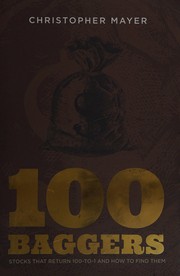
100 Baggers
Subtitled Stocks That Return 100-to-1 and How to Find Them; expanded edition 2025.
Summary
Mayer studies stocks that returned one hundred times the purchase price, building on Thomas Phelps' 1972 book One Hundred to One in the Stock Market, and identifies what they had in common. His sample covers three hundred and sixty-five companies from 1962 to 2014 that achieved this return.
The central arithmetic is that a hundredfold return requires either enormous earnings growth, a large expansion in the multiple applied to those earnings, or both, and that the two combining is what he calls the twin engine. He finds that the median time to a hundredfold return was about twenty-six years, which establishes the holding period the strategy requires.
The characteristics he identifies include small size at purchase, since a large company cannot grow a hundredfold; high returns on invested capital sustained over long periods, which is the mathematical requirement for compounding; the ability to reinvest earnings at those returns, since a high return business that cannot reinvest returns cash instead; owner-operators with substantial personal holdings; and low or reasonable purchase multiples.
His most emphasised practical point is what he calls the coffee can approach, meaning buying and then not selling, on the argument that the hundredfold returns are only available to holders and that no investor will hold through the drawdowns unless they commit in advance. The sample is selected entirely on outcome, which means the characteristics cannot distinguish companies that succeeded from companies that shared the traits and failed. The holding period required is longer than most investors will accept. The reinvestment argument is the analytically strongest part.
Key takeaways 8
- A hundredfold return requires substantial earnings growth combined with expansion in the multiple applied to those earnings.
- The median time to a hundredfold return was about twenty-six years, which sets the holding period the strategy requires.
- Companies must be small at the point of purchase, since a large company cannot grow a hundredfold from its starting position.
- High return on invested capital sustained over decades is the mathematical requirement, since the return on reinvested earnings determines compounding.
- A high-return business that cannot reinvest its earnings at those returns returns cash instead and does not compound.
- Owner-operators with substantial personal holdings appeared frequently in the sample, which aligns capital allocation with shareholder outcomes.
- Not selling is the operative discipline, since the returns are available only to holders and every such stock had severe drawdowns along the way.
- The sample is selected entirely on outcome, so the shared characteristics cannot distinguish these companies from those that had the same traits and failed.
Who should read it
Long-horizon equity investors who want the arithmetic and the characteristics of extreme compounders, with the selection problem understood.
About Christopher Mayer
Co-founder and portfolio manager, Woodlock House Family Capital 2018-present; previously newsletter writer at Agora Financial
100 Baggers turned Thomas Phelps's buy-and-hold arithmetic into a working screen and has outlived its publication cycle as a reference for long-hold investors.
Who recommended it 1
Similar books 6
Chosen by shared topics, the entries that hold them, and the people who recommended both.
Buy a few outstanding growth companies, research them by scuttlebutt, and hold.
“The late Philip Fisher wrote several books that are very good [including] Common Stocks and Uncommon Profits.” — Arnold Van Den Berg
Source: Van Den Berg on Fisher's books
Recommended by: Arnold Van Den Berg, Bill Stewart and 10 others
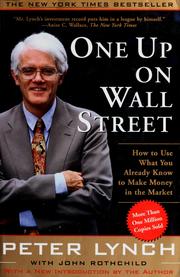
The amateur's edge argument from the Magellan record.
“One book that probably made the biggest impact on my career in those early formidable years back in the day was Peter Lynch's 'One Up on Wall Street.'” — David Rolfe
Source: Rolfe on the book that most shaped his early career
Recommended by: David Rolfe, Francisco Garcia Parames and 9 others
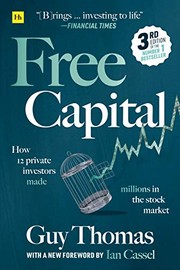
Twelve UK private investors, most of them working in small and micro caps.
What makes a business high quality and worth owning for years at a fair price.
Recommended by: Patrick O'Shaughnessy
A small-cap manager on capacity limits and why size is an edge.
The 1972 original that Mayer updated; buy right and hold on.
Recommended by: Mohnish Pabrai
Where it sits in the reference 6
Topics