Updates

  1. Person pages list letters, writing, profiles and links as sortable tables with filters, and show each person's companies as links; Fund letters show each letter's description in its own column.
  2. Experts show a checked job title and a short description of each person; 30 more people have photographs.
  3. Every company, fund, university and publication the experts work for has a page listing the people there.
  4. Fund letters show each letter's thesis and filter by it; 225 person pages list the essays, columns and newsletter issues the person wrote.
  5. Person pages list every essay and newsletter issue a person wrote, and their own books as a table in List view.
  6. Recommends shows the five largest kinds of book and the rest under More; browse pictures load sooner.
  7. Podcasts and talks link the original episode, filter by Audio and video or Press, and list each publisher once.
  8. Pages are wider, Recommends has List and Grid, and a filter clicked again turns off.
  9. Book cards sit in a ruled grid with Open Library and Goodreads links and each book's one-line note.
  10. Funds is now Investors; each investor's styles are buttons that filter the table.
  11. Podcasts and talks on a person's page filter by year and publisher and show as a list or a grid of pictures.
  12. Quotes show only people's own words: 472 summaries written by list sites are gone.
  13. Country pages open from Browse again, and every link on the shelf lands on a page.
  14. Subject and person pages show their sections as tabs, and each book appears once on a person's page.
  15. Book cards show the quote, who said it and the source; grids show five cards to a row.
  16. On a phone, a menu holds the sections, search, Updates, Feedback and dark mode.
  17. Feedback takes a screenshot of the page with no browser prompt, opens a screenshot full size when you click it, and clears itself once sent.
  18. Book cards are centred, search names the topic each book sits in, and any text cut short shows whole on hover.
  19. Search groups its results by kind: people, companies, geographies, subjects, topics, books, funds, fund letters and papers.
  20. The Books table lists who recommended each book by name, and the browser tab names the section you are in.
  21. Feedback can take a screenshot of the page, or one you paste or choose, and opens in the corner beside Updates.
  22. Each rail button reopens its section where you left it, and Browse, Table and People show on every book and subject page.
  23. Filters grey out choices that hold nothing instead of hiding them, and Books › People filters by authors or recommenders.
  24. Feedback takes a subject line and up to three screenshots.
  25. Biographies are grouped by the person they are about: 41 new pages, from Abraham Lincoln to Lee Kuan Yew.
  26. Sport splits into 23 sports, and Religion into one topic per faith.
  27. Book lists show as cards: the cover, one recommendation quote and every recommender by name.
  28. Seventeen subjects that had two or three pages under different names now have one page each.
  29. Every page lists its Experts as authors and recommenders, with a link to them on the Experts tab.
  30. Economics, Financial history, Financial panics and Accounting are subjects of their own, with one page per financial crisis.
  31. Book, person and subject pages open inside the app, so the tabs stay in view.
  32. 996 more book covers, and photographs or logos for 227 more people and companies.
  33. Books › Browse shows every subject as cards, and the rail holds Fund letters, Papers, Experts, Books and Funds.
  34. Every topic over 150 books splits into narrower topics, each with a page of its own.

Send feedback

What is it?
Screenshots, up to 3 (optional)
or paste one with Ctrl+V

We use your email only to reply to you.

The Small-Cap Advantage

The Small-Cap Advantage

Brian T. Bares
2011
T3 Open Librarygoodreads

A small-cap manager on capacity limits and why size is an edge.

Summary

Bares runs a small-capitalisation and microcapitalisation investment firm and wrote this to explain why the segment offers returns that larger managers cannot access and how a firm should be structured to pursue them.

The structural argument concerns capacity and coverage. Small companies are followed by few or no analysts, so information is genuinely less processed than in large-cap securities. Institutional investors cannot take meaningful positions without moving prices or breaching ownership limits, which excludes most of the capital that competes elsewhere. Index funds hold small caps in proportions that do not reflect quality, since index construction is mechanical. These conditions mean that fundamental research produces more information advantage per hour spent than the same effort in a well-covered large company.

The constraints are the other half of the argument, and Bares is explicit about them. Capacity is limited, so a firm pursuing this strategy must close to new money at a size far below what the industry considers viable. Liquidity means positions take time to build and to exit. Volatility is higher and drawdowns are deeper, so the client base must be able to tolerate them. Business risk is therefore high: the strategy that works cannot support a large asset management business.

The practical content covers research process, including direct contact with management at companies too small for institutional attention, the concentration required to make research effort worthwhile, and the argument for holding a small number of positions.

The book is written by a practitioner about his own approach and the evidence is his experience rather than systematic data. The academic literature on the small-cap premium is contested, and the premium has been weak in many periods since the effect was documented. The structural argument about analyst coverage and institutional capacity constraints remains valid.

Key takeaways 7

  1. Small companies are followed by few analysts, so publicly available information is genuinely less processed than in large-cap securities.
  2. Institutional investors cannot take meaningful positions in small companies without moving prices, which removes most competing capital.
  3. Fundamental research produces more information advantage per hour in small companies than the same effort in well-covered ones.
  4. Capacity constraints require a manager pursuing this strategy to close to new money far below the size the industry considers viable.
  5. The strategy that produces the returns cannot support a large asset management business, which is why few firms pursue it properly.
  6. Concentration is required because research effort per position is high and diluting it across many holdings wastes it.
  7. Deeper drawdowns and lower liquidity mean the client base must be selected for tolerance rather than for assets.

Who should read it

Investors and managers considering small-capitalisation strategies who need the structural case and an honest statement of the capacity and business constraints.

Similar books 6

Chosen by shared topics, the entries that hold them, and the people who recommended both.

Christopher Mayer · 2015

Subtitled Stocks That Return 100-to-1 and How to Find Them; expanded edition 2025.

Recommended by: Mohnish Pabrai

Guy Thomas · 2011

Twelve UK private investors, most of them working in small and micro caps.
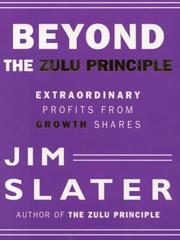
Jim Slater · 1996

The follow-up, aimed squarely at smaller growth companies.

Ed Wachenheim · 2016

Wiley edition confirmed elsewhere.

Peter Lynch, John Rothchild · 1989

The amateur's edge argument from the Magellan record.

“One book that probably made the biggest impact on my career in those early formidable years back in the day was Peter Lynch's 'One Up on Wall Street.'” — David Rolfe

Source: Rolfe on the book that most shaped his early career

Recommended by: David Rolfe, Francisco Garcia Parames and 9 others

Where it sits in the reference 2

Assets
Investment styles

Topics

Investing