Updates

  1. Person pages list letters, writing, profiles and links as sortable tables with filters, and show each person's companies as links; Fund letters show each letter's description in its own column.
  2. Experts show a checked job title and a short description of each person; 30 more people have photographs.
  3. Every company, fund, university and publication the experts work for has a page listing the people there.
  4. Fund letters show each letter's thesis and filter by it; 225 person pages list the essays, columns and newsletter issues the person wrote.
  5. Person pages list every essay and newsletter issue a person wrote, and their own books as a table in List view.
  6. Recommends shows the five largest kinds of book and the rest under More; browse pictures load sooner.
  7. Podcasts and talks link the original episode, filter by Audio and video or Press, and list each publisher once.
  8. Pages are wider, Recommends has List and Grid, and a filter clicked again turns off.
  9. Book cards sit in a ruled grid with Open Library and Goodreads links and each book's one-line note.
  10. Funds is now Investors; each investor's styles are buttons that filter the table.
  11. Podcasts and talks on a person's page filter by year and publisher and show as a list or a grid of pictures.
  12. Quotes show only people's own words: 472 summaries written by list sites are gone.
  13. Country pages open from Browse again, and every link on the shelf lands on a page.
  14. Subject and person pages show their sections as tabs, and each book appears once on a person's page.
  15. Book cards show the quote, who said it and the source; grids show five cards to a row.
  16. On a phone, a menu holds the sections, search, Updates, Feedback and dark mode.
  17. Feedback takes a screenshot of the page with no browser prompt, opens a screenshot full size when you click it, and clears itself once sent.
  18. Book cards are centred, search names the topic each book sits in, and any text cut short shows whole on hover.
  19. Search groups its results by kind: people, companies, geographies, subjects, topics, books, funds, fund letters and papers.
  20. The Books table lists who recommended each book by name, and the browser tab names the section you are in.
  21. Feedback can take a screenshot of the page, or one you paste or choose, and opens in the corner beside Updates.
  22. Each rail button reopens its section where you left it, and Browse, Table and People show on every book and subject page.
  23. Filters grey out choices that hold nothing instead of hiding them, and Books › People filters by authors or recommenders.
  24. Feedback takes a subject line and up to three screenshots.
  25. Biographies are grouped by the person they are about: 41 new pages, from Abraham Lincoln to Lee Kuan Yew.
  26. Sport splits into 23 sports, and Religion into one topic per faith.
  27. Book lists show as cards: the cover, one recommendation quote and every recommender by name.
  28. Seventeen subjects that had two or three pages under different names now have one page each.
  29. Every page lists its Experts as authors and recommenders, with a link to them on the Experts tab.
  30. Economics, Financial history, Financial panics and Accounting are subjects of their own, with one page per financial crisis.
  31. Book, person and subject pages open inside the app, so the tabs stay in view.
  32. 996 more book covers, and photographs or logos for 227 more people and companies.
  33. Books › Browse shows every subject as cards, and the rail holds Fund letters, Papers, Experts, Books and Funds.
  34. Every topic over 150 books splits into narrower topics, each with a page of its own.

Send feedback

What is it?
Screenshots, up to 3 (optional)
or paste one with Ctrl+V

We use your email only to reply to you.

Common Stocks and Common Sense

Common Stocks and Common Sense

Ed Wachenheim
2016
T3 224 pages · about 3h 44m to read Open Librarygoodreads

Wiley edition confirmed elsewhere.

Summary

Wachenheim has run Greenhaven Associates since 1987, and he wrote this as a set of case studies of individual investments rather than as a statement of method. Each chapter takes one position, explains what the firm saw, what it estimated, what it paid, what happened and what it got wrong.

The cases include IBM, Whirlpool, Union Pacific, Lowe's, Boeing, AIG, Interstate Bakeries, Southwest Airlines and others. The recurring analytical pattern is that Greenhaven buys large, well-known, financially sound companies whose earnings are temporarily depressed by an identifiable and reversible cause, holds them for three to five years, and sells when the market has repriced the normalised earnings. Wachenheim explicitly avoids obscure small companies, distressed situations and businesses he cannot model. He builds an earnings estimate for a normal year several years out, applies a multiple, and requires the resulting value to be substantially above the price.

He is unusually direct about failures. The Interstate Bakeries chapter documents a total loss and identifies what he misjudged. He also says plainly that the firm's returns have come from a modest number of large winners and that most positions have performed adequately rather than well.

The method is transparent and the cases are documented with real numbers, which makes it more useful than most investment books. The limitations are that the sample is chosen by the author from his own record, that the approach depends on judgement about what constitutes a temporary problem, which is the hard part and cannot be taught by example, and that the strategy requires holding through periods when the position looks wrong.

Key takeaways 7

  1. Buying large well-known companies whose earnings are temporarily depressed by an identifiable and reversible cause is the whole of the strategy.
  2. Estimating normalised earnings three to five years out, then applying a conservative multiple, is more reliable than forecasting near-term results.
  3. Financial strength is the precondition for the strategy, because it determines whether the company survives the temporary problem.
  4. Investment returns come from a small number of large winners, and most positions produce ordinary results.
  5. Deciding whether a problem is temporary or permanent is the analytical judgement on which everything turns, and it cannot be reduced to a rule.
  6. Holding a position for years through periods when it looks wrong is a requirement of the method rather than a virtue.
  7. Documenting the reasoning at purchase makes it possible to identify later whether the thesis broke or the price merely moved.

Who should read it

Investors who want to see a working manager's actual analysis on specific positions, including the losses, rather than a statement of principles.

About Ed Wachenheim

Chairman, Greenhaven Associates 1988-present

A long-running concentrated equity record and one durable book of investment case studies, but almost nothing else published.

Greenhaven Associates

Similar books 6

Chosen by shared topics, the entries that hold them, and the people who recommended both.
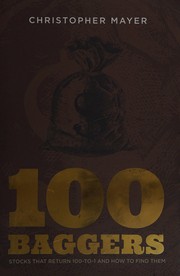
Christopher Mayer · 2015

Subtitled Stocks That Return 100-to-1 and How to Find Them; expanded edition 2025.

Recommended by: Mohnish Pabrai
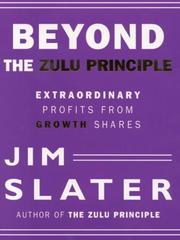
Jim Slater · 1996

The follow-up, aimed squarely at smaller growth companies.
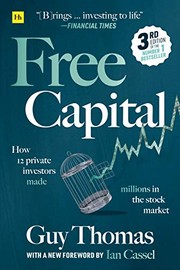
Guy Thomas · 2011

Twelve UK private investors, most of them working in small and micro caps.
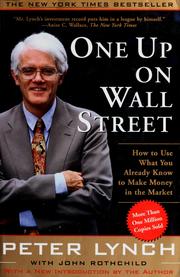
Peter Lynch, John Rothchild · 1989

The amateur's edge argument from the Magellan record.

“One book that probably made the biggest impact on my career in those early formidable years back in the day was Peter Lynch's 'One Up on Wall Street.'” — David Rolfe

Source: Rolfe on the book that most shaped his early career

Recommended by: David Rolfe, Francisco Garcia Parames and 9 others

Where it sits in the reference 2

Investors
Assets

Topics

Investing