Updates

  1. Person pages list letters, writing, profiles and links as sortable tables with filters, and show each person's companies as links; Fund letters show each letter's description in its own column.
  2. Experts show a checked job title and a short description of each person; 30 more people have photographs.
  3. Every company, fund, university and publication the experts work for has a page listing the people there.
  4. Fund letters show each letter's thesis and filter by it; 225 person pages list the essays, columns and newsletter issues the person wrote.
  5. Person pages list every essay and newsletter issue a person wrote, and their own books as a table in List view.
  6. Recommends shows the five largest kinds of book and the rest under More; browse pictures load sooner.
  7. Podcasts and talks link the original episode, filter by Audio and video or Press, and list each publisher once.
  8. Pages are wider, Recommends has List and Grid, and a filter clicked again turns off.
  9. Book cards sit in a ruled grid with Open Library and Goodreads links and each book's one-line note.
  10. Funds is now Investors; each investor's styles are buttons that filter the table.
  11. Podcasts and talks on a person's page filter by year and publisher and show as a list or a grid of pictures.
  12. Quotes show only people's own words: 472 summaries written by list sites are gone.
  13. Country pages open from Browse again, and every link on the shelf lands on a page.
  14. Subject and person pages show their sections as tabs, and each book appears once on a person's page.
  15. Book cards show the quote, who said it and the source; grids show five cards to a row.
  16. On a phone, a menu holds the sections, search, Updates, Feedback and dark mode.
  17. Feedback takes a screenshot of the page with no browser prompt, opens a screenshot full size when you click it, and clears itself once sent.
  18. Book cards are centred, search names the topic each book sits in, and any text cut short shows whole on hover.
  19. Search groups its results by kind: people, companies, geographies, subjects, topics, books, funds, fund letters and papers.
  20. The Books table lists who recommended each book by name, and the browser tab names the section you are in.
  21. Feedback can take a screenshot of the page, or one you paste or choose, and opens in the corner beside Updates.
  22. Each rail button reopens its section where you left it, and Browse, Table and People show on every book and subject page.
  23. Filters grey out choices that hold nothing instead of hiding them, and Books › People filters by authors or recommenders.
  24. Feedback takes a subject line and up to three screenshots.
  25. Biographies are grouped by the person they are about: 41 new pages, from Abraham Lincoln to Lee Kuan Yew.
  26. Sport splits into 23 sports, and Religion into one topic per faith.
  27. Book lists show as cards: the cover, one recommendation quote and every recommender by name.
  28. Seventeen subjects that had two or three pages under different names now have one page each.
  29. Every page lists its Experts as authors and recommenders, with a link to them on the Experts tab.
  30. Economics, Financial history, Financial panics and Accounting are subjects of their own, with one page per financial crisis.
  31. Book, person and subject pages open inside the app, so the tabs stay in view.
  32. 996 more book covers, and photographs or logos for 227 more people and companies.
  33. Books › Browse shows every subject as cards, and the rail holds Fund letters, Papers, Experts, Books and Funds.
  34. Every topic over 150 books splits into narrower topics, each with a page of its own.

Send feedback

What is it?
Screenshots, up to 3 (optional)
or paste one with Ctrl+V

We use your email only to reply to you.

Free Capital

Free Capital

Guy Thomas
2011
T3 279 pages · about 4h 39m to read Open Librarygoodreads

Twelve UK private investors, most of them working in small and micro caps.

Summary

Thomas, an actuary and academic, interviewed twelve private investors in the United Kingdom who had accumulated enough capital from investing to stop working, most of them managing their own money full time. The subjects are anonymised or identified by first name and are not professional fund managers.

The value is in the variation. Thomas does not present a single method. His subjects include mechanical value screeners, investors who concentrate in a handful of small companies they research intensively, one who trades on chart patterns, one who focuses on companies undergoing corporate events, and several who use spread betting and contracts for difference for leverage and tax treatment. Some hold thirty positions, others three. Some are highly active, others hold for years. He records how each got started, how they size positions, how they research, what they read, and what they got wrong.

The common features he identifies are more about circumstance than technique: all worked with relatively small capital by institutional standards, which let them buy small and illiquid companies that funds cannot; all had low personal spending relative to their capital; all avoided the career and client pressures that constrain professionals; several used tax-sheltered accounts systematically.

The sample is chosen entirely on success, which means it carries no information about how many people attempted the same and failed. The tax and account structures described are specific to the United Kingdom, particularly the individual savings account and spread betting treatment. The book is best used as evidence that several different methods can work at small scale, and for the practical detail on how the subjects organise their days and their research.

Key takeaways 7

  1. Several different investment methods produced financial independence for the subjects, so no single approach is required.
  2. Small capital is an advantage because it permits positions in companies too small for institutional investors to hold.
  3. Freedom from client and career pressure allows concentration and inactivity that professional managers cannot sustain.
  4. Low personal spending relative to capital is what converts investment returns into financial independence.
  5. Investors working alone can research small companies more deeply than analysts covering many, which is where their edge sits.
  6. Tax-sheltered accounts and instrument selection produce a material share of the after-tax return over decades.
  7. A sample selected on success says nothing about the failure rate of the same strategies.

Who should read it

Individual investors managing their own capital who want to see how a range of self-directed approaches were actually executed, particularly in United Kingdom small caps.

Similar books 6

Chosen by shared topics, the entries that hold them, and the people who recommended both.

Christopher Mayer · 2015

Subtitled Stocks That Return 100-to-1 and How to Find Them; expanded edition 2025.

Recommended by: Mohnish Pabrai

Brian T. Bares · 2011

A small-cap manager on capacity limits and why size is an edge.
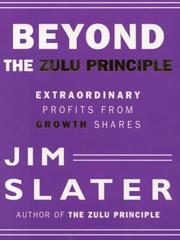
Jim Slater · 1996

The follow-up, aimed squarely at smaller growth companies.

Ed Wachenheim · 2016

Wiley edition confirmed elsewhere.

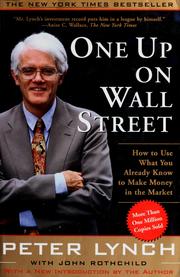
Peter Lynch, John Rothchild · 1989

The amateur's edge argument from the Magellan record.

“One book that probably made the biggest impact on my career in those early formidable years back in the day was Peter Lynch's 'One Up on Wall Street.'” — David Rolfe

Source: Rolfe on the book that most shaped his early career

Recommended by: David Rolfe, Francisco Garcia Parames and 9 others

Where it sits in the reference 2

Assets
Investment styles

Topics

Investing