The Ancestor's Tale
Dawkins narrates the whole of evolutionary history as a pilgrimage backward in time, meeting ancestors at each branching point. The cumulative effect is a felt sense of deep time that no abstract statement about 'billions of years' can produce. Reading this first recalibrates everything that follows.
Who recommended it 1 · 1 direct
Similar books 6
Chosen by shared topics, the entries that hold them, and the people who recommended both.
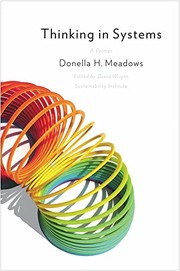
Meadows wrote this before systems thinking became a popular phrase, and it remains the clearest account of why short-term interventions in complex systems so often backfire. The chapter on leverage points is the conceptual core of what long-term thinking actually requires from decision-makers.
Recommended by: Patrick O'Shaughnessy, Daniel Burka and 3 others

How shared fictions such as money, nations and gods let humans cooperate at scale.
“…books I've recommended, highlighted to death, or forced on friends.” — Andrew Wilkinson
Source: Andrew Wilkinson's Bookshelf, neverenough.com
Recommended by: Andrew Wilkinson, Bill Gates, Mohnish Pabrai and 38 others

Burkeman's book on finitude is the necessary counterweight to grandiose civilizational thinking. Four thousand weeks is approximately an 80-year life, and Burkeman's argument — that productivity systems typically function as denial mechanisms against this fact — forces the question of how a mortal agent ought to orient toward long-term causes. The tension between personal finitude and multigenerational obligation is never fully resolved here, which is exactly right.
Recommended by: Andrew Wilkinson, The Barefoot Investor and 1 other

Diamond's central question — why did some civilizations come to dominate others over 10,000 years? — is precisely the kind of question that requires long-term thinking to even ask. The answer, rooted in geography and biology rather than culture or intelligence, is a model for how to reason about slow causes and fast effects.
“This is an insightful read on the pace at which societies develop and why.” — Christopher Bloomstran
Source: Semper Augustus 2023 Letter to Clients, 'Worldly Wisdom', p. 81
Recommended by: Charlie Munger, Christopher Bloomstran and 14 others

Naval Ravikant's ideas on building wealth and being happy, gathered from his talks.
Recommended by: Balaji S. Srinivasan, Nat Eliason and 9 others
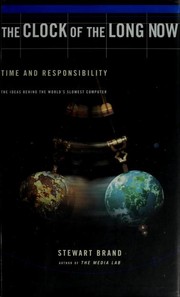
Brand's book is the founding document of institutional long-term thinking. It proposes a 10,000-year clock as a forcing function for civilizational patience, and along the way develops the concept of pace layers — the idea that different structures (fashion, commerce, governance, culture, nature) change at radically different speeds, and that confusing these speeds is the root of most short-termism.
Recommended by: Bret Victor, Phil Libin, Stewart Brand
Where it sits in the reference 1
Topics