
Guns, Germs, and Steel
Diamond's central question — why did some civilizations come to dominate others over 10,000 years? — is precisely the kind of question that requires long-term thinking to even ask. The answer, rooted in geography and biology rather than culture or intelligence, is a model for how to reason about slow causes and fast effects.
Summary
Diamond asks why Eurasian societies conquered others rather than the reverse, and answers with geography rather than with any claim about the people involved. His argument runs through the availability of domesticable plants and animals, which was concentrated in the Fertile Crescent, and through the east-west orientation of Eurasia, which allowed crops and livestock to spread across similar latitudes while the north-south axes of Africa and the Americas blocked diffusion.
Food surpluses produced dense populations, occupational specialisation, writing, centralised states and standing armies. Dense populations living beside domesticated animals also produced epidemic diseases and the partial immunity that comes from long exposure. Diamond argues that these diseases, rather than weapons, killed the large majority of indigenous Americans, and he uses the encounter at Cajamarca between Pizarro and Atahualpa as the concentrated illustration of all three factors.
The evidence draws on archaeology, linguistics, epidemiology and biogeography. Diamond was trained in physiology and ornithology and worked in New Guinea, where the question was put to him by Yali, a local politician.
The book is heavily contested by specialists. Anthropologists and historians accuse Diamond of environmental determinism, of compressing complex regional histories, and of underweighting institutions, contingency and agency. Acemoglu and Robinson in Why Nations Fail argue directly against the geographic thesis. Others note that geography cannot explain why Europe rather than China industrialised, since both sit on the same continent. Diamond's answer, about European political fragmentation, is the weakest part. Read it as a strong argument for one factor rather than as a settled account.
Key takeaways 8
- Differences in the wealth and power of societies come from environmental and geographic starting conditions, not from any difference among peoples.
- The Fertile Crescent held an unusual concentration of domesticable plant and large mammal species, which gave its societies a head start nobody else could match.
- Eurasia's east-west axis let domesticated crops and animals spread across similar climates, while the north-south axes of Africa and the Americas prevented that diffusion.
- Dense agricultural populations living with domesticated animals generated epidemic diseases and partial immunity to them.
- Disease, not military technology, caused the large majority of deaths in the European conquest of the Americas.
- Food surplus is the precondition for specialisation, writing, bureaucracy and standing armies, so agricultural capacity determines political complexity.
- Only fourteen large mammal species were ever domesticated, and thirteen of them were native to Eurasia.
- Technological advantage accumulates where populations are large and connected, because innovation depends on the number of people exchanging ideas.
Who should read it
Readers who want a single-factor explanation of long-run divergence between societies, useful when read against the institutional argument in Why Nations Fail.
Who recommended it 16 · 3 direct
“This is an insightful read on the pace at which societies develop and why.”
Similar books 6
Chosen by shared topics, the entries that hold them, and the people who recommended both.

How shared fictions such as money, nations and gods let humans cooperate at scale.
“…books I've recommended, highlighted to death, or forced on friends.” — Andrew Wilkinson
Source: Andrew Wilkinson's Bookshelf, neverenough.com
Recommended by: Andrew Wilkinson, Bill Gates, Mohnish Pabrai and 38 others

How the division of labour and free markets make a nation rich.
Recommended by: Naval Ravikant, Patrick Collison and 7 others

Buy a few outstanding growth companies, research them by scuttlebutt, and hold.
“The late Philip Fisher wrote several books that are very good [including] Common Stocks and Uncommon Profits.” — Arnold Van Den Berg
Source: Van Den Berg on Fisher's books
Recommended by: Arnold Van Den Berg, Bill Stewart and 10 others
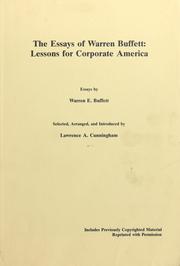
Berkshire's shareholder letters arranged by topic: governance, valuation, mergers.
“The resource is as valuable as Larry Cunningham's The Essays of Warren Buffett, which similarly organizes by subject matter” — Christopher Bloomstran
Source: Semper Augustus 2024 Letter to Clients, 'Books and Tunes for Walking', p. 96
Recommended by: Christopher Bloomstran, Francois Rochon and 11 others

Why some nations grew rich over 500 years, with culture as the deciding factor.
Recommended by: Charlie Munger, Mohnish Pabrai, Jamie Dimon and 1 other

Meadows wrote this before systems thinking became a popular phrase, and it remains the clearest account of why short-term interventions in complex systems so often backfire. The chapter on leverage points is the conceptual core of what long-term thinking actually requires from decision-makers.
Recommended by: Patrick O'Shaughnessy, Daniel Burka and 3 others
Where it sits in the reference 3
Topics