
Path Dependence
Returns chain rather than average, so a 50 percent loss needs a 100 percent gain to repair and the order of outcomes matters as much as their mean. More broadly, small early accidents lock in structures - standards, habits, capital stock - that later logic cannot dislodge. Investors respond by capping position sizes and treating survival as the precondition for every other model.
Start here
- The Origin of WealthEric D. Beinhocker, 2006
- Increasing Returns and Path Dependence in the EconomyW. Brian Arthur, 1994
- Complexity and the EconomyW. Brian Arthur, 2014
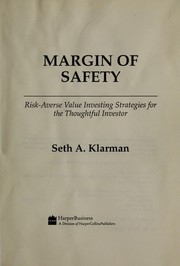
Avoid permanent loss: buy well below value and aim for absolute returns.
“Seth Klarman's 'Margin of Safety' is a good book about risk.” — Arnold Van Den Berg
Source: Van Den Berg on Margin of Safety as a book about risk
Recommended by: Arnold Van Den Berg, Frank Martin, Guy Spier and 6 others

Diamond's central question — why did some civilizations come to dominate others over 10,000 years? — is precisely the kind of question that requires long-term thinking to even ask. The answer, rooted in geography and biology rather than culture or intelligence, is a model for how to reason about slow causes and fast effects.
“This is an insightful read on the pace at which societies develop and why.” — Christopher Bloomstran
Source: Semper Augustus 2023 Letter to Clients, 'Worldly Wisdom', p. 81
Recommended by: Charlie Munger, Christopher Bloomstran and 14 others

How plague, cholera, malaria and smallpox shaped history.
Recommended by: Patrick Collison, Paul Graham

Papers showing positive feedback and lock-in govern parts of the economy.
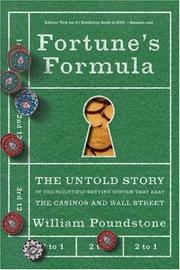
The Kelly criterion for sizing bets, from Bell Labs to casinos and hedge funds.
Recommended by: Mohnish Pabrai
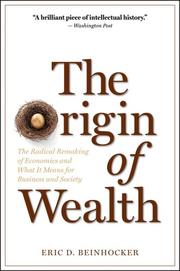
The economy as a complex evolving system rather than one in equilibrium.
Recommended by: Ryan Peterson

Austrian roundabout investing: accept losses now for a stronger position later.
 Mohnish Pabrairecommends 3 books here
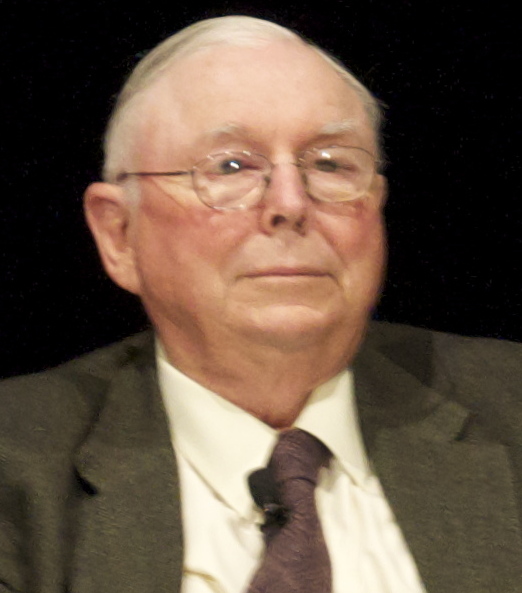 Charlie Mungerrecommends 1 book here
 Marc Andreessenrecommends 1 book here
 Paul Grahamrecommends 1 book here
 Ray Daliorecommends 1 book here
 Warren Buffettrecommends 1 book here
 Seth Klarmanrecommends 1 book here
 Tyler Cowenrecommends 1 book here
 Guy Spierrecommends 1 book here
 Simon Sinekrecommends 1 book here
Show all 26
 William Ackmanrecommends 1 book here
 Bill Gatesrecommends 1 book here
 Daniel Ekrecommends 1 book here
 Jamie Dimonrecommends 1 book here
 Patrick Collisonrecommends 1 book here
 Ryan Petersonrecommends 1 book here
 Scott Farquharrecommends 1 book here
 Stewart Brandrecommends 1 book here
- Multiplicative SystemsShane Parrish · essay · One zero in the chain sets the whole product to zero.
- The Butterfly EffectShane Parrish · essay · Small initial differences lock in very different paths.
- InertiaShane Parrish · essay · Organisations keep their heading absent an outside force.
- Getting Wealthy vs. Staying WealthyMorgan Housel · essay · Survival is the precondition for compounding.