Updates

  1. Person pages list letters, writing, profiles and links as sortable tables with filters, and show each person's companies as links; Fund letters show each letter's description in its own column.
  2. Experts show a checked job title and a short description of each person; 30 more people have photographs.
  3. Every company, fund, university and publication the experts work for has a page listing the people there.
  4. Fund letters show each letter's thesis and filter by it; 225 person pages list the essays, columns and newsletter issues the person wrote.
  5. Person pages list every essay and newsletter issue a person wrote, and their own books as a table in List view.
  6. Recommends shows the five largest kinds of book and the rest under More; browse pictures load sooner.
  7. Podcasts and talks link the original episode, filter by Audio and video or Press, and list each publisher once.
  8. Pages are wider, Recommends has List and Grid, and a filter clicked again turns off.
  9. Book cards sit in a ruled grid with Open Library and Goodreads links and each book's one-line note.
  10. Funds is now Investors; each investor's styles are buttons that filter the table.
  11. Podcasts and talks on a person's page filter by year and publisher and show as a list or a grid of pictures.
  12. Quotes show only people's own words: 472 summaries written by list sites are gone.
  13. Country pages open from Browse again, and every link on the shelf lands on a page.
  14. Subject and person pages show their sections as tabs, and each book appears once on a person's page.
  15. Book cards show the quote, who said it and the source; grids show five cards to a row.
  16. On a phone, a menu holds the sections, search, Updates, Feedback and dark mode.
  17. Feedback takes a screenshot of the page with no browser prompt, opens a screenshot full size when you click it, and clears itself once sent.
  18. Book cards are centred, search names the topic each book sits in, and any text cut short shows whole on hover.
  19. Search groups its results by kind: people, companies, geographies, subjects, topics, books, funds, fund letters and papers.
  20. The Books table lists who recommended each book by name, and the browser tab names the section you are in.
  21. Feedback can take a screenshot of the page, or one you paste or choose, and opens in the corner beside Updates.
  22. Each rail button reopens its section where you left it, and Browse, Table and People show on every book and subject page.
  23. Filters grey out choices that hold nothing instead of hiding them, and Books › People filters by authors or recommenders.
  24. Feedback takes a subject line and up to three screenshots.
  25. Biographies are grouped by the person they are about: 41 new pages, from Abraham Lincoln to Lee Kuan Yew.
  26. Sport splits into 23 sports, and Religion into one topic per faith.
  27. Book lists show as cards: the cover, one recommendation quote and every recommender by name.
  28. Seventeen subjects that had two or three pages under different names now have one page each.
  29. Every page lists its Experts as authors and recommenders, with a link to them on the Experts tab.
  30. Economics, Financial history, Financial panics and Accounting are subjects of their own, with one page per financial crisis.
  31. Book, person and subject pages open inside the app, so the tabs stay in view.
  32. 996 more book covers, and photographs or logos for 227 more people and companies.
  33. Books › Browse shows every subject as cards, and the rail holds Fund letters, Papers, Experts, Books and Funds.
  34. Every topic over 150 books splits into narrower topics, each with a page of its own.

Send feedback

What is it?
Screenshots, up to 3 (optional)
or paste one with Ctrl+V

We use your email only to reply to you.

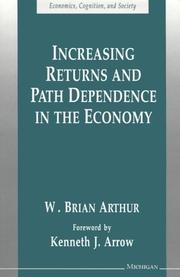
Increasing Returns and Path Dependence in th

Increasing Returns and Path Dependence in the Economy

W. Brian Arthur
1994
T2 213 pages · about 3h 33m to read Open Librarygoodreads

Summary

Brian Arthur collects his papers from the 1980s and early 1990s arguing that positive feedback governs important parts of the economy and that standard equilibrium analysis, built on diminishing returns, cannot describe those parts. Where returns increase with adoption, small early events determine which of several possible outcomes the system settles into, and the outcome that wins need not be the most efficient.

Arthur's formal contribution is the application of non-linear Polya urn processes to technology adoption. He shows that when each adoption raises the probability of further adoptions, the process converges to one of multiple possible limits, and which limit it reaches depends on the random early sequence. The technology examples are QWERTY, the internal combustion engine over steam, VHS over Betamax, and nuclear reactor designs. He also applies the framework to industrial location, arguing that agglomeration produces regional concentration that historical accident selects.

The economic content became the theoretical basis for how technology investors talk about network effects and lock-in, and the book is the primary source for that vocabulary. The empirical claims have been contested: Liebowitz and Margolis published detailed rebuttals arguing that QWERTY was not inferior to Dvorak and that VHS won on merit, and the general question of whether inefficient lock-in actually occurs in practice remains open. The papers are technical in places and repetitive as a collection, since they were written separately.

Key takeaways 7

  1. When adoption raises the value of a technology to later adopters, the market can settle on any of several outcomes rather than converging on one.
  2. The outcome that emerges from an increasing-returns process depends on early random events and need not be the most efficient available.
  3. Standard equilibrium economics assumes diminishing returns and therefore cannot generate multiple equilibria or path dependence.
  4. Once a technology accumulates enough adopters, a superior alternative can fail because switching costs exceed individual gains.
  5. Regional industrial concentration results from agglomeration feedback rather than from underlying geographic advantage.
  6. Firms in increasing-returns markets should compete for early adoption share rather than for near-term margin.
  7. Arthur argues that knowledge-based industries operate under increasing returns while resource-based industries do not, so the two need different analysis.

Who should read it

Technology investors and founders who want the original formal argument behind network effects, lock-in and winner-take-most market structure.

Similar books 6

Chosen by shared topics, the entries that hold them, and the people who recommended both.
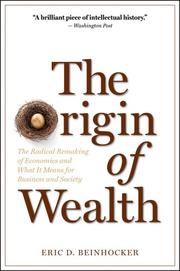
Eric D. Beinhocker · 2006

The economy as a complex evolving system rather than one in equilibrium.

Recommended by: Ryan Peterson
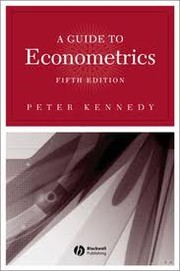
Peter Kennedy · 1998

What each econometric technique is for, what it assumes and what goes wrong.

Recommended by: Nassim Nicholas Taleb

Where it sits in the reference 2

Mental models
Economics

Topics

EconomicsScienceComplexity and systems science