Updates

  1. Person pages list letters, writing, profiles and links as sortable tables with filters, and show each person's companies as links; Fund letters show each letter's description in its own column.
  2. Experts show a checked job title and a short description of each person; 30 more people have photographs.
  3. Every company, fund, university and publication the experts work for has a page listing the people there.
  4. Fund letters show each letter's thesis and filter by it; 225 person pages list the essays, columns and newsletter issues the person wrote.
  5. Person pages list every essay and newsletter issue a person wrote, and their own books as a table in List view.
  6. Recommends shows the five largest kinds of book and the rest under More; browse pictures load sooner.
  7. Podcasts and talks link the original episode, filter by Audio and video or Press, and list each publisher once.
  8. Pages are wider, Recommends has List and Grid, and a filter clicked again turns off.
  9. Book cards sit in a ruled grid with Open Library and Goodreads links and each book's one-line note.
  10. Funds is now Investors; each investor's styles are buttons that filter the table.
  11. Podcasts and talks on a person's page filter by year and publisher and show as a list or a grid of pictures.
  12. Quotes show only people's own words: 472 summaries written by list sites are gone.
  13. Country pages open from Browse again, and every link on the shelf lands on a page.
  14. Subject and person pages show their sections as tabs, and each book appears once on a person's page.
  15. Book cards show the quote, who said it and the source; grids show five cards to a row.
  16. On a phone, a menu holds the sections, search, Updates, Feedback and dark mode.
  17. Feedback takes a screenshot of the page with no browser prompt, opens a screenshot full size when you click it, and clears itself once sent.
  18. Book cards are centred, search names the topic each book sits in, and any text cut short shows whole on hover.
  19. Search groups its results by kind: people, companies, geographies, subjects, topics, books, funds, fund letters and papers.
  20. The Books table lists who recommended each book by name, and the browser tab names the section you are in.
  21. Feedback can take a screenshot of the page, or one you paste or choose, and opens in the corner beside Updates.
  22. Each rail button reopens its section where you left it, and Browse, Table and People show on every book and subject page.
  23. Filters grey out choices that hold nothing instead of hiding them, and Books › People filters by authors or recommenders.
  24. Feedback takes a subject line and up to three screenshots.
  25. Biographies are grouped by the person they are about: 41 new pages, from Abraham Lincoln to Lee Kuan Yew.
  26. Sport splits into 23 sports, and Religion into one topic per faith.
  27. Book lists show as cards: the cover, one recommendation quote and every recommender by name.
  28. Seventeen subjects that had two or three pages under different names now have one page each.
  29. Every page lists its Experts as authors and recommenders, with a link to them on the Experts tab.
  30. Economics, Financial history, Financial panics and Accounting are subjects of their own, with one page per financial crisis.
  31. Book, person and subject pages open inside the app, so the tabs stay in view.
  32. 996 more book covers, and photographs or logos for 227 more people and companies.
  33. Books › Browse shows every subject as cards, and the rail holds Fund letters, Papers, Experts, Books and Funds.
  34. Every topic over 150 books splits into narrower topics, each with a page of its own.

Send feedback

What is it?
Screenshots, up to 3 (optional)
or paste one with Ctrl+V

We use your email only to reply to you.

A Theory of the Firm

A Theory of the Firm

Michael C. Jensen
2000
T3 320 pages · about 5h 20m to read Open Librarygoodreads

Summary

Jensen collected his principal papers on the economics of organisations, several written with William Meckling, with connecting commentary. The collection is the compact statement of the agency theory framework that reshaped corporate finance and governance.

The foundational paper, Theory of the Firm from 1976, defines agency costs as the sum of monitoring expenditure by the principal, bonding expenditure by the agent, and the residual loss from divergence between the agent's decisions and those that would maximise the principal's welfare. Jensen and Meckling apply this to the capital structure decision, showing that both outside equity and debt carry agency costs, and that the observed structure reflects the minimisation of the total.

The free cash flow paper from 1986 is the most consequential for practice. Jensen argues that managers with cash flow in excess of profitable investment opportunities will spend it on growth that reduces value, because compensation, status and power scale with size. Debt reduces this by committing the cash to fixed payments, which is why leveraged buyouts and debt-financed repurchases created value in the takeover wave of the 1980s. He treats the takeover market as the mechanism through which this discipline is applied to managers who will not apply it themselves.

Other papers cover the nature of the firm as a nexus of contracts, the specific knowledge problem in allocating decision rights within organisations, the separation of decision management from decision control, and the design of performance measurement and compensation systems.

The framework became the dominant paradigm and is now heavily criticised. Jensen himself later argued that the stock option compensation his work helped justify produced earnings manipulation and value destruction, and wrote about the agency costs of overvalued equity. Critics argue the framework treats the firm too narrowly as a contracting problem and that shareholder primacy as implemented produced short-termism. The papers are technical and assume economics training.

Key takeaways 7

  1. Agency costs equal monitoring expenditure plus bonding expenditure plus the residual loss from divergent decisions, and this total determines organisational form.
  2. Managers with cash flow exceeding profitable investment opportunities will spend it on value-reducing growth because their rewards scale with size.
  3. Debt creates value in such firms by committing cash to fixed payments that managers cannot divert.
  4. The takeover market disciplines managers who will not impose that discipline on themselves.
  5. The firm is a nexus of contracts rather than an entity, so its boundaries follow from contracting costs rather than from technology.
  6. Decision management and decision control should be separated wherever the person with the specific knowledge is not the residual claimant.
  7. Overvalued equity generates its own agency costs, because managers must deliver performance the valuation implies and will manipulate to do so.

Who should read it

Investors, directors and researchers who want the primary statements of agency theory, free cash flow and the case for debt as a governance mechanism.

Similar books 6

Chosen by shared topics, the entries that hold them, and the people who recommended both.

Paul Milgrom, John Roberts · 1992

How firms are organised, using agency, contracts and transaction-cost economics.

Patrick Bolton, Mathias Dewatripont · 2005
Tyler Cowen · 2019

A defence of American business on fraud, CEO pay, monopoly and tech, issue by issue.
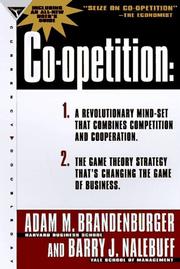
Adam M. Brandenburger, Barry J. Nalebuff · 1996

Game theory applied to business, which is cooperative and competitive at once.

Recommended by: Mohnish Pabrai

Michael E. Porter · 1976

His doctoral work, published by Harvard University Press

Oliver E. Williamson · 1985

Why firms exist: transaction costs decide when to own rather than contract.

Where it sits in the reference 2

Mental models
Economics

Topics

EconomicsBusiness and Management