Updates

  1. Person pages list letters, writing, profiles and links as sortable tables with filters, and show each person's companies as links; Fund letters show each letter's description in its own column.
  2. Experts show a checked job title and a short description of each person; 30 more people have photographs.
  3. Every company, fund, university and publication the experts work for has a page listing the people there.
  4. Fund letters show each letter's thesis and filter by it; 225 person pages list the essays, columns and newsletter issues the person wrote.
  5. Person pages list every essay and newsletter issue a person wrote, and their own books as a table in List view.
  6. Recommends shows the five largest kinds of book and the rest under More; browse pictures load sooner.
  7. Podcasts and talks link the original episode, filter by Audio and video or Press, and list each publisher once.
  8. Pages are wider, Recommends has List and Grid, and a filter clicked again turns off.
  9. Book cards sit in a ruled grid with Open Library and Goodreads links and each book's one-line note.
  10. Funds is now Investors; each investor's styles are buttons that filter the table.
  11. Podcasts and talks on a person's page filter by year and publisher and show as a list or a grid of pictures.
  12. Quotes show only people's own words: 472 summaries written by list sites are gone.
  13. Country pages open from Browse again, and every link on the shelf lands on a page.
  14. Subject and person pages show their sections as tabs, and each book appears once on a person's page.
  15. Book cards show the quote, who said it and the source; grids show five cards to a row.
  16. On a phone, a menu holds the sections, search, Updates, Feedback and dark mode.
  17. Feedback takes a screenshot of the page with no browser prompt, opens a screenshot full size when you click it, and clears itself once sent.
  18. Book cards are centred, search names the topic each book sits in, and any text cut short shows whole on hover.
  19. Search groups its results by kind: people, companies, geographies, subjects, topics, books, funds, fund letters and papers.
  20. The Books table lists who recommended each book by name, and the browser tab names the section you are in.
  21. Feedback can take a screenshot of the page, or one you paste or choose, and opens in the corner beside Updates.
  22. Each rail button reopens its section where you left it, and Browse, Table and People show on every book and subject page.
  23. Filters grey out choices that hold nothing instead of hiding them, and Books › People filters by authors or recommenders.
  24. Feedback takes a subject line and up to three screenshots.
  25. Biographies are grouped by the person they are about: 41 new pages, from Abraham Lincoln to Lee Kuan Yew.
  26. Sport splits into 23 sports, and Religion into one topic per faith.
  27. Book lists show as cards: the cover, one recommendation quote and every recommender by name.
  28. Seventeen subjects that had two or three pages under different names now have one page each.
  29. Every page lists its Experts as authors and recommenders, with a link to them on the Experts tab.
  30. Economics, Financial history, Financial panics and Accounting are subjects of their own, with one page per financial crisis.
  31. Book, person and subject pages open inside the app, so the tabs stay in view.
  32. 996 more book covers, and photographs or logos for 227 more people and companies.
  33. Books › Browse shows every subject as cards, and the rail holds Fund letters, Papers, Experts, Books and Funds.
  34. Every topic over 150 books splits into narrower topics, each with a page of its own.

Send feedback

What is it?
Screenshots, up to 3 (optional)
or paste one with Ctrl+V

We use your email only to reply to you.

The Economic Institutions of Capitalism

The Economic Institutions of Capitalism

Oliver E. Williamson
1985
T1 450 pages · about 7h 30m to read Open Librarygoodreads

Nobel-winning theory of when to make rather than buy.

Summary

Oliver Williamson developed transaction cost economics and this book is its fullest statement. The question it answers is Ronald Coase's: why do firms exist at all, rather than everything being organised through market contracts.

Williamson's answer starts from two behavioural assumptions. People are boundedly rational, so contracts are necessarily incomplete and cannot specify what happens in every future state. And some people behave opportunistically, meaning they will exploit gaps in contracts when it pays. Given these, the critical variable is asset specificity: when a transaction requires an investment that has little value outside that particular relationship, the parties become locked in, and whoever made the specific investment is exposed to being held up by the other afterward.

From this he derives the make-or-buy decision. Transactions with low asset specificity are efficiently organised through markets, because competition disciplines suppliers and switching is cheap. Transactions with high asset specificity, high uncertainty and high frequency are efficiently organised inside a firm, because hierarchy can adapt without renegotiation. Intermediate cases produce hybrid forms including long-term contracts, franchising and joint ventures. He applies this to vertical integration, to labour organisation, to corporate governance and to antitrust, arguing that many practices condemned as anticompetitive are efficient responses to contracting problems. Williamson received a Nobel prize in 2009. The framework is criticised for the assumption of opportunism and for the difficulty of measuring asset specificity independently of the outcome it explains.

Key takeaways 7

  1. Firms exist because some transactions cannot be governed efficiently through contracts between independent parties.
  2. Contracts are necessarily incomplete because people are boundedly rational and cannot anticipate every future state.
  3. Asset specificity, meaning investment with little value outside a particular relationship, creates lock-in and exposure to holdup.
  4. Transactions with high asset specificity, uncertainty and frequency should be brought inside the firm rather than contracted for.
  5. Hierarchy adapts to unforeseen circumstances by direction, while contracts require renegotiation, which is why integration is sometimes efficient.
  6. Vertical integration and restrictive contracting practices are frequently efficient responses to contracting hazards rather than attempts to foreclose competition.
  7. The unit of analysis for organisational questions should be the transaction rather than the firm or the industry.

Who should read it

Executives making outsourcing and integration decisions and investors analysing vertical structure who want the theoretical basis for where firm boundaries should sit.

Similar books 6

Chosen by shared topics, the entries that hold them, and the people who recommended both.

Tyler Cowen · 2019

A defence of American business on fraud, CEO pay, monopoly and tech, issue by issue.
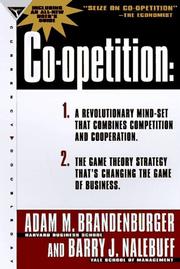
Adam M. Brandenburger, Barry J. Nalebuff · 1996

Game theory applied to business, which is cooperative and competitive at once.

Recommended by: Mohnish Pabrai

Paul Milgrom, John Roberts · 1992

How firms are organised, using agency, contracts and transaction-cost economics.

Michael E. Porter · 1976

His doctoral work, published by Harvard University Press

John Kenneth Galbraith · 1967

How large corporations run by a technostructure of experts plan rather than compete.

Recommended by: Paul Graham

Where it sits in the reference 2

Business models
Economics

Topics

EconomicsBusiness and Management