
The Dao of Capital
Summary
Spitznagel argues for an investment approach he derives from Austrian economics, particularly from Bohm-Bawerk's theory of capital and from Mises.
The organising concept is roundaboutness, which Spitznagel takes from Bohm-Bawerk: production becomes more effective when it takes an indirect route, investing first in the means of production and accepting a delay before output. He extends this into an investment principle, arguing that an investor should accept losses in the near term to achieve a stronger position later, rather than pursuing immediate returns. His illustrations include the strategic patience of Chinese classical thought, the Austrian pine forest management practice of allowing slow growth, and Klipp's rule from his own trading apprenticeship, which required taking small losses immediately rather than defending positions.
The macroeconomic argument is Austrian business cycle theory. Central banks suppressing interest rates below the natural rate distort the structure of production, drawing capital into investments that are only viable at the artificial rate, and the resulting misallocation must eventually be corrected. Spitznagel argues that intervention prevents the correction and therefore accumulates the distortion.
His practical measure is what he calls the Misesian stationarity index, a ratio of equity market capitalisation to corporate net worth, which he treats as an indicator of the distortion's extent and therefore of expected returns. He argues for holding capital in reserve when the index is high and deploying aggressively after the correction.
The Austrian framework is not accepted by most economists, and its central empirical prediction, that suppressed rates must produce a correction, has been difficult to test because the timing is unspecified. Spitznagel's index resembles Tobin's q, which has some predictive power for long-horizon returns but has signalled overvaluation for extended periods. The book is discursive and the connection between the philosophical material and the investment advice is loose. He sells the strategy he recommends.
Key takeaways 7
- Accepting a worse position now to achieve a stronger one later is the organising principle, taken from Bohm-Bawerk's theory of roundabout production.
- Taking small losses immediately rather than defending a position is a discipline that preserves the capacity to act later.
- Interest rates suppressed below the natural rate draw capital into investments viable only at the artificial rate.
- Preventing corrections through intervention accumulates the distortion rather than removing it.
- The ratio of equity market value to corporate net worth indicates the extent of the distortion and predicts subsequent returns.
- Holding capital in reserve has an option value that conventional portfolio measures do not capture.
- Investors should aim at compound growth over a full cycle rather than at returns measured within it.
Who should read it
Investors interested in the Austrian framework applied to portfolio decisions, noting that the economics is heterodox and the author sells the strategy.
Similar books 6
Chosen by shared topics, the entries that hold them, and the people who recommended both.

Geometric against arithmetic returns, and what a drawdown really costs.
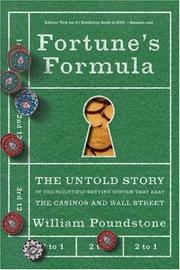
The Kelly criterion for sizing bets, from Bell Labs to casinos and hedge funds.
Recommended by: Mohnish Pabrai

Incerto volume 5
Recommended by: Nat Eliason, Ana Fabrega, Ben Horowitz and 12 others
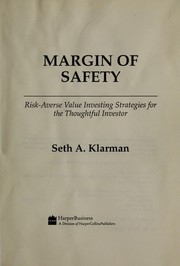
Avoid permanent loss: buy well below value and aim for absolute returns.
“Seth Klarman's 'Margin of Safety' is a good book about risk.” — Arnold Van Den Berg
Source: Van Den Berg on Margin of Safety as a book about risk
Recommended by: Arnold Van Den Berg, Frank Martin, Guy Spier and 6 others
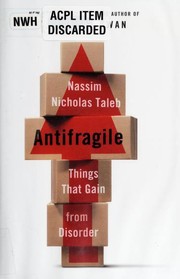
Incerto volume 4
“Nassim Taleb, author of the new book Antifragile, praises volatility and criticises those who would artificially damp it at great unseen cost. Taleb advises us to be 'anti-fragile'. This is exactly…” — Seth Klarman
Source: Klarman on Taleb's praise of volatility and what Baupost strives for
Recommended by: Mohnish Pabrai, Nat Eliason and 25 others
Where it sits in the reference 3
Topics