
Antifragility
Taleb's category beyond robust: things that gain from disorder because their payoff is convex, so shocks help more than they hurt. The portfolio expression is the barbell - most capital in the very safe, a sliver in convex long shots, and nothing in between, least of all short-volatility positions dressed up as income. Prefer positions you would welcome a crisis into over positions that merely survive one.
Start here
- The Black SwanNassim Nicholas Taleb, 2007
- AntifragileNassim Nicholas Taleb, 2012
- The Dao of CapitalMark Spitznagel, 2013
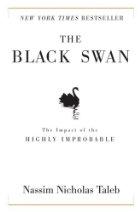
Rare, unforeseen, high-impact events drive history, explained only after the fact.
“The message of The Black Swan is how important it is to realize that the things everyone rules out can still come to pass.” — Howard Marks
Source: Oaktree memo 'The Limits to Negativism'
Recommended by: Howard Marks, Marc Andreessen, Nat Eliason and 18 others
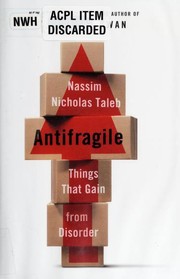
Incerto volume 4
“Nassim Taleb, author of the new book Antifragile, praises volatility and criticises those who would artificially damp it at great unseen cost. Taleb advises us to be 'anti-fragile'. This is exactly…” — Seth Klarman
Source: Klarman on Taleb's praise of volatility and what Baupost strives for
Recommended by: Mohnish Pabrai, Nat Eliason and 25 others

Austrian roundabout investing: accept losses now for a stronger position later.

Incerto volume 5
Recommended by: Nat Eliason, Ana Fabrega, Ben Horowitz and 12 others
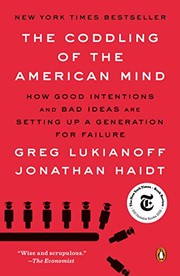
Three false beliefs taught to young Americans, and how they harm their minds.
Recommended by: Eric Weinstein, Julian Shapiro and 2 others

Geometric against arithmetic returns, and what a drawdown really costs.
 Marc Andreessenrecommends 3 books here
 Matt Mullenwegrecommends 3 books here
 Naval Ravikantrecommends 3 books here
 Vinod Khoslarecommends 3 books here
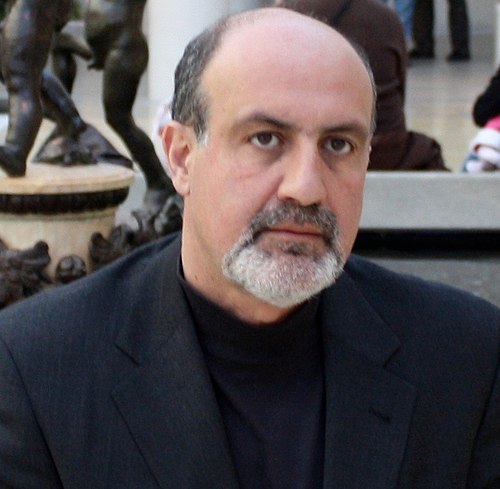 Nassim Nicholas Talebrecommends 2 books here
 Changpeng Zhaorecommends 2 books here
 James Altucherrecommends 2 books here
Show all 46
 Patrick Collisonrecommends 2 books here
 Vlad Tenevrecommends 2 books here
 Ben Horowitzrecommends 1 book here
 Daniel Kahnemanrecommends 1 book here
 Howard Marksrecommends 1 book here
 Peter Thielrecommends 1 book here
 Mohnish Pabrairecommends 1 book here
 Seth Klarmanrecommends 1 book here
 Ryan Holidayrecommends 1 book here
 Simon Sinekrecommends 1 book here
 Albert Wengerrecommends 1 book here
 Bill Gatesrecommends 1 book here
 Chris Dixonrecommends 1 book here
 Eric Weinsteinrecommends 1 book here
 Ev Williamsrecommends 1 book here
 Jeff Bezosrecommends 1 book here
 Keith Raboisrecommends 1 book here
 Ryan Petersonrecommends 1 book here
 Tim Ferrissrecommends 1 book here
 Tobi Lütkerecommends 1 book here
 Tom Bilyeurecommends 1 book here
- The Dangers of Suppressing VolatilityShane Parrish · essay · Damping small shocks stores up one large one.
- Iatrogenics: Harm Done by the HealerShane Parrish · essay · Intervention that does more damage than the disease.
- Slack: The Case for Unused CapacityShane Parrish · essay · Systems run at full utilisation have no room to absorb shocks.
- What Is a Black Swan?Shane Parrish · essay · Rare, high-impact events that models price at zero.