Updates

  1. Person pages list letters, writing, profiles and links as sortable tables with filters, and show each person's companies as links; Fund letters show each letter's description in its own column.
  2. Experts show a checked job title and a short description of each person; 30 more people have photographs.
  3. Every company, fund, university and publication the experts work for has a page listing the people there.
  4. Fund letters show each letter's thesis and filter by it; 225 person pages list the essays, columns and newsletter issues the person wrote.
  5. Person pages list every essay and newsletter issue a person wrote, and their own books as a table in List view.
  6. Recommends shows the five largest kinds of book and the rest under More; browse pictures load sooner.
  7. Podcasts and talks link the original episode, filter by Audio and video or Press, and list each publisher once.
  8. Pages are wider, Recommends has List and Grid, and a filter clicked again turns off.
  9. Book cards sit in a ruled grid with Open Library and Goodreads links and each book's one-line note.
  10. Funds is now Investors; each investor's styles are buttons that filter the table.
  11. Podcasts and talks on a person's page filter by year and publisher and show as a list or a grid of pictures.
  12. Quotes show only people's own words: 472 summaries written by list sites are gone.
  13. Country pages open from Browse again, and every link on the shelf lands on a page.
  14. Subject and person pages show their sections as tabs, and each book appears once on a person's page.
  15. Book cards show the quote, who said it and the source; grids show five cards to a row.
  16. On a phone, a menu holds the sections, search, Updates, Feedback and dark mode.
  17. Feedback takes a screenshot of the page with no browser prompt, opens a screenshot full size when you click it, and clears itself once sent.
  18. Book cards are centred, search names the topic each book sits in, and any text cut short shows whole on hover.
  19. Search groups its results by kind: people, companies, geographies, subjects, topics, books, funds, fund letters and papers.
  20. The Books table lists who recommended each book by name, and the browser tab names the section you are in.
  21. Feedback can take a screenshot of the page, or one you paste or choose, and opens in the corner beside Updates.
  22. Each rail button reopens its section where you left it, and Browse, Table and People show on every book and subject page.
  23. Filters grey out choices that hold nothing instead of hiding them, and Books › People filters by authors or recommenders.
  24. Feedback takes a subject line and up to three screenshots.
  25. Biographies are grouped by the person they are about: 41 new pages, from Abraham Lincoln to Lee Kuan Yew.
  26. Sport splits into 23 sports, and Religion into one topic per faith.
  27. Book lists show as cards: the cover, one recommendation quote and every recommender by name.
  28. Seventeen subjects that had two or three pages under different names now have one page each.
  29. Every page lists its Experts as authors and recommenders, with a link to them on the Experts tab.
  30. Economics, Financial history, Financial panics and Accounting are subjects of their own, with one page per financial crisis.
  31. Book, person and subject pages open inside the app, so the tabs stay in view.
  32. 996 more book covers, and photographs or logos for 227 more people and companies.
  33. Books › Browse shows every subject as cards, and the rail holds Fund letters, Papers, Experts, Books and Funds.
  34. Every topic over 150 books splits into narrower topics, each with a page of its own.

Send feedback

What is it?
Screenshots, up to 3 (optional)
or paste one with Ctrl+V

We use your email only to reply to you.

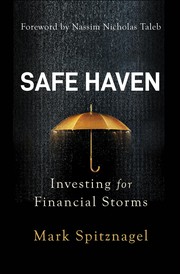
Safe Haven

Safe Haven

Mark Spitznagel
2021
T3 208 pages · about 3h 28m to read Open Librarygoodreads

Geometric against arithmetic returns, and what a drawdown really costs.

Summary

Spitznagel runs Universa Investments, a fund that sells tail risk protection, and this book states the mathematical argument behind that business.

The central claim rests on the difference between arithmetic and geometric returns. A portfolio's compound growth rate is not the average of its annual returns but the geometric mean, which is reduced by volatility. A large loss requires a disproportionately large gain to recover, so avoiding large losses raises compound growth even if the avoidance costs something in most periods. Spitznagel therefore argues that a hedge should be evaluated by whether it raises the portfolio's compound growth rate, not by whether it has a positive expected return on its own or by whether it reduces measured volatility.

From this he attacks the conventional safe havens. Gold, bonds, diversifying assets and low-volatility strategies reduce risk mainly by reducing exposure to the assets that generate returns, so they lower compound growth as well as volatility. He calls this cost-ineffective mitigation. What he wants instead is an instrument that pays out very large multiples in the specific states where the portfolio suffers most, which costs little in normal periods precisely because those states are rare.

He develops the argument with simulations, with a treatment of the Kelly criterion and the St Petersburg problem, and with Austrian economic arguments about the distortion of capital markets by monetary policy.

The obvious objection is that Spitznagel sells the product his argument recommends, and the book does not disclose Universa's returns in a form that permits independent evaluation. Academic work on tail hedging generally finds that options protection is expensive over long periods and that its benefit depends heavily on the entry price and on execution. The mathematics about geometric returns is correct and uncontroversial; the claim that his particular implementation delivers on it is not established here.

Key takeaways 7

  1. Compound growth is governed by the geometric mean of returns, which volatility reduces, so avoiding large losses raises long-run wealth.
  2. A hedge should be judged by whether it raises the portfolio's compound growth rate, not by its own expected return or by its effect on measured volatility.
  3. Conventional diversifying assets reduce risk mainly by reducing exposure to return-generating assets, which lowers growth as well.
  4. A large loss requires a disproportionately larger gain to recover, and this asymmetry compounds across a portfolio's life.
  5. An effective hedge pays very large multiples in rare states rather than small amounts in common ones.
  6. Risk measures based on volatility misstate the cost of losses because they treat upside and downside symmetrically.
  7. The price paid for protection determines whether it adds or subtracts value, so tail hedging is not automatically beneficial.

Who should read it

Allocators considering tail risk protection who want the compound growth argument, noting that the author sells the product it recommends.

Similar books 6

Chosen by shared topics, the entries that hold them, and the people who recommended both.
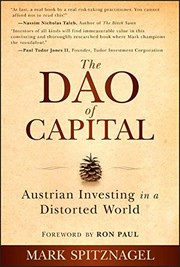
Mark Spitznagel · 2013

Austrian roundabout investing: accept losses now for a stronger position later.
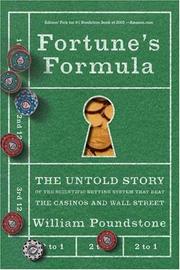
William Poundstone · 2005

The Kelly criterion for sizing bets, from Bell Labs to casinos and hedge funds.

Recommended by: Mohnish Pabrai
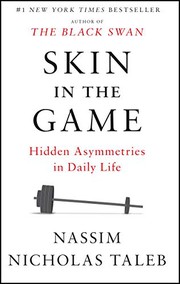
Nassim Nicholas Taleb · 2018

Incerto volume 5

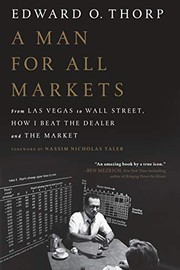
Edward O. Thorp · 2017

From beating blackjack with maths to pricing warrants and running a hedge fund.
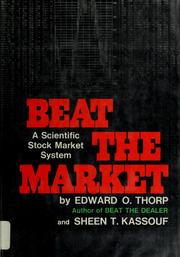
Edward O. Thorp, Sheen T. Kassouf · 1967

A method to price warrants and convertibles and hedge them against the stock.

Edward O. Thorp, Leonard C. MacLean, William T. Ziemba · 2010

Edited volume of collected papers.

Recommended by: Nassim Nicholas Taleb

Where it sits in the reference 3

Portfolio & risk
Mental models
Mental models

Topics

Investing