Updates

  1. Person pages list letters, writing, profiles and links as sortable tables with filters, and show each person's companies as links; Fund letters show each letter's description in its own column.
  2. Experts show a checked job title and a short description of each person; 30 more people have photographs.
  3. Every company, fund, university and publication the experts work for has a page listing the people there.
  4. Fund letters show each letter's thesis and filter by it; 225 person pages list the essays, columns and newsletter issues the person wrote.
  5. Person pages list every essay and newsletter issue a person wrote, and their own books as a table in List view.
  6. Recommends shows the five largest kinds of book and the rest under More; browse pictures load sooner.
  7. Podcasts and talks link the original episode, filter by Audio and video or Press, and list each publisher once.
  8. Pages are wider, Recommends has List and Grid, and a filter clicked again turns off.
  9. Book cards sit in a ruled grid with Open Library and Goodreads links and each book's one-line note.
  10. Funds is now Investors; each investor's styles are buttons that filter the table.
  11. Podcasts and talks on a person's page filter by year and publisher and show as a list or a grid of pictures.
  12. Quotes show only people's own words: 472 summaries written by list sites are gone.
  13. Country pages open from Browse again, and every link on the shelf lands on a page.
  14. Subject and person pages show their sections as tabs, and each book appears once on a person's page.
  15. Book cards show the quote, who said it and the source; grids show five cards to a row.
  16. On a phone, a menu holds the sections, search, Updates, Feedback and dark mode.
  17. Feedback takes a screenshot of the page with no browser prompt, opens a screenshot full size when you click it, and clears itself once sent.
  18. Book cards are centred, search names the topic each book sits in, and any text cut short shows whole on hover.
  19. Search groups its results by kind: people, companies, geographies, subjects, topics, books, funds, fund letters and papers.
  20. The Books table lists who recommended each book by name, and the browser tab names the section you are in.
  21. Feedback can take a screenshot of the page, or one you paste or choose, and opens in the corner beside Updates.
  22. Each rail button reopens its section where you left it, and Browse, Table and People show on every book and subject page.
  23. Filters grey out choices that hold nothing instead of hiding them, and Books › People filters by authors or recommenders.
  24. Feedback takes a subject line and up to three screenshots.
  25. Biographies are grouped by the person they are about: 41 new pages, from Abraham Lincoln to Lee Kuan Yew.
  26. Sport splits into 23 sports, and Religion into one topic per faith.
  27. Book lists show as cards: the cover, one recommendation quote and every recommender by name.
  28. Seventeen subjects that had two or three pages under different names now have one page each.
  29. Every page lists its Experts as authors and recommenders, with a link to them on the Experts tab.
  30. Economics, Financial history, Financial panics and Accounting are subjects of their own, with one page per financial crisis.
  31. Book, person and subject pages open inside the app, so the tabs stay in view.
  32. 996 more book covers, and photographs or logos for 227 more people and companies.
  33. Books › Browse shows every subject as cards, and the rail holds Fund letters, Papers, Experts, Books and Funds.
  34. Every topic over 150 books splits into narrower topics, each with a page of its own.

Send feedback

What is it?
Screenshots, up to 3 (optional)
or paste one with Ctrl+V

We use your email only to reply to you.

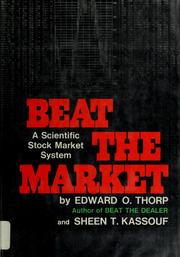
Beat the Market

Beat the Market

Edward O. Thorp, Sheen T. Kassouf
1967
T1 221 pages · about 3h 41m to read Open Librarygoodreads

The convertible and warrant hedge that started quantitative arbitrage.

Summary

Thorp and Kassouf published the first systematic method for pricing and hedging convertible securities, and it is the foundation of what became convertible arbitrage and, more broadly, of derivative hedging as a trading business.

The method works from the relationship between a warrant or convertible bond and the underlying common stock. Thorp and Kassouf derived an empirical formula for the value of a warrant as a function of the stock price, the exercise price and the time to expiry, and showed that warrants were frequently overpriced relative to that value. The trade is to sell the overpriced warrant and buy a calculated quantity of the underlying stock, so that small movements in the stock price leave the position's value unchanged. They give the hedge ratio calculation, which is the derivative of the warrant value with respect to the stock price, and explain that the ratio must be adjusted as the stock moves, which is delta hedging described before the term existed.

The book predates Black and Scholes by six years. Thorp's formula was empirical rather than derived from a no-arbitrage argument, which is what Black, Scholes and Merton supplied, but the practical trading implication is the same.

The specific market conditions described are from the 1960s and the warrant mispricings the book identifies no longer exist at that scale, precisely because the book and its successors eliminated them. It is worth reading for the reasoning, which is unusually clear, and as the origin of hedged derivative trading as an investment approach.

Key takeaways 7

  1. A warrant or convertible can be hedged against its underlying stock so that small price movements leave the combined position unchanged.
  2. The correct hedge ratio is the rate of change of the derivative's value with respect to the stock price, and it must be adjusted as the stock moves.
  3. Warrants were systematically overpriced in the 1960s market, and selling them hedged produced returns with little exposure to market direction.
  4. A relationship between two related securities can be traded even when the direction of either is unknown, which is the foundation of arbitrage as a business.
  5. An empirical pricing relationship is sufficient for trading even without a theoretical derivation, which Thorp demonstrated six years before Black and Scholes.
  6. The value of a warrant depends on the volatility of the underlying stock and the time remaining, which is why identical stock prices support different warrant prices.
  7. Publishing a profitable method eliminates it, and the mispricings described here disappeared as the technique spread.

Who should read it

Investors interested in the origin of hedged derivative trading and the clearest early statement of how a delta hedge works.

About Edward O. Thorp

Mathematician; founder, Princeton/Newport Partners 1969-1988 and Ridgeline Partners 1994-2002

Turned the Kelly criterion and warrant-pricing math into the first quantitative hedge fund, and his books are primary sources for both card counting and convertible arbitrage.

Ridgeline Partners, Princeton/Newport Partners

Similar books 6

Chosen by shared topics, the entries that hold them, and the people who recommended both.
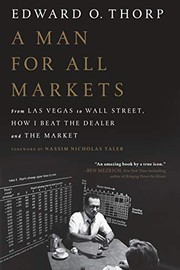
Edward O. Thorp · 2017

From beating blackjack with maths to pricing warrants and running a hedge fund.

Edward O. Thorp, Leonard C. MacLean, William T. Ziemba · 2010

Edited volume of collected papers.

Recommended by: Nassim Nicholas Taleb
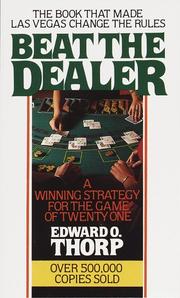
Edward O. Thorp · 1962

The first proven way to beat blackjack, by counting the cards left in the deck.

Marcos López de Prado · 2018

Why standard machine learning fails on market data, and how to avoid false backtests.
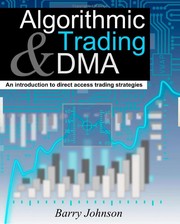
Barry Johnson · 2010

Execution algorithms and direct market access, from the desk.
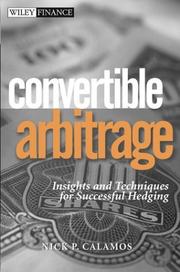
Nick P. Calamos · 2003

How convertible arbitrage hedges a convertible's stock, credit and volatility risk.

Where it sits in the reference 4

Investors
Assets
Portfolio & risk
Investment styles

Topics

Investing