
The Lindy Effect
For non-perishables - ideas, institutions, business models - expected remaining life grows with age, because each year survived is evidence of robustness. Investors use it as a base rate for durability: a franchise that has repelled competitors for fifty years earns a longer forecast than one that has managed five. The burden of proof sits with whoever says this time is different.
Start here
- Same as EverMorgan Housel, 2023
- AntifragileNassim Nicholas Taleb, 2012
- Skin in the GameNassim Nicholas Taleb, 2018
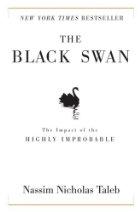
Rare, unforeseen, high-impact events drive history, explained only after the fact.
“The message of The Black Swan is how important it is to realize that the things everyone rules out can still come to pass.” — Howard Marks
Source: Oaktree memo 'The Limits to Negativism'
Recommended by: Howard Marks, Marc Andreessen, Nat Eliason and 18 others
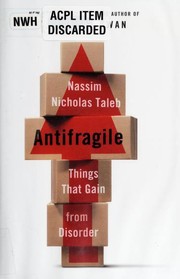
Incerto volume 4
“Nassim Taleb, author of the new book Antifragile, praises volatility and criticises those who would artificially damp it at great unseen cost. Taleb advises us to be 'anti-fragile'. This is exactly…” — Seth Klarman
Source: Klarman on Taleb's praise of volatility and what Baupost strives for
Recommended by: Mohnish Pabrai, Nat Eliason and 25 others

Incerto volume 5
Recommended by: Nat Eliason, Ana Fabrega, Ben Horowitz and 12 others

What companies that lasted over a century have in common, from a Shell planner.
“Recently, I came across two books on long lived companies: ''The Living Company, Habits for Survival in a Turbulent Business Environment'' by Arie de Geus” — Prem Watsa
Source: Fairfax Financial 2020 Shareholders' Letter, p. 30
Recommended by: Mohnish Pabrai, Prem Watsa

“There are many things that never change” — Andrew Wilkinson
Source: Newsletter
Recommended by: Andrew Wilkinson
 Marc Andreessenrecommends 3 books here
 Matt Mullenwegrecommends 3 books here
 Naval Ravikantrecommends 3 books here
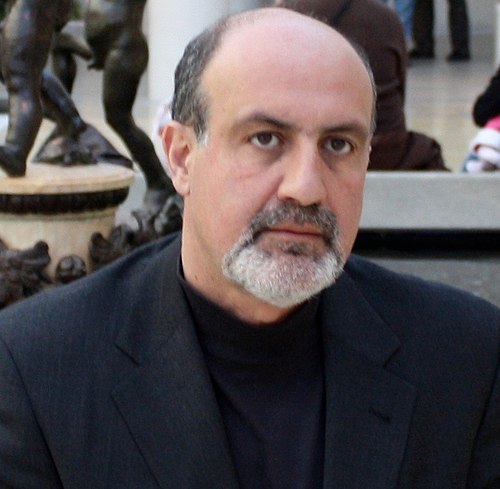 Nassim Nicholas Talebrecommends 2 books here
 Mohnish Pabrairecommends 2 books here
 Changpeng Zhaorecommends 2 books here
 James Altucherrecommends 2 books here
 Patrick Collisonrecommends 2 books here
Show all 46
 Vinod Khoslarecommends 2 books here
 Vlad Tenevrecommends 2 books here
 Ben Horowitzrecommends 1 book here
 Daniel Kahnemanrecommends 1 book here
 Howard Marksrecommends 1 book here
 Peter Thielrecommends 1 book here
 Prem Watsarecommends 1 book here
 Seth Klarmanrecommends 1 book here
 Ryan Holidayrecommends 1 book here
 Simon Sinekrecommends 1 book here
 Albert Wengerrecommends 1 book here
 Bill Gatesrecommends 1 book here
 Chris Dixonrecommends 1 book here
 Ev Williamsrecommends 1 book here
 Jeff Bezosrecommends 1 book here
 Keith Raboisrecommends 1 book here
 Ryan Petersonrecommends 1 book here
 Tim Ferrissrecommends 1 book here
 Tobi Lütkerecommends 1 book here
 Tom Bilyeurecommends 1 book here
- Half Life: The Decay of KnowledgeShane Parrish · essay · How fast facts and advantages expire.
- Expiring vs. Permanent SkillsMorgan Housel · essay · A Lindy test for which knowledge keeps paying.
- What Is a Black Swan?Shane Parrish · essay · Rare, high-impact events that models price at zero.
- Everything Is CyclicalMorgan Housel · essay · Booms create the busts that follow them.