
The Efficient Market Hypothesis
The claim that prices absorb available information fast enough that trading on it yields nothing after costs - a model with documented cracks in momentum, the value premium and crashes far too violent for its statistics. Use it as the null hypothesis: assume the price is right until you can name the structural reason it is not. It is why cheap index funds beat most managers, and why an edge you cannot articulate is not an edge.
Start here
- A Random Walk Down Wall StreetBurton G. Malkiel, 1973
- The Myth of the Rational MarketJustin Fox, 2009
- Adaptive MarketsAndrew W. Lo, 2017
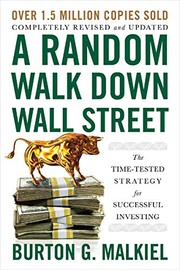
Stock prices follow a random walk, so a low-cost index fund beats stock picking.
Recommended by: Nat Eliason, Mohnish Pabrai
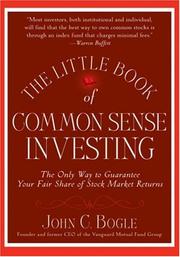
After costs, most investors trail the market, so hold a low-cost index fund.
Recommended by: Mohnish Pabrai, The Barefoot Investor and 4 others
How Markowitz, Sharpe, Fama, Black and Scholes built the theory of modern finance.

“In his excellent book, Inefficient Markets, Andrei Shleifer describes the three arguments that comprise the theoretical foundation for market efficiency.” — Michael Mauboussin
Source: Capital Ideas Revisited (Legg Mason Capital Management)
Recommended by: Michael Mauboussin

Recommended by: Mohnish Pabrai
Markets pay skilled active managers; a survey of the strategies they run.


How economics copied the maths of 19th-century physics, and what that cost it.
“there's a wonderful book called More Heat Than Light by a professor named Phil Mirowski, which documents how economists mapped over equations from Newtonian physics” — Michael Mauboussin
Source: The Tim Ferriss Show #659 — official transcript
Recommended by: Michael Mauboussin, Eric Weinstein

The cross-sectional testing methods behind every factor claim.
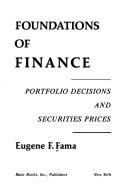
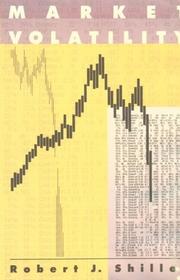
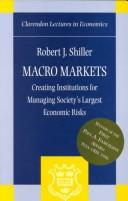
The statistical tools of empirical finance and the questions they test.

Recommended by: Mohnish Pabrai
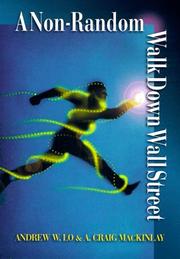

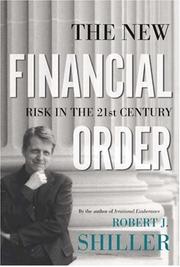
Recommended by: Nassim Nicholas Taleb

Fischer Black's life and ideas, from option pricing on, that shaped modern finance.
Recommended by: Mohnish Pabrai

“his book An Engine Not a Camera (which I would highly recommend if you are interested in these topics)” — Michael Mauboussin
Source: The Wisdom and Whims of the Collective (Legg Mason Capital Management)
Recommended by: Michael Mauboussin
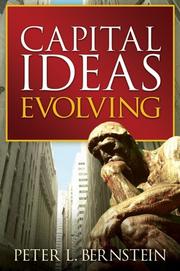

Recommended by: Mohnish Pabrai
Philosophical treatment of contingency and the practice of option trading
Recommended by: Nassim Nicholas Taleb
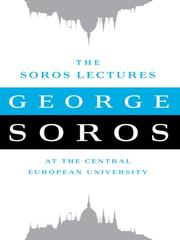

A quant on confusing models with reality, in finance and life
Recommended by: Nassim Nicholas Taleb

How physicists and mathematicians came to run money; useful context for Simons.
Recommended by: Eric Weinstein
A formal model of markets whose efficiency shifts as participants adapt.


 Andrew W. Lowrote 4 books here
 Robert J. Shillerwrote 3 books here
 Eugene F. Famawrote 2 books here
 George Soroswrote 2 books here
 John C. Boglewrote 1 book here
 Emanuel Dermanwrote 1 book here
 Mohnish Pabrairecommends 8 books here
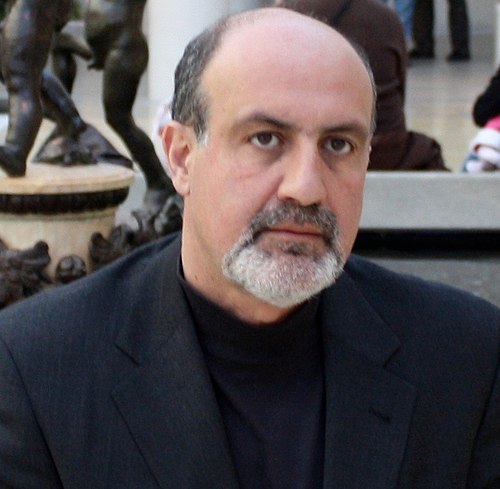 Nassim Nicholas Talebrecommends 3 books here
 Eric Weinsteinrecommends 2 books here
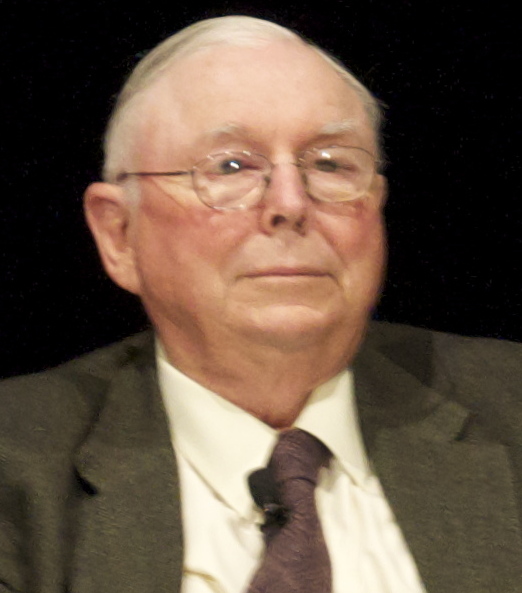 Charlie Mungerrecommends 1 book here
 Warren Buffettrecommends 1 book here
 Balaji S. Srinivasanrecommends 1 book here
 Palmer Luckeyrecommends 1 book here
- Who Is On the Other Side?Michael J. Mauboussin · paper · A framework for locating your actual source of edge.
- The Wisdom of CrowdsMichael J. Mauboussin · paper · When aggregation works and when it collapses into a mob.
- Myth Busting and the Variant PerceptionMichael J. Mauboussin · paper · Testing consensus beliefs against the actual data.
- The Limits of Crowd WisdomShane Parrish · essay · Crowds are wise only while members stay independent.