Updates

  1. Person pages list letters, writing, profiles and links as sortable tables with filters, and show each person's companies as links; Fund letters show each letter's description in its own column.
  2. Experts show a checked job title and a short description of each person; 30 more people have photographs.
  3. Every company, fund, university and publication the experts work for has a page listing the people there.
  4. Fund letters show each letter's thesis and filter by it; 225 person pages list the essays, columns and newsletter issues the person wrote.
  5. Person pages list every essay and newsletter issue a person wrote, and their own books as a table in List view.
  6. Recommends shows the five largest kinds of book and the rest under More; browse pictures load sooner.
  7. Podcasts and talks link the original episode, filter by Audio and video or Press, and list each publisher once.
  8. Pages are wider, Recommends has List and Grid, and a filter clicked again turns off.
  9. Book cards sit in a ruled grid with Open Library and Goodreads links and each book's one-line note.
  10. Funds is now Investors; each investor's styles are buttons that filter the table.
  11. Podcasts and talks on a person's page filter by year and publisher and show as a list or a grid of pictures.
  12. Quotes show only people's own words: 472 summaries written by list sites are gone.
  13. Country pages open from Browse again, and every link on the shelf lands on a page.
  14. Subject and person pages show their sections as tabs, and each book appears once on a person's page.
  15. Book cards show the quote, who said it and the source; grids show five cards to a row.
  16. On a phone, a menu holds the sections, search, Updates, Feedback and dark mode.
  17. Feedback takes a screenshot of the page with no browser prompt, opens a screenshot full size when you click it, and clears itself once sent.
  18. Book cards are centred, search names the topic each book sits in, and any text cut short shows whole on hover.
  19. Search groups its results by kind: people, companies, geographies, subjects, topics, books, funds, fund letters and papers.
  20. The Books table lists who recommended each book by name, and the browser tab names the section you are in.
  21. Feedback can take a screenshot of the page, or one you paste or choose, and opens in the corner beside Updates.
  22. Each rail button reopens its section where you left it, and Browse, Table and People show on every book and subject page.
  23. Filters grey out choices that hold nothing instead of hiding them, and Books › People filters by authors or recommenders.
  24. Feedback takes a subject line and up to three screenshots.
  25. Biographies are grouped by the person they are about: 41 new pages, from Abraham Lincoln to Lee Kuan Yew.
  26. Sport splits into 23 sports, and Religion into one topic per faith.
  27. Book lists show as cards: the cover, one recommendation quote and every recommender by name.
  28. Seventeen subjects that had two or three pages under different names now have one page each.
  29. Every page lists its Experts as authors and recommenders, with a link to them on the Experts tab.
  30. Economics, Financial history, Financial panics and Accounting are subjects of their own, with one page per financial crisis.
  31. Book, person and subject pages open inside the app, so the tabs stay in view.
  32. 996 more book covers, and photographs or logos for 227 more people and companies.
  33. Books › Browse shows every subject as cards, and the rail holds Fund letters, Papers, Experts, Books and Funds.
  34. Every topic over 150 books splits into narrower topics, each with a page of its own.

Send feedback

What is it?
Screenshots, up to 3 (optional)
or paste one with Ctrl+V

We use your email only to reply to you.

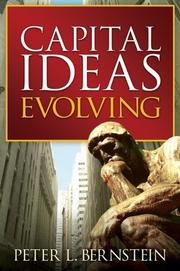
Capital Ideas Evolving

Capital Ideas Evolving

Peter L. Bernstein
2007
T4 304 pages · about 5h 4m to read Open Librarygoodreads

Summary

Bernstein wrote this as a sequel to Capital Ideas, which had traced the development of modern financial theory from Bachelier through Markowitz, Sharpe, Modigliani and Miller, Black, Scholes and Merton. This volume asks what happened to those ideas over the following two decades.

The structure alternates between theorists and practitioners. The theoretical chapters cover the challenges to the original framework: behavioural finance and the anomalies it documents, Andrew Lo's adaptive markets hypothesis which frames efficiency as an evolutionary outcome that varies with conditions, Robert Shiller's work on volatility and on risk-sharing institutions, and Paul Samuelson's later reflections. The practitioner chapters cover people applying the ideas: Bill Gross at PIMCO, David Swensen at Yale, Barclays Global Investors, Goldman Sachs Asset Management and others, examining how each translated theory into portfolios.

Bernstein's argument is that the theoretical framework has been modified rather than overturned. The efficient market hypothesis is not literally true, and behavioural finance has documented systematic departures, but the practical implications drawn from the original theory, including the difficulty of beating the market after costs, the value of diversification and the separation of alpha from beta, have survived and have been implemented at scale. He gives particular attention to portable alpha and to the separation of market exposure from active return, which he treats as the period's main practical innovation.

The book was published in 2007, immediately before the crisis tested several of the innovations it describes favourably, including portable alpha structures and the endowment model, both of which performed poorly in 2008. Bernstein was in his late eighties and the writing is less tight than his earlier work. Read Capital Ideas first, since this assumes it.

Key takeaways 7

  1. The theoretical framework of modern finance has been modified by behavioural findings rather than overturned by them.
  2. Separating market exposure from active return allows each to be sourced and priced independently, which is the period's main practical innovation.
  3. The adaptive markets hypothesis treats efficiency as an evolutionary outcome that varies with conditions rather than as a fixed property.
  4. Practical implications of the original theory, including the difficulty of beating the market after costs, survived the theoretical challenges.
  5. Institutional investors implemented academic ideas at scale in ways their originators had not anticipated.
  6. Portable alpha structures separate the source of active return from the market exposure a portfolio wants to hold.
  7. The book was published immediately before several of the innovations it describes favourably performed badly in the crisis.

Who should read it

Investors who have read Capital Ideas and want the account of how the theory developed and was implemented through 2007.

About Peter L. Bernstein

Founder, Peter L. Bernstein Inc.; founding editor of The Journal of Portfolio Management; economist and financial historian (1919-2009)

Against the Gods and Capital Ideas are the standard accounts of risk and of modern finance theory, read across the whole field.

Peter L. Bernstein Inc.

Similar books 6

Chosen by shared topics, the entries that hold them, and the people who recommended both.
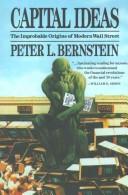
Peter L. Bernstein · 1992

How Markowitz, Sharpe, Fama, Black and Scholes built the theory of modern finance.

Lasse Heje Pedersen · 2015

Markets pay skilled active managers; a survey of the strategies they run.

Turan G. Bali, Robert F. Engle, Scott Murray · 2016

The cross-sectional testing methods behind every factor claim.

Where it sits in the reference 2

Investors
Mental models

Topics

Finance and MarketsInvesting