Updates

  1. Person pages list letters, writing, profiles and links as sortable tables with filters, and show each person's companies as links; Fund letters show each letter's description in its own column.
  2. Experts show a checked job title and a short description of each person; 30 more people have photographs.
  3. Every company, fund, university and publication the experts work for has a page listing the people there.
  4. Fund letters show each letter's thesis and filter by it; 225 person pages list the essays, columns and newsletter issues the person wrote.
  5. Person pages list every essay and newsletter issue a person wrote, and their own books as a table in List view.
  6. Recommends shows the five largest kinds of book and the rest under More; browse pictures load sooner.
  7. Podcasts and talks link the original episode, filter by Audio and video or Press, and list each publisher once.
  8. Pages are wider, Recommends has List and Grid, and a filter clicked again turns off.
  9. Book cards sit in a ruled grid with Open Library and Goodreads links and each book's one-line note.
  10. Funds is now Investors; each investor's styles are buttons that filter the table.
  11. Podcasts and talks on a person's page filter by year and publisher and show as a list or a grid of pictures.
  12. Quotes show only people's own words: 472 summaries written by list sites are gone.
  13. Country pages open from Browse again, and every link on the shelf lands on a page.
  14. Subject and person pages show their sections as tabs, and each book appears once on a person's page.
  15. Book cards show the quote, who said it and the source; grids show five cards to a row.
  16. On a phone, a menu holds the sections, search, Updates, Feedback and dark mode.
  17. Feedback takes a screenshot of the page with no browser prompt, opens a screenshot full size when you click it, and clears itself once sent.
  18. Book cards are centred, search names the topic each book sits in, and any text cut short shows whole on hover.
  19. Search groups its results by kind: people, companies, geographies, subjects, topics, books, funds, fund letters and papers.
  20. The Books table lists who recommended each book by name, and the browser tab names the section you are in.
  21. Feedback can take a screenshot of the page, or one you paste or choose, and opens in the corner beside Updates.
  22. Each rail button reopens its section where you left it, and Browse, Table and People show on every book and subject page.
  23. Filters grey out choices that hold nothing instead of hiding them, and Books › People filters by authors or recommenders.
  24. Feedback takes a subject line and up to three screenshots.
  25. Biographies are grouped by the person they are about: 41 new pages, from Abraham Lincoln to Lee Kuan Yew.
  26. Sport splits into 23 sports, and Religion into one topic per faith.
  27. Book lists show as cards: the cover, one recommendation quote and every recommender by name.
  28. Seventeen subjects that had two or three pages under different names now have one page each.
  29. Every page lists its Experts as authors and recommenders, with a link to them on the Experts tab.
  30. Economics, Financial history, Financial panics and Accounting are subjects of their own, with one page per financial crisis.
  31. Book, person and subject pages open inside the app, so the tabs stay in view.
  32. 996 more book covers, and photographs or logos for 227 more people and companies.
  33. Books › Browse shows every subject as cards, and the rail holds Fund letters, Papers, Experts, Books and Funds.
  34. Every topic over 150 books splits into narrower topics, each with a page of its own.

Send feedback

What is it?
Screenshots, up to 3 (optional)
or paste one with Ctrl+V

We use your email only to reply to you.

Odds On

Odds On

Matt Hall
2016
T4 186 pages · about 3h 6m to read Open Librarygoodreads

Hall makes the evidence-based case for passive over active.

Summary

Matt Hall co-founded Hill Investment Group and wrote this as an argument for evidence-based investing aimed at individual investors and at advisers who want to change how they work. The position is the standard one derived from academic finance: markets are difficult to beat, costs and taxes are the reliably controllable variables, factor exposures explain most of the return differences between portfolios, and investor behaviour destroys more return than security selection creates.

Hall's contribution is less the argument than the account of adopting it. He describes his own start in a traditional brokerage environment selling active products, his encounter with the academic research and with Dimensional Fund Advisors, and the commercial difficulty of moving a practice to an approach that gives clients less to talk about. He argues that the adviser's real work is behavioural: preventing clients from acting on forecasts, from chasing performance, and from abandoning a plan during drawdowns.

The book is short and promotional in places, since Hall's firm sells the service he is describing. It contains no original research and readers wanting the evidence should go to the underlying academic work or to Swedroe and Berkin. Its value is as an accessible statement of the position and as an account of what changing an advisory practice actually costs.

Key takeaways 6

  1. Costs, taxes and investor behaviour are the variables an investor controls, and security selection is not among them.
  2. Factor exposures rather than manager skill explain most of the return differences between diversified portfolios.
  3. An adviser's principal work is preventing clients from acting on their own reactions to market movements.
  4. Hall argues that the commercial difficulty of evidence-based advice is that it gives the adviser little to appear busy about.
  5. Investors chase performance systematically, which means their realised returns fall below the returns of the funds they hold.
  6. A written plan agreed in advance is the only effective defence against decisions made during a drawdown.

Who should read it

Individual investors and advisers considering a move to a low-cost factor-based approach who want the argument stated plainly by a practitioner.

Similar books 6

Chosen by shared topics, the entries that hold them, and the people who recommended both.
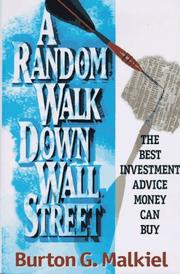
Burton G. Malkiel · 1973

Stock prices follow a random walk, so a low-cost index fund beats stock picking.

Recommended by: Nat Eliason, Mohnish Pabrai
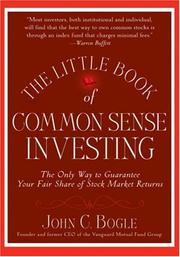
John C. Bogle · 2007

After costs, most investors trail the market, so hold a low-cost index fund.

Where it sits in the reference 2

Investment styles
Mental models

Topics

Investing