Updates

  1. Person pages list letters, writing, profiles and links as sortable tables with filters, and show each person's companies as links; Fund letters show each letter's description in its own column.
  2. Experts show a checked job title and a short description of each person; 30 more people have photographs.
  3. Every company, fund, university and publication the experts work for has a page listing the people there.
  4. Fund letters show each letter's thesis and filter by it; 225 person pages list the essays, columns and newsletter issues the person wrote.
  5. Person pages list every essay and newsletter issue a person wrote, and their own books as a table in List view.
  6. Recommends shows the five largest kinds of book and the rest under More; browse pictures load sooner.
  7. Podcasts and talks link the original episode, filter by Audio and video or Press, and list each publisher once.
  8. Pages are wider, Recommends has List and Grid, and a filter clicked again turns off.
  9. Book cards sit in a ruled grid with Open Library and Goodreads links and each book's one-line note.
  10. Funds is now Investors; each investor's styles are buttons that filter the table.
  11. Podcasts and talks on a person's page filter by year and publisher and show as a list or a grid of pictures.
  12. Quotes show only people's own words: 472 summaries written by list sites are gone.
  13. Country pages open from Browse again, and every link on the shelf lands on a page.
  14. Subject and person pages show their sections as tabs, and each book appears once on a person's page.
  15. Book cards show the quote, who said it and the source; grids show five cards to a row.
  16. On a phone, a menu holds the sections, search, Updates, Feedback and dark mode.
  17. Feedback takes a screenshot of the page with no browser prompt, opens a screenshot full size when you click it, and clears itself once sent.
  18. Book cards are centred, search names the topic each book sits in, and any text cut short shows whole on hover.
  19. Search groups its results by kind: people, companies, geographies, subjects, topics, books, funds, fund letters and papers.
  20. The Books table lists who recommended each book by name, and the browser tab names the section you are in.
  21. Feedback can take a screenshot of the page, or one you paste or choose, and opens in the corner beside Updates.
  22. Each rail button reopens its section where you left it, and Browse, Table and People show on every book and subject page.
  23. Filters grey out choices that hold nothing instead of hiding them, and Books › People filters by authors or recommenders.
  24. Feedback takes a subject line and up to three screenshots.
  25. Biographies are grouped by the person they are about: 41 new pages, from Abraham Lincoln to Lee Kuan Yew.
  26. Sport splits into 23 sports, and Religion into one topic per faith.
  27. Book lists show as cards: the cover, one recommendation quote and every recommender by name.
  28. Seventeen subjects that had two or three pages under different names now have one page each.
  29. Every page lists its Experts as authors and recommenders, with a link to them on the Experts tab.
  30. Economics, Financial history, Financial panics and Accounting are subjects of their own, with one page per financial crisis.
  31. Book, person and subject pages open inside the app, so the tabs stay in view.
  32. 996 more book covers, and photographs or logos for 227 more people and companies.
  33. Books › Browse shows every subject as cards, and the rail holds Fund letters, Papers, Experts, Books and Funds.
  34. Every topic over 150 books splits into narrower topics, each with a page of its own.

Send feedback

What is it?
Screenshots, up to 3 (optional)
or paste one with Ctrl+V

We use your email only to reply to you.

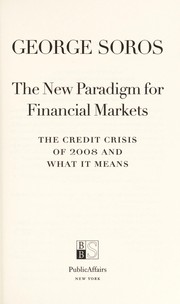
The Soros Lectures at the Central European U

The Soros Lectures at the Central European University

Summary

George Soros delivered these five lectures in Budapest in 2009, and they are the most compact statement of the intellectual framework he has developed across several books.

The framework has two propositions. Fallibility: participants in a situation cannot have complete knowledge of it, because their own thinking is part of what they are trying to understand. Reflexivity: participants' misconceptions affect the situation itself, which then affects their thinking, so that a two-way feedback loop operates between perception and reality. Soros argues that this makes social phenomena categorically different from natural ones and that economics has erred fundamentally by modelling markets as if the two were alike.

The applications follow. Financial markets do not tend toward equilibrium; they produce boom and bust sequences in which a prevailing bias and an underlying trend reinforce each other until the divergence from reality becomes unsustainable. Soros describes the stages of such a sequence and applies it to the credit expansion that ended in 2008, which he treats as the culmination of a super-bubble developed over decades. The final lectures cover open society, the political philosophy he takes from Karl Popper, and his argument that markets require regulation because they are inherently unstable rather than despite being efficient. The lectures are short and abstract. Reflexivity has never been formalised in a way that generates testable predictions, which is the standard objection and which Soros acknowledges.

Key takeaways 7

  1. Participants cannot have complete knowledge of a situation they are part of, because their own thinking is among the things to be understood.
  2. Reflexivity means participants' misconceptions alter the situation, which then alters their thinking, producing two-way feedback.
  3. Financial markets do not tend toward equilibrium, because prices affect the fundamentals that prices are supposed to reflect.
  4. Boom and bust sequences follow a pattern in which a prevailing bias and an underlying trend reinforce each other until the divergence becomes unsustainable.
  5. Soros treats the 2008 crisis as the culmination of a credit super-bubble that developed over several decades.
  6. Markets require regulation because they are inherently unstable rather than because regulation improves on efficient outcomes.
  7. Reflexivity has never been formalised into testable predictions, which is the standard objection to the framework.

Who should read it

Investors who want the clearest short statement of reflexivity and of the boom-bust framework from the person who trades on it.

About George Soros

Founder, Soros Fund Management and the Quantum Fund; founder, Open Society Foundations

The Alchemy of Finance introduced reflexivity, a primary-source framework macro traders and academics still build on.

Soros Fund Management, Open Society Foundations

Similar books 6

Chosen by shared topics, the entries that hold them, and the people who recommended both.

George Soros · 2019

Published in the UK as In Defence of Open Society.

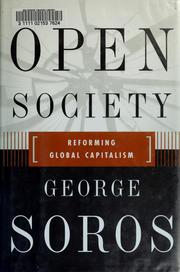
George Soros · 2000

The causes of instability in the global economy and the open society as a remedy.

Where it sits in the reference 2

Investors
Mental models

Topics

PhilosophyFinance and MarketsPolitics and GovernmentMoral and political philosophyPolitical philosophy and ideology