Updates

  1. Person pages list letters, writing, profiles and links as sortable tables with filters, and show each person's companies as links; Fund letters show each letter's description in its own column.
  2. Experts show a checked job title and a short description of each person; 30 more people have photographs.
  3. Every company, fund, university and publication the experts work for has a page listing the people there.
  4. Fund letters show each letter's thesis and filter by it; 225 person pages list the essays, columns and newsletter issues the person wrote.
  5. Person pages list every essay and newsletter issue a person wrote, and their own books as a table in List view.
  6. Recommends shows the five largest kinds of book and the rest under More; browse pictures load sooner.
  7. Podcasts and talks link the original episode, filter by Audio and video or Press, and list each publisher once.
  8. Pages are wider, Recommends has List and Grid, and a filter clicked again turns off.
  9. Book cards sit in a ruled grid with Open Library and Goodreads links and each book's one-line note.
  10. Funds is now Investors; each investor's styles are buttons that filter the table.
  11. Podcasts and talks on a person's page filter by year and publisher and show as a list or a grid of pictures.
  12. Quotes show only people's own words: 472 summaries written by list sites are gone.
  13. Country pages open from Browse again, and every link on the shelf lands on a page.
  14. Subject and person pages show their sections as tabs, and each book appears once on a person's page.
  15. Book cards show the quote, who said it and the source; grids show five cards to a row.
  16. On a phone, a menu holds the sections, search, Updates, Feedback and dark mode.
  17. Feedback takes a screenshot of the page with no browser prompt, opens a screenshot full size when you click it, and clears itself once sent.
  18. Book cards are centred, search names the topic each book sits in, and any text cut short shows whole on hover.
  19. Search groups its results by kind: people, companies, geographies, subjects, topics, books, funds, fund letters and papers.
  20. The Books table lists who recommended each book by name, and the browser tab names the section you are in.
  21. Feedback can take a screenshot of the page, or one you paste or choose, and opens in the corner beside Updates.
  22. Each rail button reopens its section where you left it, and Browse, Table and People show on every book and subject page.
  23. Filters grey out choices that hold nothing instead of hiding them, and Books › People filters by authors or recommenders.
  24. Feedback takes a subject line and up to three screenshots.
  25. Biographies are grouped by the person they are about: 41 new pages, from Abraham Lincoln to Lee Kuan Yew.
  26. Sport splits into 23 sports, and Religion into one topic per faith.
  27. Book lists show as cards: the cover, one recommendation quote and every recommender by name.
  28. Seventeen subjects that had two or three pages under different names now have one page each.
  29. Every page lists its Experts as authors and recommenders, with a link to them on the Experts tab.
  30. Economics, Financial history, Financial panics and Accounting are subjects of their own, with one page per financial crisis.
  31. Book, person and subject pages open inside the app, so the tabs stay in view.
  32. 996 more book covers, and photographs or logos for 227 more people and companies.
  33. Books › Browse shows every subject as cards, and the rail holds Fund letters, Papers, Experts, Books and Funds.
  34. Every topic over 150 books splits into narrower topics, each with a page of its own.

Send feedback

What is it?
Screenshots, up to 3 (optional)
or paste one with Ctrl+V

We use your email only to reply to you.

Soros on Soros: Staying Ahead of the Curve

Soros on Soros: Staying Ahead of the Curve

George Soros
1995
T3 360 pages · about 6h to read Open Librarygoodreads

Summary

This book consists of extended interviews with George Soros conducted by Byron Wien and Krisztina Koenen, covering his life, his investment philosophy and his political views. It was published in 1995, after the 1992 sterling trade had made him publicly known.

The investment sections state reflexivity more accessibly than The Alchemy of Finance does. Soros argues that market participants act on views that are necessarily imperfect, that their actions change the fundamentals they are assessing, and that this two-way connection means markets do not tend toward equilibrium. He describes how he uses this in practice: forming a hypothesis about a prevailing bias and the trend it is affecting, taking a position, and treating the market's behaviour as a test of the hypothesis rather than as noise. He describes his practice of looking for the flaw in his own thesis, his use of physical symptoms including back pain as a signal that something in the portfolio is wrong, and his willingness to reverse a position entirely.

The sterling trade is discussed directly: the argument that the exchange rate mechanism required Britain to hold a rate incompatible with its domestic conditions, that the Bundesbank would not cut rates to help, and that the position was therefore asymmetric because the downside was limited by the band.

The biographical material covers Budapest under Nazi occupation, the London years and the philosophical influence of Karl Popper, which is the source of the fallibility argument.

The interview form means the ideas are stated without development, and Soros himself acknowledges that reflexivity has not been formalised into anything testable. The book predates his later foundations work, the 1997 and 1998 losses and the fund's transition to a family office.

Key takeaways 7

  1. Market participants act on views that are necessarily imperfect, and their actions change the fundamentals those views concern.
  2. A market trend and a prevailing misconception together create the conditions for a boom and bust sequence.
  3. Soros treats a position as a test of a hypothesis, so market behaviour that contradicts the thesis is information rather than noise.
  4. Looking actively for the flaw in one's own thesis is the practical discipline he claims separates him from other managers.
  5. The 1992 sterling position was attractive because the exchange rate band limited the downside while the upside was large.
  6. A fixed exchange rate becomes indefensible when the domestic conditions it implies are politically unacceptable.
  7. Being willing to reverse a position entirely, rather than reducing it, follows from treating positions as hypotheses.

Who should read it

Investors who want Soros's framework in accessible interview form rather than in the more difficult version he wrote himself.

About George Soros

Founder, Soros Fund Management and the Quantum Fund; founder, Open Society Foundations

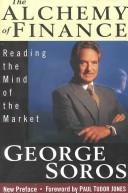
The Alchemy of Finance introduced reflexivity, a primary-source framework macro traders and academics still build on.

Soros Fund Management, Open Society Foundations

Similar books 6

Chosen by shared topics, the entries that hold them, and the people who recommended both.

George Soros · 1987

Reflexivity, where beliefs move prices and prices move facts, tested in a live diary.

“The Alchemy joins Reminiscences of a Stock Operator as a timeless instructional guide to the marketplace.” — Paul Tudor Jones

Source: Tudor Jones pairing it with Reminiscences of a Stock Operator

Recommended by: Guy Spier, Paul Tudor Jones, Peter Cundill and 3 others

Michael T. Kaufman · 2002

George Soros's life from wartime Europe to finance and philanthropy.

Recommended by: Mohnish Pabrai

Robert Slater · 1996

Journalistic and secondary; Soros declined to participate.

Recommended by: Mohnish Pabrai

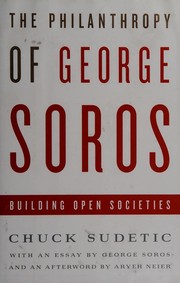
Chuck Sudetic · 2011

George Soros's Open Society foundations and what they funded.

Where it sits in the reference 4

Investors
Assets
Mental models
Biographies

Topics

InvestingBiography and MemoirInvestors, Traders and Gamblers