Updates

  1. Person pages list letters, writing, profiles and links as sortable tables with filters, and show each person's companies as links; Fund letters show each letter's description in its own column.
  2. Experts show a checked job title and a short description of each person; 30 more people have photographs.
  3. Every company, fund, university and publication the experts work for has a page listing the people there.
  4. Fund letters show each letter's thesis and filter by it; 225 person pages list the essays, columns and newsletter issues the person wrote.
  5. Person pages list every essay and newsletter issue a person wrote, and their own books as a table in List view.
  6. Recommends shows the five largest kinds of book and the rest under More; browse pictures load sooner.
  7. Podcasts and talks link the original episode, filter by Audio and video or Press, and list each publisher once.
  8. Pages are wider, Recommends has List and Grid, and a filter clicked again turns off.
  9. Book cards sit in a ruled grid with Open Library and Goodreads links and each book's one-line note.
  10. Funds is now Investors; each investor's styles are buttons that filter the table.
  11. Podcasts and talks on a person's page filter by year and publisher and show as a list or a grid of pictures.
  12. Quotes show only people's own words: 472 summaries written by list sites are gone.
  13. Country pages open from Browse again, and every link on the shelf lands on a page.
  14. Subject and person pages show their sections as tabs, and each book appears once on a person's page.
  15. Book cards show the quote, who said it and the source; grids show five cards to a row.
  16. On a phone, a menu holds the sections, search, Updates, Feedback and dark mode.
  17. Feedback takes a screenshot of the page with no browser prompt, opens a screenshot full size when you click it, and clears itself once sent.
  18. Book cards are centred, search names the topic each book sits in, and any text cut short shows whole on hover.
  19. Search groups its results by kind: people, companies, geographies, subjects, topics, books, funds, fund letters and papers.
  20. The Books table lists who recommended each book by name, and the browser tab names the section you are in.
  21. Feedback can take a screenshot of the page, or one you paste or choose, and opens in the corner beside Updates.
  22. Each rail button reopens its section where you left it, and Browse, Table and People show on every book and subject page.
  23. Filters grey out choices that hold nothing instead of hiding them, and Books › People filters by authors or recommenders.
  24. Feedback takes a subject line and up to three screenshots.
  25. Biographies are grouped by the person they are about: 41 new pages, from Abraham Lincoln to Lee Kuan Yew.
  26. Sport splits into 23 sports, and Religion into one topic per faith.
  27. Book lists show as cards: the cover, one recommendation quote and every recommender by name.
  28. Seventeen subjects that had two or three pages under different names now have one page each.
  29. Every page lists its Experts as authors and recommenders, with a link to them on the Experts tab.
  30. Economics, Financial history, Financial panics and Accounting are subjects of their own, with one page per financial crisis.
  31. Book, person and subject pages open inside the app, so the tabs stay in view.
  32. 996 more book covers, and photographs or logos for 227 more people and companies.
  33. Books › Browse shows every subject as cards, and the rail holds Fund letters, Papers, Experts, Books and Funds.
  34. Every topic over 150 books splits into narrower topics, each with a page of its own.

Send feedback

What is it?
Screenshots, up to 3 (optional)
or paste one with Ctrl+V

We use your email only to reply to you.

The Strategic Dividend Investor

The Strategic Dividend Investor

Daniel Peris
2011
T4 177 pages · about 2h 57m to read Open Librarygoodreads

Peris argues dividends, not multiple expansion, drive real returns.

Summary

Daniel Peris manages dividend-focused portfolios and holds a doctorate in history, and this book argues that the dividend rather than capital appreciation should be understood as the primary source of equity return.

His historical argument is that for most of the history of equity investing, investors bought shares for the income they produced, and the expectation that returns would come principally from price appreciation is a recent development dating from the postwar period. He documents the long-run decomposition of American equity returns into dividend income, dividend growth and change in valuation, and shows that the first two account for the great majority over long horizons while the third has contributed most of the variation.

His practical argument follows. An investor buying for income can assess the sustainability and growth of a company's cash distribution, which is a tractable analytical problem, whereas an investor buying for appreciation must forecast what someone else will pay, which is not. He sets out how to analyse dividend sustainability, coverage and growth, what payout ratios indicate in different industries, and how to build a portfolio on this basis. He is critical of the treatment of buybacks as equivalent to dividends, arguing that they are discretionary and frequently poorly timed. The book is more historically grounded than most dividend investing advocacy. Its principal weakness is that it does not seriously address the tax disadvantage of dividends for taxable investors in many jurisdictions.

Key takeaways 7

  1. Dividend income and dividend growth account for the great majority of long-run equity returns, with valuation change contributing most of the variation.
  2. The expectation that equity returns come principally from price appreciation is a recent development rather than the historical norm.
  3. An investor buying for income can analyse cash distribution sustainability, which is tractable, rather than forecasting what others will pay.
  4. Buybacks are discretionary and frequently badly timed, so treating them as equivalent to dividends is a mistake.
  5. Payout ratios carry different information in different industries, and a single threshold applied across sectors misleads.
  6. Peris argues that a company committing to a dividend accepts a discipline that a company retaining cash does not.
  7. The book does not adequately address the tax disadvantage of dividends for taxable investors.

Who should read it

Investors considering an income-focused equity approach who want the historical return decomposition behind the argument.

Similar books 6

Chosen by shared topics, the entries that hold them, and the people who recommended both.
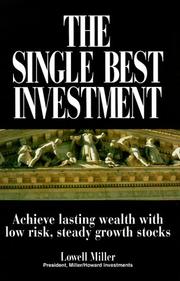
Lowell Miller · 1999

Miller on buying rising-dividend businesses and holding them.

Elroy Dimson, Paul Marsh, Mike Staunton · 2002

Stock, bond and bill returns for sixteen countries from 1900 to 2000.

Recommended by: Mohnish Pabrai

Christopher Mayer · 2015

Subtitled Stocks That Return 100-to-1 and How to Find Them; expanded edition 2025.

Recommended by: Mohnish Pabrai
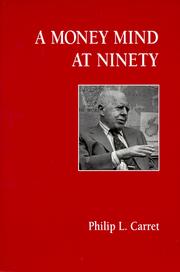
Philip L. Carret, Philip Carret · 1995

A fund manager of sixty years on investing, business and a long life.

Recommended by: Mohnish Pabrai
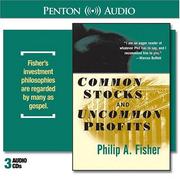
Philip Fisher · 1958

Buy a few outstanding growth companies, research them by scuttlebutt, and hold.

“The late Philip Fisher wrote several books that are very good [including] Common Stocks and Uncommon Profits.” — Arnold Van Den Berg

Source: Van Den Berg on Fisher's books

Recommended by: Arnold Van Den Berg, Bill Stewart and 10 others

Where it sits in the reference 2

Investment philosophy
Investment styles

Topics

Investing