Updates

  1. Person pages list letters, writing, profiles and links as sortable tables with filters, and show each person's companies as links; Fund letters show each letter's description in its own column.
  2. Experts show a checked job title and a short description of each person; 30 more people have photographs.
  3. Every company, fund, university and publication the experts work for has a page listing the people there.
  4. Fund letters show each letter's thesis and filter by it; 225 person pages list the essays, columns and newsletter issues the person wrote.
  5. Person pages list every essay and newsletter issue a person wrote, and their own books as a table in List view.
  6. Recommends shows the five largest kinds of book and the rest under More; browse pictures load sooner.
  7. Podcasts and talks link the original episode, filter by Audio and video or Press, and list each publisher once.
  8. Pages are wider, Recommends has List and Grid, and a filter clicked again turns off.
  9. Book cards sit in a ruled grid with Open Library and Goodreads links and each book's one-line note.
  10. Funds is now Investors; each investor's styles are buttons that filter the table.
  11. Podcasts and talks on a person's page filter by year and publisher and show as a list or a grid of pictures.
  12. Quotes show only people's own words: 472 summaries written by list sites are gone.
  13. Country pages open from Browse again, and every link on the shelf lands on a page.
  14. Subject and person pages show their sections as tabs, and each book appears once on a person's page.
  15. Book cards show the quote, who said it and the source; grids show five cards to a row.
  16. On a phone, a menu holds the sections, search, Updates, Feedback and dark mode.
  17. Feedback takes a screenshot of the page with no browser prompt, opens a screenshot full size when you click it, and clears itself once sent.
  18. Book cards are centred, search names the topic each book sits in, and any text cut short shows whole on hover.
  19. Search groups its results by kind: people, companies, geographies, subjects, topics, books, funds, fund letters and papers.
  20. The Books table lists who recommended each book by name, and the browser tab names the section you are in.
  21. Feedback can take a screenshot of the page, or one you paste or choose, and opens in the corner beside Updates.
  22. Each rail button reopens its section where you left it, and Browse, Table and People show on every book and subject page.
  23. Filters grey out choices that hold nothing instead of hiding them, and Books › People filters by authors or recommenders.
  24. Feedback takes a subject line and up to three screenshots.
  25. Biographies are grouped by the person they are about: 41 new pages, from Abraham Lincoln to Lee Kuan Yew.
  26. Sport splits into 23 sports, and Religion into one topic per faith.
  27. Book lists show as cards: the cover, one recommendation quote and every recommender by name.
  28. Seventeen subjects that had two or three pages under different names now have one page each.
  29. Every page lists its Experts as authors and recommenders, with a link to them on the Experts tab.
  30. Economics, Financial history, Financial panics and Accounting are subjects of their own, with one page per financial crisis.
  31. Book, person and subject pages open inside the app, so the tabs stay in view.
  32. 996 more book covers, and photographs or logos for 227 more people and companies.
  33. Books › Browse shows every subject as cards, and the rail holds Fund letters, Papers, Experts, Books and Funds.
  34. Every topic over 150 books splits into narrower topics, each with a page of its own.

Send feedback

What is it?
Screenshots, up to 3 (optional)
or paste one with Ctrl+V

We use your email only to reply to you.

On Writing Well

On Writing Well

William Zinsser
1976
288 pages · about 4h 48m to read Open Librarygoodreads

Summary

Zinsser wrote a manual for non-fiction writing based on the course he taught at Yale, and it has been revised through seven editions. Its central instruction is that clear writing follows from clear thinking, and that the practical work is the removal of everything that does not do work.

The principles section covers simplicity, clutter, style, the audience, words and usage. Zinsser argues that most sentences contain words that serve no purpose, that qualifiers weaken rather than protect a statement, that the passive voice conceals who did what, and that jargon exists to signal membership rather than to communicate. He instructs writers to strip every sentence to its cleanest components and to distrust any construction that appeared easily.

The methods section covers unity of tense, person and mood; the lead, which must persuade the reader to continue and which he treats as the most important sentence; the ending, which should stop rather than summarise; the use of quotation; and the discipline of rewriting, which he says is where writing actually happens.

The forms section covers specific types including interviews, travel, memoir, science and technical writing, business writing, sport and criticism. The final section on attitudes covers voice, enjoyment and the argument that writers should write for themselves rather than for an imagined audience. The book is directed at general non-fiction and is less useful for technical or argumentative writing where structure matters more than sentence craft. Strunk and White covers the mechanics more compactly. Zinsser's advice on the lead, on cutting, and on rewriting as the actual work is what most readers take from it.

Key takeaways 8

  1. Clear writing follows from clear thinking, so a muddled sentence usually indicates that the thought behind it was not resolved.
  2. Most sentences contain words doing no work, and the practical task is removing them rather than adding anything.
  3. Qualifiers weaken a statement rather than protecting it, and a writer who hedges every claim persuades nobody.
  4. The passive voice conceals who performed an action, which is why institutions use it and why writers should not.
  5. Jargon signals membership of a group rather than communicating anything to a reader outside it.
  6. The first sentence must persuade the reader to read the second, which makes the lead the most consequential decision in a piece.
  7. An ending should stop rather than summarise, and the best endings arrive earlier than the writer expects.
  8. Rewriting is where writing happens, and the belief that good writers produce clean first drafts prevents people from doing the actual work.

Who should read it

Anyone writing non-fiction regularly who wants sentence-level discipline and a method for cutting.

Who recommended it 5 · 1 direct

Derek Siversreported
Tim Ferrissreported

Similar books 6

Chosen by shared topics, the entries that hold them, and the people who recommended both.

Frank Luntz · 2007

Why some words persuade and others fail, from a political pollster.

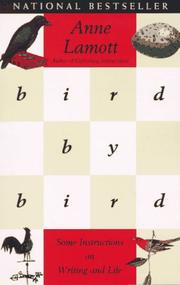
Anne Lamott · 1994

Writing advice focused on the fears and habits that stop people writing.

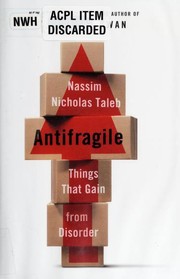
Nassim Nicholas Taleb · 2012

Incerto volume 4

“Nassim Taleb, author of the new book Antifragile, praises volatility and criticises those who would artificially damp it at great unseen cost. Taleb advises us to be 'anti-fragile'. This is exactly…” — Seth Klarman

Source: Klarman on Taleb's praise of volatility and what Baupost strives for

Recommended by: Mohnish Pabrai, Nat Eliason and 25 others
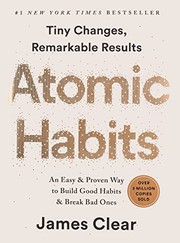
James Clear · 2016

Build habits by making them obvious, attractive, easy and satisfying.

T4 Bird
Bird by Anne Lamott

Recommended by: Nat Eliason

Where it sits in the reference 0

No entry holds this book yet. It reached the reference because someone recommended it.

Topics

Writing and Communication