Updates

  1. Person pages list letters, writing, profiles and links as sortable tables with filters, and show each person's companies as links; Fund letters show each letter's description in its own column.
  2. Experts show a checked job title and a short description of each person; 30 more people have photographs.
  3. Every company, fund, university and publication the experts work for has a page listing the people there.
  4. Fund letters show each letter's thesis and filter by it; 225 person pages list the essays, columns and newsletter issues the person wrote.
  5. Person pages list every essay and newsletter issue a person wrote, and their own books as a table in List view.
  6. Recommends shows the five largest kinds of book and the rest under More; browse pictures load sooner.
  7. Podcasts and talks link the original episode, filter by Audio and video or Press, and list each publisher once.
  8. Pages are wider, Recommends has List and Grid, and a filter clicked again turns off.
  9. Book cards sit in a ruled grid with Open Library and Goodreads links and each book's one-line note.
  10. Funds is now Investors; each investor's styles are buttons that filter the table.
  11. Podcasts and talks on a person's page filter by year and publisher and show as a list or a grid of pictures.
  12. Quotes show only people's own words: 472 summaries written by list sites are gone.
  13. Country pages open from Browse again, and every link on the shelf lands on a page.
  14. Subject and person pages show their sections as tabs, and each book appears once on a person's page.
  15. Book cards show the quote, who said it and the source; grids show five cards to a row.
  16. On a phone, a menu holds the sections, search, Updates, Feedback and dark mode.
  17. Feedback takes a screenshot of the page with no browser prompt, opens a screenshot full size when you click it, and clears itself once sent.
  18. Book cards are centred, search names the topic each book sits in, and any text cut short shows whole on hover.
  19. Search groups its results by kind: people, companies, geographies, subjects, topics, books, funds, fund letters and papers.
  20. The Books table lists who recommended each book by name, and the browser tab names the section you are in.
  21. Feedback can take a screenshot of the page, or one you paste or choose, and opens in the corner beside Updates.
  22. Each rail button reopens its section where you left it, and Browse, Table and People show on every book and subject page.
  23. Filters grey out choices that hold nothing instead of hiding them, and Books › People filters by authors or recommenders.
  24. Feedback takes a subject line and up to three screenshots.
  25. Biographies are grouped by the person they are about: 41 new pages, from Abraham Lincoln to Lee Kuan Yew.
  26. Sport splits into 23 sports, and Religion into one topic per faith.
  27. Book lists show as cards: the cover, one recommendation quote and every recommender by name.
  28. Seventeen subjects that had two or three pages under different names now have one page each.
  29. Every page lists its Experts as authors and recommenders, with a link to them on the Experts tab.
  30. Economics, Financial history, Financial panics and Accounting are subjects of their own, with one page per financial crisis.
  31. Book, person and subject pages open inside the app, so the tabs stay in view.
  32. 996 more book covers, and photographs or logos for 227 more people and companies.
  33. Books › Browse shows every subject as cards, and the rail holds Fund letters, Papers, Experts, Books and Funds.
  34. Every topic over 150 books splits into narrower topics, each with a page of its own.

Send feedback

What is it?
Screenshots, up to 3 (optional)
or paste one with Ctrl+V

We use your email only to reply to you.

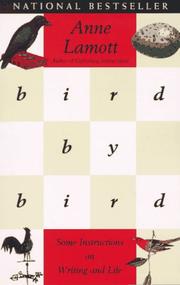
Bird by Bird

Bird by Bird

Anne Lamott
1994
239 pages · about 3h 59m to read Open Librarygoodreads

Summary

Lamott wrote a book about writing that spends most of its length on the psychological conditions that prevent it. The title comes from her brother's school report on birds, left until the night before, and her father's advice to take it bird by bird. Her practical instruction reduces to two rules: write short assignments, meaning only as much as you can see through a one-inch picture frame, and accept that first drafts will be bad.

The chapter on what she calls shitty first drafts is the one most cited. Lamott argues that all writers produce bad first drafts, that the belief in fluent first-pass writing is what stops people, and that the draft exists only to produce material for the second pass. She writes about the internal voices that criticise during composition and the necessity of writing anyway.

The craft material covers character, plot, dialogue and setting in conventional terms, and her advice on plot is that character produces it rather than the reverse. She writes about index cards for capturing observations, about jealousy of other writers, about writing groups, and about publication being far less satisfying than writers expect, which she states repeatedly.

The book is specific to literary fiction and personal essay rather than to business or technical writing, though the psychological material applies to any writing task. It is not a style manual and offers nothing on structure at the sentence level, for which Zinsser or Strunk and White serve better. Lamott's religious and recovery framing is present throughout and some readers find it intrusive. The humour is heavy and the digressions are frequent.

Key takeaways 8

  1. All first drafts are bad, and the belief that competent writers produce good first drafts is what prevents most people from writing.
  2. A writer should attempt only as much as fits inside a one-inch frame at a time, because the size of the whole project is what causes paralysis.
  3. Perfectionism prevents completion and should be treated as an obstacle rather than as a standard.
  4. Characters produce plot through what they do, so plot constructed in advance and imposed on characters produces dead writing.
  5. Writing every day at a set time matters more than inspiration or conditions.
  6. Publication does not deliver the satisfaction writers expect, so the work itself has to be the reason for doing it.
  7. Listening carefully to how people actually speak is the source of usable dialogue, which cannot be invented.
  8. Jealousy of other writers is universal and corrosive, and pretending otherwise makes it worse.

Who should read it

Anyone who needs to write regularly and is stopped by their own standards rather than by lack of technique.

Who recommended it 10

Maria Popovareported
Paul Grahamreported
Ramit Sethireported
Ryan Holidayreported
Scott Belskyreported
Susan Cainreported
Tim Ferrissreported

Similar books 6

Chosen by shared topics, the entries that hold them, and the people who recommended both.
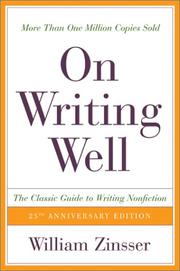
William Zinsser · 1976

A manual for non-fiction: clear writing comes from clear thinking.

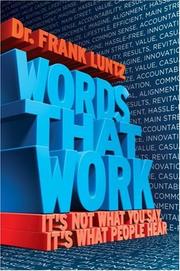
Frank Luntz · 2007

Why some words persuade and others fail, from a political pollster.

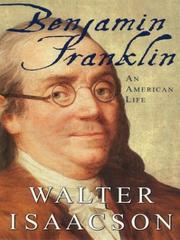
Walter Isaacson · 2003

Franklin's life as printer, scientist, diplomat and founder.

“…books I've recommended, highlighted to death, or forced on friends.” — Andrew Wilkinson

Source: Andrew Wilkinson's Bookshelf, neverenough.com

Recommended by: Alfred Lin, Andrew Wilkinson, Mohnish Pabrai and 7 others
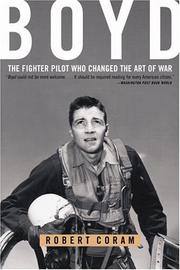
Robert Coram · 2002

The definitive account of John Boyd and the OODA loop. Boyd's contribution was to show that strategy is fundamentally about time and adaptation: the side that observes, orients, decides, and acts faster keeps the opponent reacting rather than acting. His ideas crossed into business, software, and lean manufacturing.

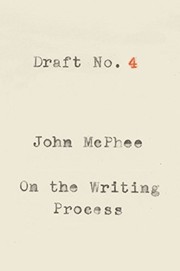
John McPhee · 2017

Recommended by: Tim Ferriss

Where it sits in the reference 0

No entry holds this book yet. It reached the reference because someone recommended it.

Topics

Writing and Communication