
Boyd: The Fighter Pilot Who Changed the Art of War
The definitive account of John Boyd and the OODA loop. Boyd's contribution was to show that strategy is fundamentally about time and adaptation: the side that observes, orients, decides, and acts faster keeps the opponent reacting rather than acting. His ideas crossed into business, software, and lean manufacturing.
Summary
Coram's biography covers John Boyd, an Air Force fighter pilot and theorist who developed energy manoeuvrability theory, drove the design of the F-15 and F-16, formulated the OODA loop, and influenced manoeuvre warfare doctrine including the 1991 Gulf War ground plan.
The technical contribution came first. Energy manoeuvrability theory quantified an aircraft's performance as a relationship between energy state and manoeuvring capability across the flight envelope, which allowed direct comparison between aircraft for the first time. Boyd calculated it using computer time he obtained without authorisation, and the results showed that American aircraft were inferior to Soviet ones in specific regimes.
The OODA loop, meaning observe, orient, decide, act, is the concept most widely borrowed. Boyd's argument was not that acting fast wins, which is the common simplification, but that operating inside an opponent's decision cycle produces confusion and disorientation, since the situation changes before they can act on their assessment. He treated orientation, which is shaped by culture, experience and prior information, as the decisive element rather than speed.
Coram documents the career cost: Boyd was passed over, marginalised and made enemies deliberately, and he told subordinates they could choose between doing something and being someone. The biography is admiring to the point of hagiography, and Coram treats Boyd's opponents uniformly as careerists. Boyd published almost nothing, which makes his ideas hard to check against a primary source. The business use of the OODA loop is generally the simplified speed version that Boyd did not argue.
Key takeaways 8
- Energy manoeuvrability theory quantified aircraft performance as a relationship between energy state and manoeuvring capability, which permitted direct comparison for the first time.
- The OODA loop describes a cycle of observe, orient, decide and act, and operating inside an opponent's cycle produces disorientation rather than merely being faster.
- Orientation, shaped by culture, experience and prior information, is the decisive element of the loop rather than speed.
- An opponent whose situation changes before they can act on their assessment becomes progressively less able to act at all.
- Boyd argued that people must choose between doing something significant and being someone significant, since the first requires accepting the cost to the second.
- Design requirements should be derived from what the pilot needs in combat rather than from what the technology permits, which drove the lightweight fighter programme.
- Institutional resistance to correct analysis is a function of what the institution has already committed to rather than of the analysis itself.
- Boyd published almost nothing, which means his ideas are known mainly through briefings and through accounts by others.
Who should read it
Operators and strategists who want the origin of the OODA loop stated properly rather than as a claim about speed, in an admiring biography.
Who recommended it 4 · 1 direct
Similar books 6
Chosen by shared topics, the entries that hold them, and the people who recommended both.

John Boyd's military strategy, including the OODA loop, applied to business.
Recommended by: Ryan Peterson
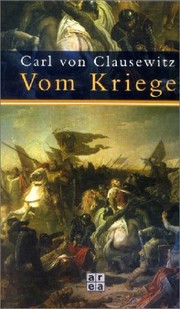
Clausewitz introduces friction, fog, and the political nature of conflict as irreducible elements of strategy. His insistence that war is a continuation of politics by other means is the foundational challenge to anyone who wants a purely technical theory of winning.
Recommended by: Ryan Holiday, Elon Musk, Reid Hoffman

Machiavelli's handbook on political strategy remains disturbing because it separates effectiveness from morality — a distinction every strategic thinker eventually has to confront. His analysis of how new rulers consolidate power is still the sharpest treatment of legitimacy under conditions of uncertainty.
Recommended by: Ryan Holiday, Stewart Brand, Fred Wilson and 2 others
Fifty-two laws of management and defence spending, each backed by data.
Liddell Hart's historical survey of military campaigns argues that dislocation — attacking an enemy's psychological equilibrium and logistics rather than their strength — is consistently more decisive than frontal assault. A direct critique of Clausewitz's legacy applied to 20th-century warfare.

Insider account of restructuring JSOC for speed of decision.
Recommended by: Patrick Collison, Changpeng Zhao and 1 other
Where it sits in the reference 4
Topics