Strategy: The Indirect Approach
Liddell Hart's historical survey of military campaigns argues that dislocation — attacking an enemy's psychological equilibrium and logistics rather than their strength — is consistently more decisive than frontal assault. A direct critique of Clausewitz's legacy applied to 20th-century warfare.
Similar books 6
Chosen by shared topics, the entries that hold them, and the people who recommended both.
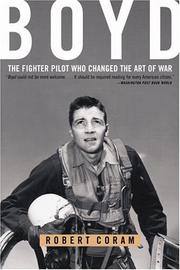
The definitive account of John Boyd and the OODA loop. Boyd's contribution was to show that strategy is fundamentally about time and adaptation: the side that observes, orients, decides, and acts faster keeps the opponent reacting rather than acting. His ideas crossed into business, software, and lean manufacturing.
Recommended by: Morgan Housel, Patrick O'Shaughnessy and 2 others
John Boyd's military strategy, including the OODA loop, applied to business.
Recommended by: Ryan Peterson
Clausewitz introduces friction, fog, and the political nature of conflict as irreducible elements of strategy. His insistence that war is a continuation of politics by other means is the foundational challenge to anyone who wants a purely technical theory of winning.
Recommended by: Ryan Holiday, Elon Musk, Reid Hoffman
Insider account of restructuring JSOC for speed of decision.
Recommended by: Patrick Collison, Changpeng Zhao and 1 other
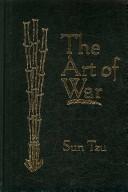
The original text on strategic positioning. Sun Tzu's core insight — that winning without fighting is the highest form of strategy — runs through everything that followed. Short enough to read in an afternoon, dense enough to argue about for a career.
Recommended by: Mohnish Pabrai, Evan Spiegel, Fred Wilson and 4 others

Machiavelli's handbook on political strategy remains disturbing because it separates effectiveness from morality — a distinction every strategic thinker eventually has to confront. His analysis of how new rulers consolidate power is still the sharpest treatment of legitimacy under conditions of uncertainty.
Recommended by: Ryan Holiday, Stewart Brand, Fred Wilson and 2 others
Where it sits in the reference 2
Topics