Leadership from war, sport and politics
Military treatises, accounts by commanders and coaches, and studies of political leaders, read for lessons on leading organisations.
Start here
- Master of the SenateRobert A. Caro, 2002
- Team of RivalsDoris Kearns Goodwin, 2003
- The Score Takes Care of ItselfBill Walsh, Steve Jamison, 2009
- It's Your ShipD. Michael Abrashoff, 2002
- Extreme OwnershipJocko Willink, Leif Babin, 2015
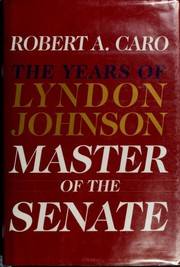
How Lyndon Johnson mastered the Senate's rules and became its majority leader.
Recommended by: Jim Collins, Marc Andreessen and 1 other

How Lincoln brought his three rivals for the 1860 nomination into his cabinet.
Recommended by: Bill Gates, Mohnish Pabrai, Jamie Dimon and 1 other

How a coach took the 49ers from 2 and 14 to three Super Bowls with set standards.
Recommended by: Nat Eliason, Ryan Holiday, David Cancel and 8 others

A naval captain on delegating authority to improve performance
Recommended by: Jim Collins
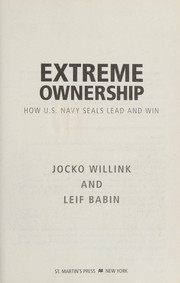
Navy SEAL leadership doctrine adapted to running teams and firms
Recommended by: Nat Eliason, Alfred Lin, Austin Rief and 9 others

Insider account of restructuring JSOC for speed of decision.
Recommended by: Patrick Collison, Changpeng Zhao and 1 other

The definitive account of John Boyd and the OODA loop. Boyd's contribution was to show that strategy is fundamentally about time and adaptation: the side that observes, orients, decides, and acts faster keeps the opponent reacting rather than acting. His ideas crossed into business, software, and lean manufacturing.
Recommended by: Morgan Housel, Patrick O'Shaughnessy and 2 others
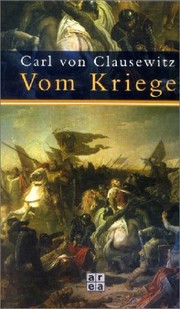
Clausewitz introduces friction, fog, and the political nature of conflict as irreducible elements of strategy. His insistence that war is a continuation of politics by other means is the foundational challenge to anyone who wants a purely technical theory of winning.
Recommended by: Ryan Holiday, Elon Musk, Reid Hoffman
Liddell Hart's historical survey of military campaigns argues that dislocation — attacking an enemy's psychological equilibrium and logistics rather than their strength — is consistently more decisive than frontal assault. A direct critique of Clausewitz's legacy applied to 20th-century warfare.
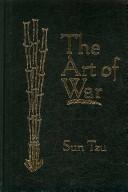
The original text on strategic positioning. Sun Tzu's core insight — that winning without fighting is the highest form of strategy — runs through everything that followed. Short enough to read in an afternoon, dense enough to argue about for a career.
Recommended by: Mohnish Pabrai, Evan Spiegel, Fred Wilson and 4 others

Machiavelli's handbook on political strategy remains disturbing because it separates effectiveness from morality — a distinction every strategic thinker eventually has to confront. His analysis of how new rulers consolidate power is still the sharpest treatment of legitimacy under conditions of uncertainty.
Recommended by: Ryan Holiday, Stewart Brand, Fred Wilson and 2 others

Marquet's account of transforming the USS Santa Fe from the worst-performing submarine in the Navy to the best. The specific mechanism — moving from leader-follower to leader-leader by pushing control down while moving competence and clarity up — is one of the most rigorously documented leadership case studies in print.
Recommended by: Brian Armstrong, Jason Fried, Simon Sinek


Recommended by: Mohnish Pabrai

John Boyd's military strategy, including the OODA loop, applied to business.
Recommended by: Ryan Peterson

Recommended by: Alfred Lin

Fifteen lessons on life and leadership from Nelson Mandela's example.
Recommended by: Richard Branson

Recommended by: Mohnish Pabrai


Recommended by: Patrick Collison


 Ryan Holidayrecommends 5 books here
 Mohnish Pabrairecommends 4 books here
 Bill Gatesrecommends 3 books here
 Patrick Collisonrecommends 3 books here
 Jim Collinsrecommends 2 books here
 Marc Andreessenrecommends 2 books here
 Reid Hoffmanrecommends 2 books here
 Alfred Linrecommends 2 books here
 Fred Wilsonrecommends 2 books here
 Keith Raboisrecommends 2 books here
Show all 49
 Richard Bransonrecommends 2 books here
 Ryan Petersonrecommends 2 books here
 Tom Bilyeurecommends 2 books here
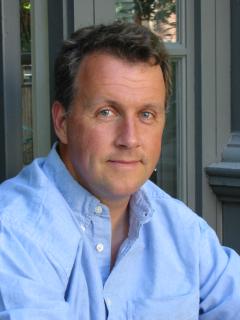 Paul Grahamrecommends 1 book here
 Peter Thielrecommends 1 book here
 Marc Benioffrecommends 1 book here
 Simon Sinekrecommends 1 book here
 Brian Armstrongrecommends 1 book here
 Casey Neistatrecommends 1 book here
 Changpeng Zhaorecommends 1 book here
 Daniel Ekrecommends 1 book here
 Doug McMillonrecommends 1 book here
 Drew Houstonrecommends 1 book here
 Elon Muskrecommends 1 book here
 Evan Spiegelrecommends 1 book here
 Garry Tanrecommends 1 book here
 Jack Dorseyrecommends 1 book here
 Jamie Dimonrecommends 1 book here
 Justin Kanrecommends 1 book here
 Ron Conwayrecommends 1 book here
 Sam Altmanrecommends 1 book here
 Satya Nadellarecommends 1 book here
 Scott Belskyrecommends 1 book here
 Stewart Brandrecommends 1 book here
 Stewart Butterfieldrecommends 1 book here
 Tim Ferrissrecommends 1 book here
 Tobi Lütkerecommends 1 book here
 Vlad Tenevrecommends 1 book here