Leadership
Books on how to lead people: trust, purpose, coaching, feedback and the conduct of executives.
Start here
- Execution: The Discipline of Getting Things DoneLarry Bossidy, Ram Charan, 2002
- Dare to LeadBrené Brown
- Leaders Eat LastSimon Sinek
- Leadership on the LineRonald A. Heifetz, Marty Linsky
- MultipliersLiz Wiseman
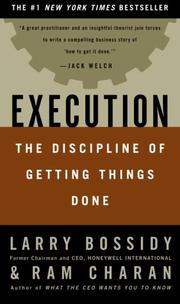
Execution is a discipline the CEO must lead, linking people, strategy and operations.
Recommended by: Mohnish Pabrai, Jamie Dimon
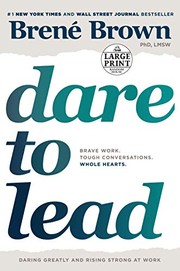
Brown's research on shame and vulnerability turns into a practical leadership argument: armor — the behaviors leaders adopt to avoid discomfort — is the main driver of organizational dysfunction. The book is dense with specific behaviors to practice and avoid, grounded in years of qualitative research.
Recommended by: Sheryl Sandberg
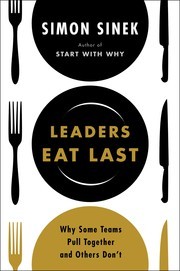
Sinek's second major book applies neuroscience — oxytocin, cortisol, dopamine — to explain why some work environments feel safe and others don't, and how leaders establish the Circle of Safety that determines whether teams will take the risks that produce performance. More substantive than Start With Why.
Recommended by: Alfred Lin, Julie Stevanja, Tom Bilyeu and 1 other
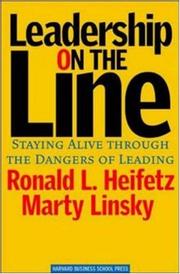
Heifetz and Linsky distinguish adaptive challenges — which require people to change their beliefs and behaviors — from technical problems that expertise can solve. Most leadership failures happen when people apply technical solutions to adaptive challenges. This is among the most important distinctions in the field.

Wiseman's research finding: some leaders act as Multipliers who bring out two times the intelligence of their teams; others are Diminishers who unintentionally suppress it. The taxonomy of specific behaviors (the Empire Builder, the Tyrant, the Know-It-All vs. their opposites) is precise enough to be self-diagnostic.

Scott's two-axis framework — care personally, challenge directly — gives a practical vocabulary for the feedback conversations managers routinely avoid. The quadrant model (Radical Candor, Ruinous Empathy, Obnoxious Aggression, Manipulative Insincerity) is one of the most operationally useful tools in management writing.
Recommended by: Aileen Lee, Brett Adcock, David Cancel and 7 others
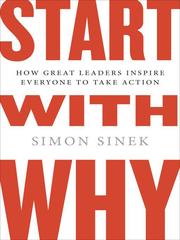
Sinek's Golden Circle (Why/How/What) is less empirically grounded than the rest of this list, but its core observation is accurate: people don't follow what you do, they follow why you do it. Useful for understanding how leaders communicate identity externally and why some inspire loyalty while others just manage compliance.
Recommended by: Richard Branson, Tony Hsieh, Alfred Lin and 4 others


A chief executive's advice on the art of leadership.
Recommended by: Mohnish Pabrai, David Cancel

Applies the Seven Habits to organisations: lead by fixed principles, not by values.
Recommended by: Mohnish Pabrai


Gandhi's principles restated as a leadership standard for executives
Recommended by: Mohnish Pabrai

Recommended by: Mohnish Pabrai

Recommended by: Mohnish Pabrai
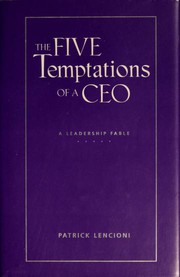
A fable of five temptations, starting with status over results, that sink CEOs.
Recommended by: Cindy Eckert
Recommended by: Mohnish Pabrai, Girish Mathrubootham and 2 others

Recommended by: Michael Batko
Bogle's speeches to Vanguard staff over its first 25 years, with commentary.
Recommended by: Mr. Money Mustache
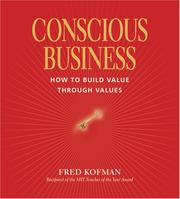
Seven qualities, such as unconditional responsibility, of people who make firms work.
Recommended by: Reid Hoffman, Sheryl Sandberg
Compiled from Investor's Business Daily profiles.

Recommended by: Mohnish Pabrai
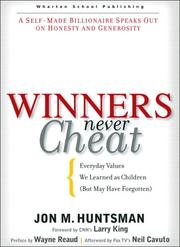
Recommended by: Mohnish Pabrai

Recommended by: Mohnish Pabrai, Ev Williams, Sam Altman and 1 other
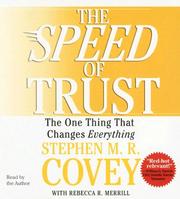
Trust as an economic variable: low trust adds cost and slows everything.
Recommended by: John Maeda

Recommended by: Mohnish Pabrai
How peer-group forums work; the method used by chief executives
Recommended by: Guy Spier
Recommended by: Mohnish Pabrai

Recommended by: Alfred Lin
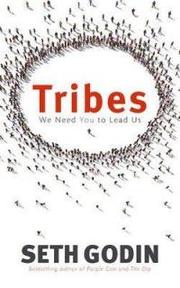
The internet makes it cheap to gather people around a shared interest; lead them.
Recommended by: Catriona Wallace
163 short chapters, each one practical idea about work, hiring and service.
Recommended by: Michael Batko
Recommended by: Mohnish Pabrai

Recommended by: Graham Duncan


Recommended by: Tom Bilyeu

Recommended by: Mohnish Pabrai

Recommended by: Mohnish Pabrai

Fifteen commitments for leading from curiosity instead of defensiveness.
Recommended by: Alex Lieberman, Austin Rief, Brian Armstrong and 3 others

Recommended by: Tim Ferriss, Ali Abdaal, Brian Armstrong


Leadership treated as the creation of meaning inside organisations
Recommended by: Reid Hoffman



How Bill Campbell coached the leaders of Google, Apple and Intuit.
Recommended by: Matt Mullenweg, Bryant Chou and 5 others

Interviews with leaders such as Jeff Bezos on how they lead.

How leaders drive hypergrowth by raising standards, focus and urgency.
Recommended by: Jason Calacanis, Terrance McArthur


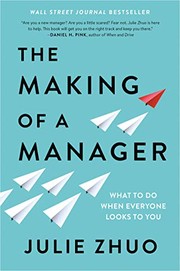
What a new manager needs to know about leading people, meetings, hiring and feedback.
Recommended by: Ali Abdaal, Jake Knapp, Stewart Butterfield
 Simon Sinekwrote 3 books here
 Stephen Coveywrote 2 books here
 John C. Boglewrote 1 book here
 David M. Rubensteinwrote 1 book here
 Eric Schmidtwrote 1 book here
 Seth Godinwrote 1 book here
 Brené Brownwrote 1 book here
 Jerry Colonnawrote 1 book here
Show all 13

 Mohnish Pabrairecommends 16 books here
 Alfred Linrecommends 3 books here
 Brian Armstrongrecommends 3 books here
 Sheryl Sandbergrecommends 3 books here
 Tom Bilyeurecommends 3 books here
 Reid Hoffmanrecommends 2 books here
 Arianna Huffingtonrecommends 2 books here
 Dustin Moskovitzrecommends 2 books here
Show all 55
 Justin Kanrecommends 2 books here
 Stewart Butterfieldrecommends 2 books here
 Ray Daliorecommends 1 book here
 Brad Feldrecommends 1 book here
 Guy Spierrecommends 1 book here
 Aileen Leerecommends 1 book here
 Brett Adcockrecommends 1 book here
 Changpeng Zhaorecommends 1 book here
 Chelsea Krostrecommends 1 book here
 Cindy Eckertrecommends 1 book here
 Drew Houstonrecommends 1 book here
 Ev Williamsrecommends 1 book here
 Jamie Dimonrecommends 1 book here
 Jason Calacanisrecommends 1 book here
 John Maedarecommends 1 book here
 Kirsten Greenrecommends 1 book here
 Matt Mullenwegrecommends 1 book here
 Patrick Bet-Davidrecommends 1 book here
 Richard Bransonrecommends 1 book here
 Ruth Poratrecommends 1 book here
 Ryan Petersonrecommends 1 book here
 Sam Altmanrecommends 1 book here
 Susan Wojcickirecommends 1 book here
 Tim Ferrissrecommends 1 book here
 Tobi Lütkerecommends 1 book here
 Tony Hsiehrecommends 1 book here
 Tony Robbinsrecommends 1 book here
 Trevor Ncuberecommends 1 book here