Updates

  1. Person pages list letters, writing, profiles and links as sortable tables with filters, and show each person's companies as links; Fund letters show each letter's description in its own column.
  2. Experts show a checked job title and a short description of each person; 30 more people have photographs.
  3. Every company, fund, university and publication the experts work for has a page listing the people there.
  4. Fund letters show each letter's thesis and filter by it; 225 person pages list the essays, columns and newsletter issues the person wrote.
  5. Person pages list every essay and newsletter issue a person wrote, and their own books as a table in List view.
  6. Recommends shows the five largest kinds of book and the rest under More; browse pictures load sooner.
  7. Podcasts and talks link the original episode, filter by Audio and video or Press, and list each publisher once.
  8. Pages are wider, Recommends has List and Grid, and a filter clicked again turns off.
  9. Book cards sit in a ruled grid with Open Library and Goodreads links and each book's one-line note.
  10. Funds is now Investors; each investor's styles are buttons that filter the table.
  11. Podcasts and talks on a person's page filter by year and publisher and show as a list or a grid of pictures.
  12. Quotes show only people's own words: 472 summaries written by list sites are gone.
  13. Country pages open from Browse again, and every link on the shelf lands on a page.
  14. Subject and person pages show their sections as tabs, and each book appears once on a person's page.
  15. Book cards show the quote, who said it and the source; grids show five cards to a row.
  16. On a phone, a menu holds the sections, search, Updates, Feedback and dark mode.
  17. Feedback takes a screenshot of the page with no browser prompt, opens a screenshot full size when you click it, and clears itself once sent.
  18. Book cards are centred, search names the topic each book sits in, and any text cut short shows whole on hover.
  19. Search groups its results by kind: people, companies, geographies, subjects, topics, books, funds, fund letters and papers.
  20. The Books table lists who recommended each book by name, and the browser tab names the section you are in.
  21. Feedback can take a screenshot of the page, or one you paste or choose, and opens in the corner beside Updates.
  22. Each rail button reopens its section where you left it, and Browse, Table and People show on every book and subject page.
  23. Filters grey out choices that hold nothing instead of hiding them, and Books › People filters by authors or recommenders.
  24. Feedback takes a subject line and up to three screenshots.
  25. Biographies are grouped by the person they are about: 41 new pages, from Abraham Lincoln to Lee Kuan Yew.
  26. Sport splits into 23 sports, and Religion into one topic per faith.
  27. Book lists show as cards: the cover, one recommendation quote and every recommender by name.
  28. Seventeen subjects that had two or three pages under different names now have one page each.
  29. Every page lists its Experts as authors and recommenders, with a link to them on the Experts tab.
  30. Economics, Financial history, Financial panics and Accounting are subjects of their own, with one page per financial crisis.
  31. Book, person and subject pages open inside the app, so the tabs stay in view.
  32. 996 more book covers, and photographs or logos for 227 more people and companies.
  33. Books › Browse shows every subject as cards, and the rail holds Fund letters, Papers, Experts, Books and Funds.
  34. Every topic over 150 books splits into narrower topics, each with a page of its own.

Send feedback

What is it?
Screenshots, up to 3 (optional)
or paste one with Ctrl+V

We use your email only to reply to you.

What It Takes: Seven Secrets of Success from

What It Takes: Seven Secrets of Success from the World's Greatest Professional Firms

Charles D. Ellis
2013
T4 304 pages · about 5h 4m to read Open Librarygoodreads

Summary

Charles Ellis, who founded the consulting firm Greenwich Associates and has advised professional firms for decades, examines what distinguishes a small number of professional service organisations that have sustained excellence over long periods.

His subjects are firms including McKinsey, Goldman Sachs, Cravath, the Mayo Clinic and a small number of others, and his method is to identify what they share. The characteristics he finds include: extreme selectivity in recruitment, with acceptance rates far below what the firms could fill; a culture of mission that the members genuinely hold rather than state; investment in developing people that exceeds what a short-horizon calculation would justify; the willingness to decline work and clients that do not fit, including profitable work; internal candour about performance; and governance arrangements that select leaders from within on the basis of demonstrated values rather than by seniority or by producing revenue.

Ellis argues that these characteristics reinforce each other and that no single one is separable. He also argues that firms lose the position by making individually defensible compromises, which is the same drift argument Mandis makes about Goldman specifically. The book is admiring and its firm selection is on the outcome, which is the standard problem with this method: it cannot distinguish the characteristics that produced excellence from those that accompanied it. The observations about recruitment selectivity and about declining work are the most concrete.

Key takeaways 7

  1. The firms Ellis examines are far more selective in recruitment than the number of positions requires.
  2. Declining profitable work and clients that do not fit is a practice these firms maintain and most firms cannot.
  3. Investment in developing people exceeds what a short-horizon financial calculation would justify.
  4. Leadership is selected from within on demonstrated values rather than by seniority or by revenue production.
  5. Ellis argues these characteristics reinforce each other and that adopting any one alone produces nothing.
  6. Firms lose the position through individually defensible compromises rather than through any decision to change.
  7. The firms are selected on the outcome, so the method cannot distinguish causes from accompaniments.

Who should read it

Leaders of professional service firms who want the practices that a small number of durable institutions share, treated as observation rather than proof.

About Charles D. Ellis

Founder of Greenwich Associates; chair of the Yale endowment investment committee; author of 'The Loser's Game'

His 1975 essay 'The Loser's Game' is the primary source that reframed active management as a negative-sum contest, and the argument is still cited verbatim.

Greenwich Associates

Similar books 6

Chosen by shared topics, the entries that hold them, and the people who recommended both.
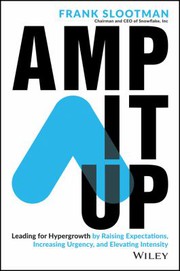
Frank Slootman · 2021

How leaders drive hypergrowth by raising standards, focus and urgency.

William J. O'Neil · 2003

Compiled from Investor's Business Daily profiles.
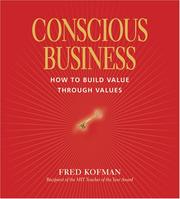
Fred Kofman · 2002

Seven qualities, such as unconditional responsibility, of people who make firms work.

Recommended by: Reid Hoffman, Sheryl Sandberg
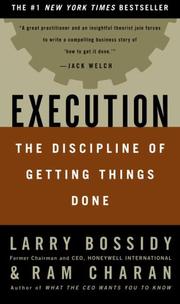
Larry Bossidy, Ram Charan · 2002

Execution is a discipline the CEO must lead, linking people, strategy and operations.

Recommended by: Mohnish Pabrai, Jamie Dimon

Where it sits in the reference 3

Investors
Business themes
Business themes

Topics

Business and ManagementLeadership