Updates

  1. Person pages list letters, writing, profiles and links as sortable tables with filters, and show each person's companies as links; Fund letters show each letter's description in its own column.
  2. Experts show a checked job title and a short description of each person; 30 more people have photographs.
  3. Every company, fund, university and publication the experts work for has a page listing the people there.
  4. Fund letters show each letter's thesis and filter by it; 225 person pages list the essays, columns and newsletter issues the person wrote.
  5. Person pages list every essay and newsletter issue a person wrote, and their own books as a table in List view.
  6. Recommends shows the five largest kinds of book and the rest under More; browse pictures load sooner.
  7. Podcasts and talks link the original episode, filter by Audio and video or Press, and list each publisher once.
  8. Pages are wider, Recommends has List and Grid, and a filter clicked again turns off.
  9. Book cards sit in a ruled grid with Open Library and Goodreads links and each book's one-line note.
  10. Funds is now Investors; each investor's styles are buttons that filter the table.
  11. Podcasts and talks on a person's page filter by year and publisher and show as a list or a grid of pictures.
  12. Quotes show only people's own words: 472 summaries written by list sites are gone.
  13. Country pages open from Browse again, and every link on the shelf lands on a page.
  14. Subject and person pages show their sections as tabs, and each book appears once on a person's page.
  15. Book cards show the quote, who said it and the source; grids show five cards to a row.
  16. On a phone, a menu holds the sections, search, Updates, Feedback and dark mode.
  17. Feedback takes a screenshot of the page with no browser prompt, opens a screenshot full size when you click it, and clears itself once sent.
  18. Book cards are centred, search names the topic each book sits in, and any text cut short shows whole on hover.
  19. Search groups its results by kind: people, companies, geographies, subjects, topics, books, funds, fund letters and papers.
  20. The Books table lists who recommended each book by name, and the browser tab names the section you are in.
  21. Feedback can take a screenshot of the page, or one you paste or choose, and opens in the corner beside Updates.
  22. Each rail button reopens its section where you left it, and Browse, Table and People show on every book and subject page.
  23. Filters grey out choices that hold nothing instead of hiding them, and Books › People filters by authors or recommenders.
  24. Feedback takes a subject line and up to three screenshots.
  25. Biographies are grouped by the person they are about: 41 new pages, from Abraham Lincoln to Lee Kuan Yew.
  26. Sport splits into 23 sports, and Religion into one topic per faith.
  27. Book lists show as cards: the cover, one recommendation quote and every recommender by name.
  28. Seventeen subjects that had two or three pages under different names now have one page each.
  29. Every page lists its Experts as authors and recommenders, with a link to them on the Experts tab.
  30. Economics, Financial history, Financial panics and Accounting are subjects of their own, with one page per financial crisis.
  31. Book, person and subject pages open inside the app, so the tabs stay in view.
  32. 996 more book covers, and photographs or logos for 227 more people and companies.
  33. Books › Browse shows every subject as cards, and the rail holds Fund letters, Papers, Experts, Books and Funds.
  34. Every topic over 150 books splits into narrower topics, each with a page of its own.

Send feedback

What is it?
Screenshots, up to 3 (optional)
or paste one with Ctrl+V

We use your email only to reply to you.

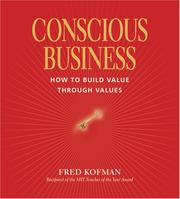
Conscious Business

Conscious Business

Fred Kofman
2002
T4 452 pages · about 7h 32m to read Open Librarygoodreads

Values-based management from a coach used across technology companies

Summary

Kofman, an economist who worked as an executive coach and later at LinkedIn and Google, sets out seven qualities he says distinguish people who make organisations work: unconditional responsibility, essential integrity, ontological humility, authentic communication, constructive negotiation, impeccable coordination and emotional mastery.

The most usable material is on responsibility and coordination. Unconditional responsibility means treating yourself as a player rather than a victim in every situation, and Kofman is precise that this is about locating your own response rather than assigning blame. Ontological humility means holding that your view of a situation is one perspective rather than the truth, and he ties it to specific conversational practice: state observations separately from interpretations, own your interpretations as yours, and ask about the other person's reasoning. The chapter on impeccable coordination sets out a request-and-promise model in which every commitment has a named performer, a specific deliverable and a date, and in which declining or renegotiating a promise is treated as legitimate while silent non-delivery is not.

The intellectual sources are Argyris on defensive reasoning, Fernando Flores on the linguistic structure of commitments, and Senge's systems work. The book mixes these with material on values and meaning that many readers find too much, and Kofman moves between practical technique and a broader philosophical position without marking the transition. For operators the coordination and difficult-conversation chapters are directly applicable and the rest can be skimmed. There is no empirical validation of the framework.

Key takeaways 7

  1. Unconditional responsibility means locating your own available response in every situation rather than assessing whose fault it is.
  2. Holding your view as one perspective rather than as the truth is what makes it possible to learn from someone who disagrees.
  3. A commitment is only real when it names a performer, a specific deliverable and a date, and anything less is a wish.
  4. Declining or renegotiating a promise should be a legitimate and expected move, since punishing renegotiation guarantees silent non-delivery instead.
  5. Separating observation from interpretation, and stating which is which, removes most of the heat from a difficult conversation.
  6. People argue positions when they should be exchanging the interests behind them, and the shift is what makes agreement possible.
  7. Emotions carry information about unmet needs and should be treated as data rather than suppressed or acted out.

Who should read it

Managers and founders who want a practical model for commitments, difficult conversations and accountability inside a team.

Who recommended it 2

Reid Hoffmanreported

Similar books 6

Chosen by shared topics, the entries that hold them, and the people who recommended both.

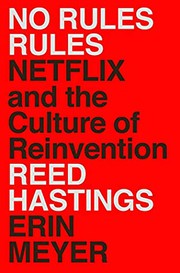
Reed Hastings, Erin Meyer · 2020

How Netflix built talent density and candour so it could remove controls.

Eric Schmidt, Jonathan Rosenberg, Alan Eagle · 2019

How Bill Campbell coached the leaders of Google, Apple and Intuit.

Jack Stack, Bo Burlingham · 2002

Building an ownership culture in which employees think and act like owners.

Where it sits in the reference 3

Business themes
Business themes
Business themes

Topics

Business and ManagementLeadership