Updates

  1. Person pages list letters, writing, profiles and links as sortable tables with filters, and show each person's companies as links; Fund letters show each letter's description in its own column.
  2. Experts show a checked job title and a short description of each person; 30 more people have photographs.
  3. Every company, fund, university and publication the experts work for has a page listing the people there.
  4. Fund letters show each letter's thesis and filter by it; 225 person pages list the essays, columns and newsletter issues the person wrote.
  5. Person pages list every essay and newsletter issue a person wrote, and their own books as a table in List view.
  6. Recommends shows the five largest kinds of book and the rest under More; browse pictures load sooner.
  7. Podcasts and talks link the original episode, filter by Audio and video or Press, and list each publisher once.
  8. Pages are wider, Recommends has List and Grid, and a filter clicked again turns off.
  9. Book cards sit in a ruled grid with Open Library and Goodreads links and each book's one-line note.
  10. Funds is now Investors; each investor's styles are buttons that filter the table.
  11. Podcasts and talks on a person's page filter by year and publisher and show as a list or a grid of pictures.
  12. Quotes show only people's own words: 472 summaries written by list sites are gone.
  13. Country pages open from Browse again, and every link on the shelf lands on a page.
  14. Subject and person pages show their sections as tabs, and each book appears once on a person's page.
  15. Book cards show the quote, who said it and the source; grids show five cards to a row.
  16. On a phone, a menu holds the sections, search, Updates, Feedback and dark mode.
  17. Feedback takes a screenshot of the page with no browser prompt, opens a screenshot full size when you click it, and clears itself once sent.
  18. Book cards are centred, search names the topic each book sits in, and any text cut short shows whole on hover.
  19. Search groups its results by kind: people, companies, geographies, subjects, topics, books, funds, fund letters and papers.
  20. The Books table lists who recommended each book by name, and the browser tab names the section you are in.
  21. Feedback can take a screenshot of the page, or one you paste or choose, and opens in the corner beside Updates.
  22. Each rail button reopens its section where you left it, and Browse, Table and People show on every book and subject page.
  23. Filters grey out choices that hold nothing instead of hiding them, and Books › People filters by authors or recommenders.
  24. Feedback takes a subject line and up to three screenshots.
  25. Biographies are grouped by the person they are about: 41 new pages, from Abraham Lincoln to Lee Kuan Yew.
  26. Sport splits into 23 sports, and Religion into one topic per faith.
  27. Book lists show as cards: the cover, one recommendation quote and every recommender by name.
  28. Seventeen subjects that had two or three pages under different names now have one page each.
  29. Every page lists its Experts as authors and recommenders, with a link to them on the Experts tab.
  30. Economics, Financial history, Financial panics and Accounting are subjects of their own, with one page per financial crisis.
  31. Book, person and subject pages open inside the app, so the tabs stay in view.
  32. 996 more book covers, and photographs or logos for 227 more people and companies.
  33. Books › Browse shows every subject as cards, and the rail holds Fund letters, Papers, Experts, Books and Funds.
  34. Every topic over 150 books splits into narrower topics, each with a page of its own.

Send feedback

What is it?
Screenshots, up to 3 (optional)
or paste one with Ctrl+V

We use your email only to reply to you.

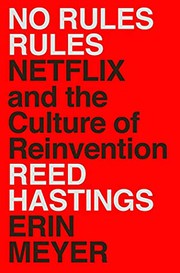
No Rules Rules

No Rules Rules

Reed Hastings, Erin Meyer
2020
T2 320 pages · about 5h 20m to read Open Librarygoodreads

Insider account by the co-founder and CEO of the Netflix culture.

Summary

Hastings, Netflix's co-founder, writes alternating chapters with Erin Meyer, a business school professor who interviewed employees and adds outside perspective and cross-cultural analysis. The structure is a sequence in which each step becomes possible only after the previous ones are in place.

The sequence begins with talent density, achieved by paying top of market and by removing adequate performers, which Hastings argues is the precondition for everything else. It proceeds to candour, implemented through explicit feedback norms including live feedback in meetings and written 360 reviews. Only after both are established does he introduce the removal of controls: no vacation policy, no expense approval, no spending limits, replaced by the instruction to act in Netflix's best interest.

The most discussed practice is the keeper test, in which managers ask whether they would fight to retain each person and remove those they would not, with a substantial severance payment. Hastings defends this directly and Meyer reports the effect on employees, including the fear it produces, which Hastings acknowledges as a cost.

Other practices include context rather than control, meaning that leaders provide the information for decisions rather than making them; the dispersed decision-making model in which no approval is required and the person closest to the information decides; sunshining, meaning that failed decisions are shared publicly by the person who made them; and paying personal top of market rather than using salary bands. The model works at a company with extraordinary margins and the ability to select from an enormous applicant pool. Meyer's chapters note that several practices transfer badly to other national cultures. The book is written by an interested party and the employees who were removed are not interviewed.

Key takeaways 8

  1. Talent density is the precondition for everything else, and removing adequate performers raises the performance of those who remain.
  2. Paying top of market for every role, and adjusting proactively rather than at review time, removes both retention risk and negotiation.
  3. Candour must be built deliberately through explicit norms and practice, because it does not emerge from a stated value.
  4. Controls including vacation policies, expense approval and spending limits can be removed once talent density and candour are established, and not before.
  5. The keeper test asks whether a manager would fight to keep each person, and those who fail it are removed with substantial severance.
  6. Leaders should provide context rather than make decisions, so that the person closest to the information decides.
  7. Failed decisions should be shared publicly by the person who made them, which is what allows risk-taking to continue after a failure.
  8. The model depends on extraordinary margins and an enormous applicant pool, and several practices transfer badly across national cultures.

Who should read it

Executives considering removing controls and process, who need the preconditions stated explicitly before adopting any of the practices.

Who recommended it 5 · 1 direct

Ben Horowitzreported
Guy Spierreported
Reid Hoffmanreported

Similar books 6

Chosen by shared topics, the entries that hold them, and the people who recommended both.
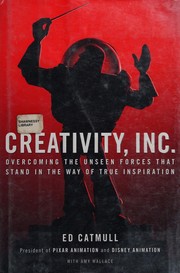
Ed Catmull, Amy Wallace · 2014

How Pixar kept a creative company working after success, and the habits it used.

Laszlo Bock · 2015

Insider account of Google's people operations by its SVP of HR.

Fred Kofman · 2002

Seven qualities, such as unconditional responsibility, of people who make firms work.

Recommended by: Reid Hoffman, Sheryl Sandberg
Ray Dalio · 2017

Decision rules from building Bridgewater: radical truth and radical transparency.

Where it sits in the reference 4

Companies
Business themes
Industries
Business themes

Topics

Business and ManagementLeadershipCompany Histories