Updates

  1. Person pages list letters, writing, profiles and links as sortable tables with filters, and show each person's companies as links; Fund letters show each letter's description in its own column.
  2. Experts show a checked job title and a short description of each person; 30 more people have photographs.
  3. Every company, fund, university and publication the experts work for has a page listing the people there.
  4. Fund letters show each letter's thesis and filter by it; 225 person pages list the essays, columns and newsletter issues the person wrote.
  5. Person pages list every essay and newsletter issue a person wrote, and their own books as a table in List view.
  6. Recommends shows the five largest kinds of book and the rest under More; browse pictures load sooner.
  7. Podcasts and talks link the original episode, filter by Audio and video or Press, and list each publisher once.
  8. Pages are wider, Recommends has List and Grid, and a filter clicked again turns off.
  9. Book cards sit in a ruled grid with Open Library and Goodreads links and each book's one-line note.
  10. Funds is now Investors; each investor's styles are buttons that filter the table.
  11. Podcasts and talks on a person's page filter by year and publisher and show as a list or a grid of pictures.
  12. Quotes show only people's own words: 472 summaries written by list sites are gone.
  13. Country pages open from Browse again, and every link on the shelf lands on a page.
  14. Subject and person pages show their sections as tabs, and each book appears once on a person's page.
  15. Book cards show the quote, who said it and the source; grids show five cards to a row.
  16. On a phone, a menu holds the sections, search, Updates, Feedback and dark mode.
  17. Feedback takes a screenshot of the page with no browser prompt, opens a screenshot full size when you click it, and clears itself once sent.
  18. Book cards are centred, search names the topic each book sits in, and any text cut short shows whole on hover.
  19. Search groups its results by kind: people, companies, geographies, subjects, topics, books, funds, fund letters and papers.
  20. The Books table lists who recommended each book by name, and the browser tab names the section you are in.
  21. Feedback can take a screenshot of the page, or one you paste or choose, and opens in the corner beside Updates.
  22. Each rail button reopens its section where you left it, and Browse, Table and People show on every book and subject page.
  23. Filters grey out choices that hold nothing instead of hiding them, and Books › People filters by authors or recommenders.
  24. Feedback takes a subject line and up to three screenshots.
  25. Biographies are grouped by the person they are about: 41 new pages, from Abraham Lincoln to Lee Kuan Yew.
  26. Sport splits into 23 sports, and Religion into one topic per faith.
  27. Book lists show as cards: the cover, one recommendation quote and every recommender by name.
  28. Seventeen subjects that had two or three pages under different names now have one page each.
  29. Every page lists its Experts as authors and recommenders, with a link to them on the Experts tab.
  30. Economics, Financial history, Financial panics and Accounting are subjects of their own, with one page per financial crisis.
  31. Book, person and subject pages open inside the app, so the tabs stay in view.
  32. 996 more book covers, and photographs or logos for 227 more people and companies.
  33. Books › Browse shows every subject as cards, and the rail holds Fund letters, Papers, Experts, Books and Funds.
  34. Every topic over 150 books splits into narrower topics, each with a page of its own.

Send feedback

What is it?
Screenshots, up to 3 (optional)
or paste one with Ctrl+V

We use your email only to reply to you.

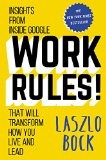
Work Rules!

Work Rules!

Laszlo Bock
2015
T3 Open Librarygoodreads

Insider account of Google's people operations by its SVP of HR.

Summary

Bock ran people operations at Google from 2006 to 2016 and documents the company's approach to hiring, management, compensation and culture, with the internal data behind the decisions. It is more empirical than most human resources books because Google ran experiments on its own workforce and Bock reports the results including the failures.

The hiring material is the strongest. Bock reports that Google found unstructured interviews had almost no predictive validity, that brainteasers predicted nothing, and that the company reduced interviews from as many as twenty-five to four after finding that the fourth interview added almost nothing to the prediction. He describes structured behavioural interviews with defined rubrics, hiring committees that remove the decision from the hiring manager, and the finding that the best predictor was a combination of work sample tests, structured interviews and general cognitive ability.

The management material covers Project Oxygen, which analysed performance data to identify what distinguished effective managers and found that technical expertise ranked last among eight behaviours, and the practice of separating performance reviews from development conversations. Other material covers pay unfairly, meaning that contribution distributions are highly skewed so pay should be too; giving employees more decision authority than is comfortable; the two tails approach of studying the best and worst performers rather than the average; and the argument that removing managers' unilateral authority over hiring, promotion and pay reduces bias.

The book generalises from a company with extraordinary selection advantages and enormous margins, and much of the practice is expensive. Bock is an advocate for his own record. The hiring findings and the interview research are the parts that transfer.

Key takeaways 8

  1. Unstructured interviews have almost no ability to predict job performance, and the confidence interviewers feel in their judgments is unrelated to accuracy.
  2. Four interviews capture nearly all the predictive value available, and additional interviews add cost without improving the decision.
  3. The best predictors of performance combine work sample tests, structured behavioural interviews with defined rubrics, and general cognitive ability.
  4. Removing hiring decisions from the individual manager and giving them to a committee reduces bias and improves consistency.
  5. Technical expertise ranked last among the behaviours that distinguished effective managers in Google's own performance data.
  6. Contribution to output is highly skewed, so compensation distributions should be skewed rather than compressed toward the average.
  7. Performance evaluation and development conversations should be separated, because people cannot receive developmental feedback while their pay is being decided.
  8. Studying the best and worst performers rather than the average produces more useful information about what actually drives outcomes.

Who should read it

Executives and people leaders redesigning hiring and management processes who want data from a company that ran the experiments.

Who recommended it 5 · 1 direct

David Cancelreported
John Doerrreported

Similar books 6

Chosen by shared topics, the entries that hold them, and the people who recommended both.
Ram Charan · 2018

Recommended by: Keith Rabois

Reid Hoffman, Ben Casnocha, Chris Yeh · 2014

Employment as an honest alliance: set tours of duty between firm and employee.

Ed Catmull, Amy Wallace · 2014

How Pixar kept a creative company working after success, and the habits it used.

Lou Adler · 1998

Hire by defining the results a role must deliver, not the skills on a CV.

Recommended by: Patrick Collison
Where it sits in the reference 4

Companies
Business themes
Business themes
Business themes

Topics

Business and ManagementLeadershipCompany Histories