Leaders Eat Last
Sinek's second major book applies neuroscience — oxytocin, cortisol, dopamine — to explain why some work environments feel safe and others don't, and how leaders establish the Circle of Safety that determines whether teams will take the risks that produce performance. More substantive than Start With Why.
Summary
Sinek argues that leadership is the willingness to sacrifice personal interest for the people in your care, and that organisations perform when their members feel safe from internal threat. His central concept is the circle of safety, meaning the boundary inside which people are protected from each other so that they can direct their attention outward at external threats and opportunities.
His explanatory framework is biochemical. He assigns endorphins and dopamine to individual achievement and pursuit, and serotonin and oxytocin to social bonding and trust, and argues that organisations designed around individual incentives produce dopamine-driven behaviour at the expense of the trust that makes cooperation possible. He extends this to what he calls destructive abundance, in which the pursuit of short-term measurable results erodes the relationships the organisation depends on.
The cases include military units where officers eat after their subordinates, Bob Chapman at Barry-Wehmiller who refused layoffs during the 2008 downturn and used furloughs distributed across all employees including executives, and a contrasting account of layoffs used as a quarterly management tool. He attributes much of the change in corporate behaviour to the shift toward shareholder value maximisation and to the normalisation of mass layoffs in the 1980s.
The biochemistry is a substantial weakness and neuroscientists reject the mapping of specific chemicals to specific organisational behaviours as stated. The cases are selected and no counterexamples are examined. The core argument, that people protect themselves rather than the organisation when internal threat is present, is well made and does not require the biology.
Key takeaways 8
- People direct their attention outward at external threats only when they feel protected from internal ones.
- Leadership means accepting personal cost to protect the people in your care, which is what produces the willingness to reciprocate.
- Organisations that make employment conditional on quarterly results produce employees who protect themselves rather than the organisation.
- Layoffs used as a routine management tool destroy the trust that makes discretionary effort possible, and the cost does not appear in the accounts.
- Individual incentive structures produce achievement-directed behaviour at the expense of the cooperation the organisation depends on.
- Distributing pain across everyone including executives, rather than concentrating it on the least powerful, preserves the group.
- Leaders who are physically and socially separated from their organisations lose the information that would tell them what is happening.
- The biochemical framework offered to explain these effects is rejected by neuroscientists and is not required by the argument.
Who should read it
Executives deciding how to handle downturns and internal competition, taking the argument about internal safety and disregarding the biology.
About Simon Sinek
British-American author and speaker on leadership, organisational purpose and long-term competition.
Start with Why argues that organisations communicate, sell and recruit better when they lead with purpose ahead of product, and gives that argument a structure managers can apply to messaging and hiring. Leaders Eat Last and The Infinite Game extend it to how leaders create safety inside teams and how firms compete without a defined finish line.
Who recommended it 4
Similar books 6
Chosen by shared topics, the entries that hold them, and the people who recommended both.
Sinek's Golden Circle (Why/How/What) is less empirically grounded than the rest of this list, but its core observation is accurate: people don't follow what you do, they follow why you do it. Useful for understanding how leaders communicate identity externally and why some inspire loyalty while others just manage compliance.
Recommended by: Richard Branson, Tony Hsieh, Alfred Lin and 4 others
Execution is a discipline the CEO must lead, linking people, strategy and operations.
Recommended by: Mohnish Pabrai, Jamie Dimon
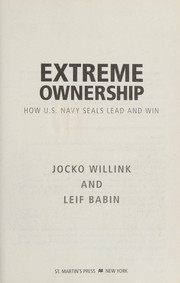
Navy SEAL leadership doctrine adapted to running teams and firms
Recommended by: Nat Eliason, Alfred Lin, Austin Rief and 9 others
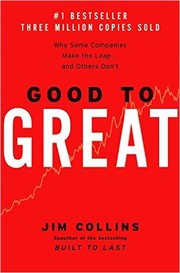
What eleven companies did to turn fifteen ordinary years into fifteen great ones.
Recommended by: Brian Armstrong, Mohnish Pabrai, Nat Eliason and 16 others

Where it sits in the reference 4
Topics