Leadership and Succession
Executives spend their time on a short list of things: deciding what the organisation will do, putting people into the few positions that determine the outcome, and turning decisions into delivered results. Grove measures a manager's output as the output of every team they influence and shows how meetings, reviews and one-on-ones produce it; Drucker treats effectiveness as a set of habits about time and priorities that can be learned. Collins reports on companies that improved for fifteen years and finds disciplined executives promoted from inside, which is the succession argument in this group, and Bossidy and Charan describe the people, strategy and operations reviews that connect a plan to a budget. The military and team titles cover decentralised command, and Grove's second book covers the moment when an industry changes and a chief executive has to bet the company.
Start here
- High Output ManagementAndrew S. Grove, 1983
- The Effective ExecutivePeter F. Drucker, 1967
- Good to GreatCollins, James C., Jim Collins, 2001
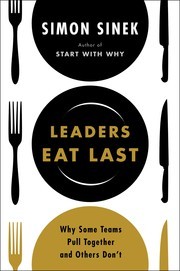
Sinek's second major book applies neuroscience — oxytocin, cortisol, dopamine — to explain why some work environments feel safe and others don't, and how leaders establish the Circle of Safety that determines whether teams will take the risks that produce performance. More substantive than Start With Why.
Recommended by: Alfred Lin, Julie Stevanja, Tom Bilyeu and 1 other
Effectiveness is learned practice: manage time, pick priorities, decide well.
Recommended by: Ev Williams, Nat Eliason, David Cancel and 5 others
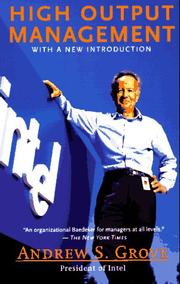
Management as production: a manager's output is the output of the team they lead.
Recommended by: Nat Eliason, Tim Ferriss, Andrew Chen and 24 others
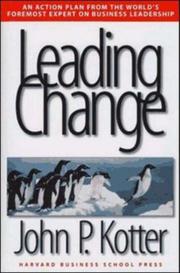
An eight-stage process for organisational change, starting with urgency.
Recommended by: Mohnish Pabrai

How to spot a strategic inflection point, when a tenfold force changes a business.
“On my Top Ten List. Great Book. Grove was CEO of Intel.” — Mohnish Pabrai
Source: Mohnish's Bookshelf — Books on Entrepreneurship, Management and Leadership, entry 174
Recommended by: Charlie Munger, Mohnish Pabrai and 11 others
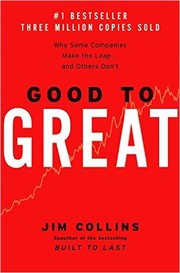
What eleven companies did to turn fifteen ordinary years into fifteen great ones.
Recommended by: Brian Armstrong, Mohnish Pabrai, Nat Eliason and 16 others

Marquet's account of transforming the USS Santa Fe from the worst-performing submarine in the Navy to the best. The specific mechanism — moving from leader-follower to leader-leader by pushing control down while moving competence and clarity up — is one of the most rigorously documented leadership case studies in print.
Recommended by: Brian Armstrong, Jason Fried, Simon Sinek
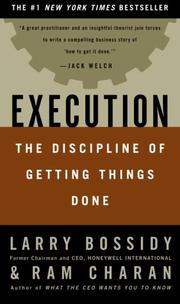
Execution is a discipline the CEO must lead, linking people, strategy and operations.
Recommended by: Mohnish Pabrai, Jamie Dimon

A fable of a failing executive team and a five-level model of what goes wrong.
Recommended by: Alfred Lin, Chris Powers, Sarah Pritula and 1 other
Navy SEAL leadership doctrine adapted to running teams and firms
Recommended by: Nat Eliason, Alfred Lin, Austin Rief and 9 others

Bain's account of what founder-led companies lose as they scale.
 Andrew S. Grovewrote 2 books here
 Jim Collinswrote 1 book here
 Peter F. Druckerwrote 1 book here
 Simon Sinekwrote 1 book here
 Mohnish Pabrairecommends 4 books here
 Alfred Linrecommends 4 books here
 Drew Houstonrecommends 4 books here
 Marc Andreessenrecommends 3 books here
 Brian Armstrongrecommends 3 books here
 Ev Williamsrecommends 3 books here
 Tim Ferrissrecommends 3 books here
 Ben Horowitzrecommends 2 books here
 John Doerrrecommends 2 books here
Show all 56
 Reid Hoffmanrecommends 2 books hereSimon Sinekrecommends 2 books here
 Balaji S. Srinivasanrecommends 2 books here
 Jamie Dimonrecommends 2 books here
 Jeff Bezosrecommends 2 books here
 Jensen Huangrecommends 2 books here
 Satya Nadellarecommends 2 books here
 Tobi Lütkerecommends 2 books here
 Tom Bilyeurecommends 2 books here
 Charlie Mungerrecommends 1 book here
 Paul Grahamrecommends 1 book here
 Brad Feldrecommends 1 book here
 Guy Kawasakirecommends 1 book here
 Anne Wojcickirecommends 1 book here
 Brian Cheskyrecommends 1 book here
 Casey Neistatrecommends 1 book here
 Daniel Ekrecommends 1 book here
 Jason Calacanisrecommends 1 book here
 Julie Zhuorecommends 1 book here
 Keith Raboisrecommends 1 book here
 Larry Ellisonrecommends 1 book here
 Mark Zuckerbergrecommends 1 book here
 Matt Mullenwegrecommends 1 book here
 Max Levchinrecommends 1 book here
 Meg Whitmanrecommends 1 book here
 Mike Cannon-Brookesrecommends 1 book here
 Patrick Collisonrecommends 1 book here
 Ron Conwayrecommends 1 book here
 Sam Altmanrecommends 1 book here