Management classics
Founding texts of management by Drucker, Barnard, Sloan, Collins, Peters and others.
Start here
- High Output ManagementAndrew S. Grove, 1983
- The Effective ExecutivePeter F. Drucker, 1967
- The Practice of ManagementPeter F. Drucker, 1954
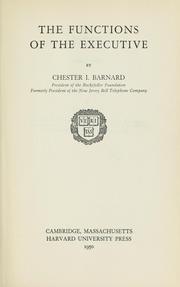
A working executive's theory of organisation, where authority rests on acceptance.
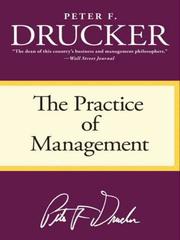
Management as a discipline: business purpose, objectives and managing managers.
Effectiveness is learned practice: manage time, pick priorities, decide well.
Recommended by: Ev Williams, Nat Eliason, David Cancel and 5 others
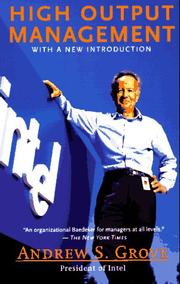
Management as production: a manager's output is the output of the team they lead.
Recommended by: Nat Eliason, Tim Ferriss, Andrew Chen and 24 others
Fifty-two laws of management and defence spending, each backed by data.

A life across economics, psychology, organisations and artificial intelligence.
Recommended by: Charlie Munger, Mohnish Pabrai

How firms are organised, using agency, contracts and transaction-cost economics.
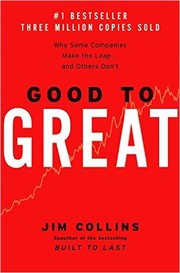
What eleven companies did to turn fifteen ordinary years into fifteen great ones.
Recommended by: Brian Armstrong, Mohnish Pabrai, Nat Eliason and 16 others

Eighteen months inside General Motors: the large corporation as a social institution.

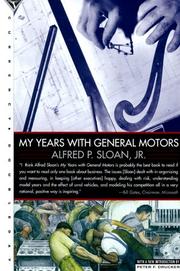
The decentralised structure and financial controls that ran General Motors.
Recommended by: Mohnish Pabrai, Patrick Collison and 1 other
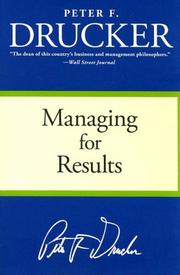

Four breaks with the postwar world, from a global economy to knowledge as capital.
Recommended by: Patrick Collison
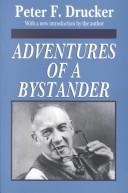
A memoir told through portraits of the people the author knew, from Vienna on.
Recommended by: Mohnish Pabrai, Stewart Brand
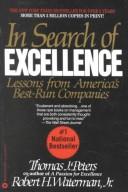
Eight practices shared by well-run companies.
Recommended by: Mohnish Pabrai, Ev Williams
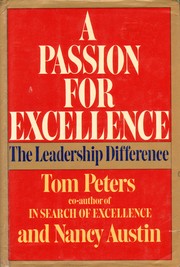
Recommended by: Mohnish Pabrai
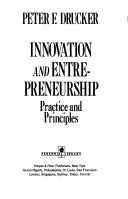
Innovation as a learnable discipline, with seven sources of opportunity to search.
Recommended by: Patrick Collison, Matt Mullenweg and 1 other
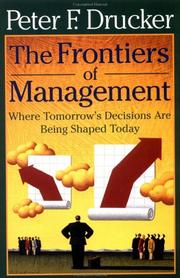
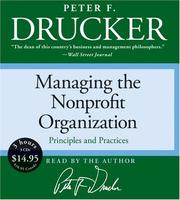

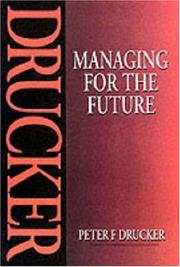
Collected HBR articles
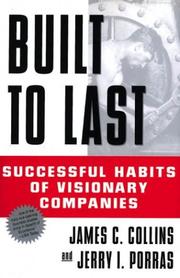
What eighteen long-lived companies did differently from close rivals in their fields.
Recommended by: Mohnish Pabrai, Drew Houston, Ev Williams and 3 others
Recommended by: Mohnish Pabrai


What companies that lasted over a century have in common, from a Shell planner.
“Recently, I came across two books on long lived companies: ''The Living Company, Habits for Survival in a Turbulent Business Environment'' by Arie de Geus” — Prem Watsa
Source: Fairfax Financial 2020 Shareholders' Letter, p. 30
Recommended by: Mohnish Pabrai, Prem Watsa
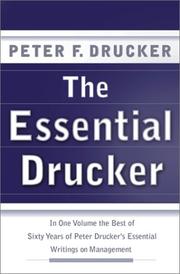
Anthology selected from sixty years of writing
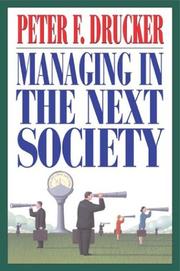

Selections on community and society
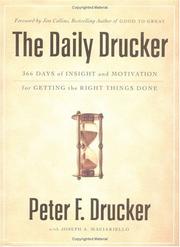

Good to Great's principles applied to non-profits and the public sector.
Recommended by: Mohnish Pabrai
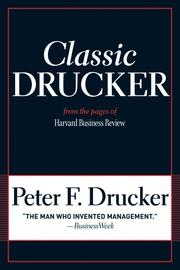
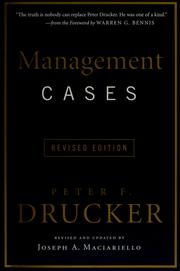
Revised edition prepared with Joseph A. Maciariello
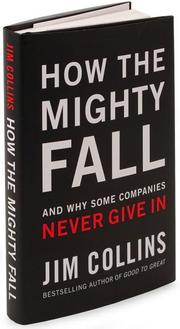
The stages by which great companies decline, and how to spot and reverse them early.
Recommended by: Alfred Lin

What companies that beat their industries tenfold in turbulent times did differently.
Recommended by: Mohnish Pabrai, Tony Hsieh, Alfred Lin
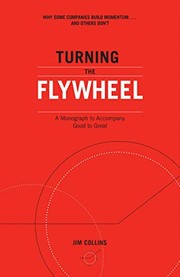


Knowledge workers must run their own careers by knowing their strengths and values.
Recommended by: Nat Eliason, Patrick Collison and 3 others
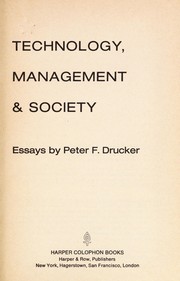
Recommended by: Patrick Collison
 Peter F. Druckerwrote 29 books here
 Jim Collinswrote 6 books here
 Andrew S. Grovewrote 1 book here
 Mohnish Pabrairecommends 13 books here
 Ev Williamsrecommends 5 books here
 Patrick Collisonrecommends 5 books here
 Drew Houstonrecommends 4 books here
 Alfred Linrecommends 3 books here
 Jeff Bezosrecommends 3 books here
 Ben Horowitzrecommends 2 books here
 John Doerrrecommends 2 books here
 Brian Armstrongrecommends 2 books here
 Matt Mullenwegrecommends 2 books here
Show all 51
 Satya Nadellarecommends 2 books here
 Tim Ferrissrecommends 2 books here
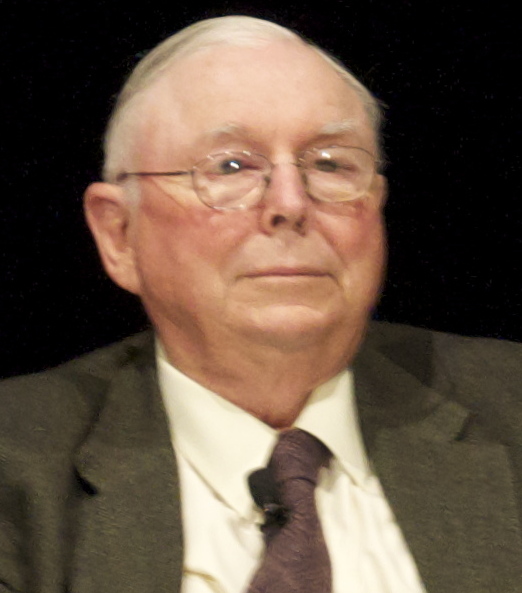 Charlie Mungerrecommends 1 book here
 Marc Andreessenrecommends 1 book here
 Paul Grahamrecommends 1 book here
 Brad Feldrecommends 1 book here
 Prem Watsarecommends 1 book here
 Reid Hoffmanrecommends 1 book here
 Guy Kawasakirecommends 1 book here
 Simon Sinekrecommends 1 book here
 Balaji S. Srinivasanrecommends 1 book here
 Brian Cheskyrecommends 1 book here
 Daniel Ekrecommends 1 book here
 Jack Marecommends 1 book here
 Jamie Dimonrecommends 1 book here
 Jason Calacanisrecommends 1 book here
 Jensen Huangrecommends 1 book here
 Julie Zhuorecommends 1 book here
 Keith Raboisrecommends 1 book here
 Larry Ellisonrecommends 1 book here
 Mark Zuckerbergrecommends 1 book here
 Max Levchinrecommends 1 book here
 Meg Whitmanrecommends 1 book here
 Ron Conwayrecommends 1 book here
 Sam Altmanrecommends 1 book here
 Stewart Brandrecommends 1 book here
 Tobi Lütkerecommends 1 book here
 Tony Hsiehrecommends 1 book here