Updates

  1. Person pages list letters, writing, profiles and links as sortable tables with filters, and show each person's companies as links; Fund letters show each letter's description in its own column.
  2. Experts show a checked job title and a short description of each person; 30 more people have photographs.
  3. Every company, fund, university and publication the experts work for has a page listing the people there.
  4. Fund letters show each letter's thesis and filter by it; 225 person pages list the essays, columns and newsletter issues the person wrote.
  5. Person pages list every essay and newsletter issue a person wrote, and their own books as a table in List view.
  6. Recommends shows the five largest kinds of book and the rest under More; browse pictures load sooner.
  7. Podcasts and talks link the original episode, filter by Audio and video or Press, and list each publisher once.
  8. Pages are wider, Recommends has List and Grid, and a filter clicked again turns off.
  9. Book cards sit in a ruled grid with Open Library and Goodreads links and each book's one-line note.
  10. Funds is now Investors; each investor's styles are buttons that filter the table.
  11. Podcasts and talks on a person's page filter by year and publisher and show as a list or a grid of pictures.
  12. Quotes show only people's own words: 472 summaries written by list sites are gone.
  13. Country pages open from Browse again, and every link on the shelf lands on a page.
  14. Subject and person pages show their sections as tabs, and each book appears once on a person's page.
  15. Book cards show the quote, who said it and the source; grids show five cards to a row.
  16. On a phone, a menu holds the sections, search, Updates, Feedback and dark mode.
  17. Feedback takes a screenshot of the page with no browser prompt, opens a screenshot full size when you click it, and clears itself once sent.
  18. Book cards are centred, search names the topic each book sits in, and any text cut short shows whole on hover.
  19. Search groups its results by kind: people, companies, geographies, subjects, topics, books, funds, fund letters and papers.
  20. The Books table lists who recommended each book by name, and the browser tab names the section you are in.
  21. Feedback can take a screenshot of the page, or one you paste or choose, and opens in the corner beside Updates.
  22. Each rail button reopens its section where you left it, and Browse, Table and People show on every book and subject page.
  23. Filters grey out choices that hold nothing instead of hiding them, and Books › People filters by authors or recommenders.
  24. Feedback takes a subject line and up to three screenshots.
  25. Biographies are grouped by the person they are about: 41 new pages, from Abraham Lincoln to Lee Kuan Yew.
  26. Sport splits into 23 sports, and Religion into one topic per faith.
  27. Book lists show as cards: the cover, one recommendation quote and every recommender by name.
  28. Seventeen subjects that had two or three pages under different names now have one page each.
  29. Every page lists its Experts as authors and recommenders, with a link to them on the Experts tab.
  30. Economics, Financial history, Financial panics and Accounting are subjects of their own, with one page per financial crisis.
  31. Book, person and subject pages open inside the app, so the tabs stay in view.
  32. 996 more book covers, and photographs or logos for 227 more people and companies.
  33. Books › Browse shows every subject as cards, and the rail holds Fund letters, Papers, Experts, Books and Funds.
  34. Every topic over 150 books splits into narrower topics, each with a page of its own.

Send feedback

What is it?
Screenshots, up to 3 (optional)
or paste one with Ctrl+V

We use your email only to reply to you.

WL

Work, labour and industrial society

Holds books on jobs and workplaces, the gig economy, employee ownership and co-operatives, factory and warehouse labour, and Peter Drucker's essays on industrial society.

Start here

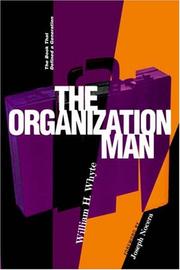
  1. The Organization ManWilliam H. Whyte, 1956
  2. Making MondragonWilliam Foote Whyte, Kathleen King Whyte, 1988
  3. Homestead: The Glory and Tragedy of an American Steel TownWilliam Serrin, 1992
  4. The Citizen's ShareJoseph R. Blasi, Richard B. Freeman, Douglas L. Kruse, 2013
  5. The Silo EffectGillian Tett, 2015
William H. Whyte · 1956

What the corporation did to the people inside it, written at its peak.

William Foote Whyte, Kathleen King Whyte · 1988

The Basque Mondragon cooperative group, studied as a working business model.
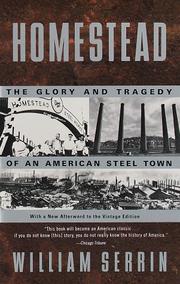
William Serrin · 1992

A Pennsylvania steel town from Carnegie's purchase in 1883 to the 1986 closure.

Joseph R. Blasi, Richard B. Freeman, Douglas L. Kruse · 2013

Broad employee ownership as an American tradition, and the case for reviving it.

Gillian Tett · 2015

How the way organisations divide work blinds them, and how some break down silos.

“Gillian Tett's new book the Silo Effect, a thoughtful discussion of the downside of narrow specialisation.” — Seth Klarman

Source: Klarman on Gillian Tett on the downside of specialisation

Recommended by: Seth Klarman

Jerry Z. Muller · 2018

How fixation on measured performance damages the work it is meant to improve.

Mary L. Gray, Siddharth Suri · 2019

The hidden on-demand workers who make automated online services work.

Christopher Mims · 2021

One USB charger followed from a factory in Vietnam by ship and truck to a door.
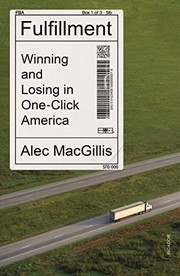
Alec MacGillis · 2021

How Amazon's growth concentrated wealth in a few places and hollowed out others.
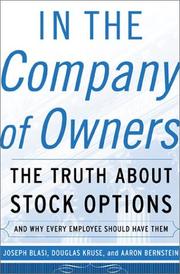
Joseph R. Blasi, Douglas L. Kruse, Aaron Bernstein · 2003

Broad-based stock options and what they did to company performance.
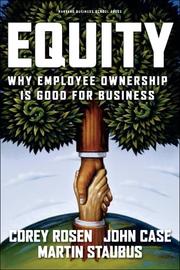
Corey Rosen, John Case, Martin Staubus · 2005

The NCEO's evidence on when shared ownership raises performance.

Nelson Lichtenstein · 2006

Edited volume on the supply chain and logistics model.
Bethany Moreton · 2009

How Wal-Mart's culture and labour model were built.

John Restakis · 2010

The global co-operative sector and how member ownership works.

Jessica Gordon Nembhard · 2014

African American co-operative economics, a history largely written out.
Zeynep Ton · 2014

Why Costco, Trader Joe's and QuikTrip pay more and still undercut rivals.
Jeremy Seabrook · 2014

Dhaka's garment industry from Rana Plaza back through its supply chain.

Tom Slee · 2015

The critical case: platform power, housing supply and regulatory arbitrage.

Diane Mulcahy · 2016

A worker's guide to the gig economy and how platforms price labour.
Arun Sundararajan · 2016

Economics of trust and matching that make marketplaces like Airbnb work.

Nathan Schneider · 2018

The revival of co-operatives and member ownership, online platforms included.

Sarah Kessler · 2018

The gig-work model Uber's unit economics depend on.

Jeremias Prassl · 2018

The gig economy's promises and realities, and the law on classifying its workers.

Alex Rosenblat · 2018

Field research on algorithmic management of drivers.

Jenny Chan, Mark Selden, Pun Ngai · 2020

Foxconn from the inside; the labour cost of the contract model.

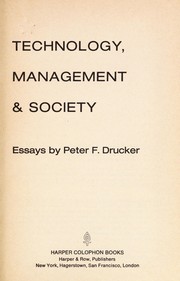
Peter F. Drucker · 1969

Four breaks with the postwar world, from a global economy to knowledge as capital.

Recommended by: Patrick Collison
Studs Terkel · 1972

Recommended by: Ev Williams

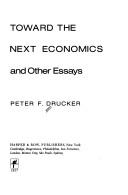
Peter F. Drucker · 1976

How employee pension funds came to own a controlling share of American industry.
Robert Jackall · 1988

Recommended by: Patrick Collison

Peter F. Drucker · 1993

Essays on 'social ecology': how societies and institutions change, Japan included.

Peter F. Drucker · 2003

Selections on community and society

Edward S. Greenberg, Leon Grunberg, Sarah Moore, Patricia B. Sikora · 2010

Longitudinal academic study of Boeing employees through restructuring.

Alexa Clay, Kyra Maya Phillips · 2015

Recommended by: Jason Fried

Alexandrea J. Ravenelle · 2019

Sociology of platform work across Uber and peers.

More society and culture