Updates

  1. Person pages list letters, writing, profiles and links as sortable tables with filters, and show each person's companies as links; Fund letters show each letter's description in its own column.
  2. Experts show a checked job title and a short description of each person; 30 more people have photographs.
  3. Every company, fund, university and publication the experts work for has a page listing the people there.
  4. Fund letters show each letter's thesis and filter by it; 225 person pages list the essays, columns and newsletter issues the person wrote.
  5. Person pages list every essay and newsletter issue a person wrote, and their own books as a table in List view.
  6. Recommends shows the five largest kinds of book and the rest under More; browse pictures load sooner.
  7. Podcasts and talks link the original episode, filter by Audio and video or Press, and list each publisher once.
  8. Pages are wider, Recommends has List and Grid, and a filter clicked again turns off.
  9. Book cards sit in a ruled grid with Open Library and Goodreads links and each book's one-line note.
  10. Funds is now Investors; each investor's styles are buttons that filter the table.
  11. Podcasts and talks on a person's page filter by year and publisher and show as a list or a grid of pictures.
  12. Quotes show only people's own words: 472 summaries written by list sites are gone.
  13. Country pages open from Browse again, and every link on the shelf lands on a page.
  14. Subject and person pages show their sections as tabs, and each book appears once on a person's page.
  15. Book cards show the quote, who said it and the source; grids show five cards to a row.
  16. On a phone, a menu holds the sections, search, Updates, Feedback and dark mode.
  17. Feedback takes a screenshot of the page with no browser prompt, opens a screenshot full size when you click it, and clears itself once sent.
  18. Book cards are centred, search names the topic each book sits in, and any text cut short shows whole on hover.
  19. Search groups its results by kind: people, companies, geographies, subjects, topics, books, funds, fund letters and papers.
  20. The Books table lists who recommended each book by name, and the browser tab names the section you are in.
  21. Feedback can take a screenshot of the page, or one you paste or choose, and opens in the corner beside Updates.
  22. Each rail button reopens its section where you left it, and Browse, Table and People show on every book and subject page.
  23. Filters grey out choices that hold nothing instead of hiding them, and Books › People filters by authors or recommenders.
  24. Feedback takes a subject line and up to three screenshots.
  25. Biographies are grouped by the person they are about: 41 new pages, from Abraham Lincoln to Lee Kuan Yew.
  26. Sport splits into 23 sports, and Religion into one topic per faith.
  27. Book lists show as cards: the cover, one recommendation quote and every recommender by name.
  28. Seventeen subjects that had two or three pages under different names now have one page each.
  29. Every page lists its Experts as authors and recommenders, with a link to them on the Experts tab.
  30. Economics, Financial history, Financial panics and Accounting are subjects of their own, with one page per financial crisis.
  31. Book, person and subject pages open inside the app, so the tabs stay in view.
  32. 996 more book covers, and photographs or logos for 227 more people and companies.
  33. Books › Browse shows every subject as cards, and the rail holds Fund letters, Papers, Experts, Books and Funds.
  34. Every topic over 150 books splits into narrower topics, each with a page of its own.

Send feedback

What is it?
Screenshots, up to 3 (optional)
or paste one with Ctrl+V

We use your email only to reply to you.

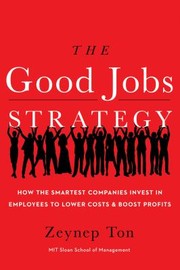
The Good Jobs Strategy

The Good Jobs Strategy

Zeynep Ton
2014
T3 229 pages · about 3h 49m to read Open Librarygoodreads

Why Costco, Trader Joe's and QuikTrip pay more and still undercut rivals.

Summary

Ton, an operations professor at MIT, studies low-cost retailers that pay well and argues that the standard trade-off between low prices and good jobs is false when the operating system is designed correctly. Her cases are QuikTrip, Mercadona in Spain, Trader Joe's and Costco, compared against conventional retailers.

Her explanation is operational rather than moral. High employee turnover and understaffing generate costs that do not appear as labour costs: stockouts, misplaced inventory, incorrect pricing, shrinkage, slow checkout, poor customer service and constant retraining. She quantifies these where she can, showing that stores understaffed to save wages lose more in unsold and misshelved inventory than they save. Her four operational choices that make higher pay affordable are: offer less, meaning restrict the assortment so that each item sells enough to justify shelf space; standardise and empower, meaning define the routine work tightly and give employees authority over the exceptions; cross-train, so labour can be moved to where demand is; and operate with slack, meaning staff above the minimum so employees have time to do the improvement work.

The last point is the counterintuitive one and the hardest to sell, since slack looks like waste in every accounting system.

The evidence is case study rather than controlled comparison, and the firms are selected on success, so the causal claim is not established. Critics note that several of her exemplars have unusual characteristics, including private ownership, that make the strategy easier to sustain. The operational diagnosis of hidden costs is the strongest and most transferable part.

Key takeaways 7

  1. Understaffing to reduce labour cost generates larger losses in stockouts, misplaced inventory, shrinkage and lost sales than it saves in wages.
  2. Restricting assortment so that each item sells enough to justify its shelf space is what makes higher staffing affordable.
  3. Standardising routine work tightly while giving employees authority over exceptions produces both consistency and the ability to handle variation.
  4. Cross-training employees allows labour to move to where demand appears, which converts a fixed cost into a flexible resource.
  5. Operating with deliberate staffing slack gives employees time to do improvement work, and every accounting system will identify that slack as waste.
  6. High employee turnover imposes retraining and error costs that do not appear in any labour line and are therefore never managed.
  7. The trade-off between low prices and good jobs is a consequence of operating design choices rather than an economic necessity.

Who should read it

Operators in retail, hospitality and other high-turnover service businesses who want the operational case for staffing and wage decisions.

Similar books 6

Chosen by shared topics, the entries that hold them, and the people who recommended both.

Dieter Brandes · 2004

Aldi's hard-discount method: radical simplicity as the way to keep costs low.
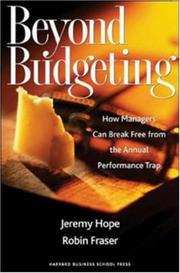
Jeremy Hope, Robin Fraser · 2003

Why the annual budget harms firms, and how some run without one.

Charles H. Fine · 1998

Fast-moving industries reveal supply-chain dynamics slow ones take decades to show.
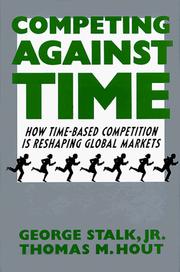
Jr. George Stalk, Thomas M. Hout · 1990

Recommended by: Tim Cook

Eliyahu M. Goldratt · 1997

A novel applying the theory of constraints to finishing projects on time.

Bob Fifer · 1994

Cost discipline handbook widely used by buyout and turnaround operators

Where it sits in the reference 6

Companies
Business models
Business models
Business themes
Business themes
Business themes

Topics

Business and ManagementSociology and CultureWork, labour and industrial society