Updates

  1. Person pages list letters, writing, profiles and links as sortable tables with filters, and show each person's companies as links; Fund letters show each letter's description in its own column.
  2. Experts show a checked job title and a short description of each person; 30 more people have photographs.
  3. Every company, fund, university and publication the experts work for has a page listing the people there.
  4. Fund letters show each letter's thesis and filter by it; 225 person pages list the essays, columns and newsletter issues the person wrote.
  5. Person pages list every essay and newsletter issue a person wrote, and their own books as a table in List view.
  6. Recommends shows the five largest kinds of book and the rest under More; browse pictures load sooner.
  7. Podcasts and talks link the original episode, filter by Audio and video or Press, and list each publisher once.
  8. Pages are wider, Recommends has List and Grid, and a filter clicked again turns off.
  9. Book cards sit in a ruled grid with Open Library and Goodreads links and each book's one-line note.
  10. Funds is now Investors; each investor's styles are buttons that filter the table.
  11. Podcasts and talks on a person's page filter by year and publisher and show as a list or a grid of pictures.
  12. Quotes show only people's own words: 472 summaries written by list sites are gone.
  13. Country pages open from Browse again, and every link on the shelf lands on a page.
  14. Subject and person pages show their sections as tabs, and each book appears once on a person's page.
  15. Book cards show the quote, who said it and the source; grids show five cards to a row.
  16. On a phone, a menu holds the sections, search, Updates, Feedback and dark mode.
  17. Feedback takes a screenshot of the page with no browser prompt, opens a screenshot full size when you click it, and clears itself once sent.
  18. Book cards are centred, search names the topic each book sits in, and any text cut short shows whole on hover.
  19. Search groups its results by kind: people, companies, geographies, subjects, topics, books, funds, fund letters and papers.
  20. The Books table lists who recommended each book by name, and the browser tab names the section you are in.
  21. Feedback can take a screenshot of the page, or one you paste or choose, and opens in the corner beside Updates.
  22. Each rail button reopens its section where you left it, and Browse, Table and People show on every book and subject page.
  23. Filters grey out choices that hold nothing instead of hiding them, and Books › People filters by authors or recommenders.
  24. Feedback takes a subject line and up to three screenshots.
  25. Biographies are grouped by the person they are about: 41 new pages, from Abraham Lincoln to Lee Kuan Yew.
  26. Sport splits into 23 sports, and Religion into one topic per faith.
  27. Book lists show as cards: the cover, one recommendation quote and every recommender by name.
  28. Seventeen subjects that had two or three pages under different names now have one page each.
  29. Every page lists its Experts as authors and recommenders, with a link to them on the Experts tab.
  30. Economics, Financial history, Financial panics and Accounting are subjects of their own, with one page per financial crisis.
  31. Book, person and subject pages open inside the app, so the tabs stay in view.
  32. 996 more book covers, and photographs or logos for 227 more people and companies.
  33. Books › Browse shows every subject as cards, and the rail holds Fund letters, Papers, Experts, Books and Funds.
  34. Every topic over 150 books splits into narrower topics, each with a page of its own.

Send feedback

What is it?
Screenshots, up to 3 (optional)
or paste one with Ctrl+V

We use your email only to reply to you.

OL

Operations, lean and quality

The Toyota Production System, lean, the theory of constraints, quality management, management systems, project delivery and supply-chain resilience.

Start here

  1. Toyota Production System: Beyond Large-Scale ProductionTaiichi Ohno, 1988
  2. The Machine That Changed the WorldJames P. Womack, Daniel T. Jones, Daniel Roos, 1990
  3. KaizenMasaaki Imai, 1986
  4. Theory of ConstraintsEliyahu M. Goldratt, 1990
  5. Critical ChainEliyahu M. Goldratt, 1997
Taiichi Ohno · 1988

The founder's account of just-in-time and automation with a human touch.
James P. Womack, Daniel T. Jones, Daniel Roos · 1990

An MIT study of car plants worldwide that showed why Japanese lean production won.
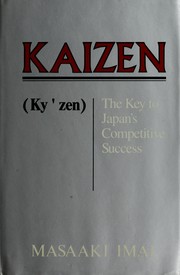
Masaaki Imai · 1986

Continuous small improvement as the core of Japanese manufacturing success.

Eliyahu M. Goldratt · 1990

Every system has one constraint; find it, exploit it, and subordinate all else to it.

Eliyahu M. Goldratt · 1997

A novel applying the theory of constraints to finishing projects on time.

Charles H. Fine · 1998

Fast-moving industries reveal supply-chain dynamics slow ones take decades to show.
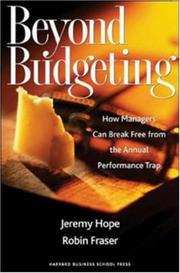
Jeremy Hope, Robin Fraser · 2003

Why the annual budget harms firms, and how some run without one.
Bent Flyvbjerg, Nils Bruzelius, Werner Rothengatter · 2003

Data showing big infrastructure projects run over cost and under demand by design.
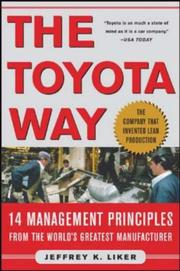
Jeffrey K. Liker · 2004

Toyota's management system as fourteen principles in four groups.
Yossi Sheffi · 2005

How firms recovered from disruptions such as 9/11 and a chip-plant fire.
Mike Rother · 2009

The routines Toyota managers use to coach steady improvement, beyond the tools.
Gene Kim, Kevin Behr, George Spafford · 2013

A novel in which an IT manager rescues a failing project using lessons from The Goal.

John Doerr · 2017

Objectives and key results, the goal system Grove built at Intel and Google adopted.

Taiichi Ohno · 1988

Insider account: Ohno's shorter, blunter shop-floor essays.

Ken Iverson · 1997

Nucor's chief executive on flat structure, incentive pay and minimills

“Another great builder of our time was Kenneth Iverson. In just a few decades, Iverson transformed a small, nearly bankrupt company into the largest and most profitable steel company in the U.S…” — Francois Rochon

Source: Rochon on Ken Iverson and the building of Nucor

Recommended by: Francois Rochon

Jeffrey K. Liker, Timothy N. Ogden · 2011

The recall crisis and tsunami tested against the lean model.
Zeynep Ton · 2014

Why Costco, Trader Joe's and QuikTrip pay more and still undercut rivals.

Yossi Sheffi · 2015

Deep-tier supply-chain risk, a decade on.
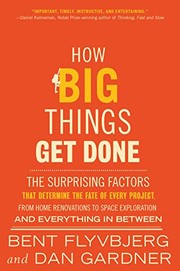
Bent Flyvbjerg, Dan Gardner · 2023

Why megaprojects overrun, and the reference-class forecasting correction.
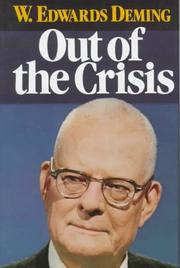
W. Edwards Deming, W. Edwards Deming · 1982

Fourteen points for managing quality by improving the system and driving out fear.

Recommended by: Patrick Collison
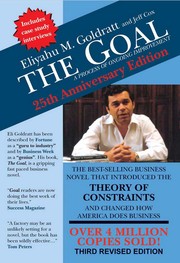
Eliyahu M. Goldratt, Jeff Cox · 1984

A plant manager learns that a system's output is set by its bottleneck.

Jr. George Stalk, Thomas M. Hout · 1990

Recommended by: Tim Cook

Bob Fifer · 1993

Cost discipline handbook widely used by buyout and turnaround operators

James P. Womack, Daniel T. Jones · 1996

Toyota's methods as five principles: value, value stream, flow, pull, perfection.

Recommended by: Mohnish Pabrai, Jeff Bezos

Robert S. Kaplan, David P. Norton · 1996

Measure a firm on finance, customers, internal processes, and learning and growth.

Recommended by: Mohnish Pabrai
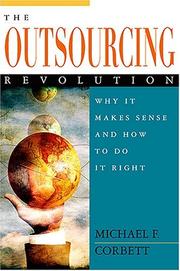
Michael F. Corbett · 2004

Practitioner survey of outsourcing decisions and their economics.

Emi Osono, Norihiko Shimizu, Hirotaka Takeuchi · 2008

Argues Toyota runs on deliberate internal contradictions.

Eliyahu M. Goldratt · 2008

A dialogue on thinking clearly: reality is simple, conflicts can be resolved.

Recommended by: Mohnish Pabrai

T4 FIRE
Dan Ward

Recommended by: Claire Diaz-Ortiz

More business models