Updates

  1. Person pages list letters, writing, profiles and links as sortable tables with filters, and show each person's companies as links; Fund letters show each letter's description in its own column.
  2. Experts show a checked job title and a short description of each person; 30 more people have photographs.
  3. Every company, fund, university and publication the experts work for has a page listing the people there.
  4. Fund letters show each letter's thesis and filter by it; 225 person pages list the essays, columns and newsletter issues the person wrote.
  5. Person pages list every essay and newsletter issue a person wrote, and their own books as a table in List view.
  6. Recommends shows the five largest kinds of book and the rest under More; browse pictures load sooner.
  7. Podcasts and talks link the original episode, filter by Audio and video or Press, and list each publisher once.
  8. Pages are wider, Recommends has List and Grid, and a filter clicked again turns off.
  9. Book cards sit in a ruled grid with Open Library and Goodreads links and each book's one-line note.
  10. Funds is now Investors; each investor's styles are buttons that filter the table.
  11. Podcasts and talks on a person's page filter by year and publisher and show as a list or a grid of pictures.
  12. Quotes show only people's own words: 472 summaries written by list sites are gone.
  13. Country pages open from Browse again, and every link on the shelf lands on a page.
  14. Subject and person pages show their sections as tabs, and each book appears once on a person's page.
  15. Book cards show the quote, who said it and the source; grids show five cards to a row.
  16. On a phone, a menu holds the sections, search, Updates, Feedback and dark mode.
  17. Feedback takes a screenshot of the page with no browser prompt, opens a screenshot full size when you click it, and clears itself once sent.
  18. Book cards are centred, search names the topic each book sits in, and any text cut short shows whole on hover.
  19. Search groups its results by kind: people, companies, geographies, subjects, topics, books, funds, fund letters and papers.
  20. The Books table lists who recommended each book by name, and the browser tab names the section you are in.
  21. Feedback can take a screenshot of the page, or one you paste or choose, and opens in the corner beside Updates.
  22. Each rail button reopens its section where you left it, and Browse, Table and People show on every book and subject page.
  23. Filters grey out choices that hold nothing instead of hiding them, and Books › People filters by authors or recommenders.
  24. Feedback takes a subject line and up to three screenshots.
  25. Biographies are grouped by the person they are about: 41 new pages, from Abraham Lincoln to Lee Kuan Yew.
  26. Sport splits into 23 sports, and Religion into one topic per faith.
  27. Book lists show as cards: the cover, one recommendation quote and every recommender by name.
  28. Seventeen subjects that had two or three pages under different names now have one page each.
  29. Every page lists its Experts as authors and recommenders, with a link to them on the Experts tab.
  30. Economics, Financial history, Financial panics and Accounting are subjects of their own, with one page per financial crisis.
  31. Book, person and subject pages open inside the app, so the tabs stay in view.
  32. 996 more book covers, and photographs or logos for 227 more people and companies.
  33. Books › Browse shows every subject as cards, and the rail holds Fund letters, Papers, Experts, Books and Funds.
  34. Every topic over 150 books splits into narrower topics, each with a page of its own.

Send feedback

What is it?
Screenshots, up to 3 (optional)
or paste one with Ctrl+V

We use your email only to reply to you.

The Power of Resilience

The Power of Resilience

Yossi Sheffi
2015
T3 488 pages · about 8h 8m to read Open Librarygoodreads

Deep-tier supply-chain risk, a decade on.

Summary

Yossi Sheffi directs the MIT Center for Transportation and Logistics and wrote this as a successor to The Resilient Enterprise, extending the analysis with a decade of further cases including the 2011 Japanese earthquake and Thai floods.

The analytical framework classifies disruptions by probability and impact, and argues that the ones that matter are the low-probability high-impact events that no forecasting process will identify in advance. The response is therefore to build capabilities that work regardless of what happens rather than to predict specific events.

The operational content is specific. Sheffi covers deep tier mapping, meaning knowing not just direct suppliers but their suppliers, since the 2011 events showed that companies were exposed through components they did not know they bought; the distinction between redundancy, which is inventory and spare capacity and costs money continuously, and flexibility, which is the ability to shift production between sites and products and costs less but requires investment in standardisation and in relationships; the detection problem, meaning how quickly a firm learns that a disruption has occurred; the response organisation and the value of practised procedures; and the specific cases including Intel, Cisco, Toyota, Ford and Nissan, whose divergent responses to the same 2011 events he compares directly. He also covers reputational and social risks in supply chains, including labour conditions and environmental exposure. The book is practical and case-based and is the standard reference for supply chain risk.

Key takeaways 7

  1. Low-probability high-impact disruptions cannot be forecast individually, so firms should build capabilities rather than predictions.
  2. Deep tier mapping is necessary because firms are exposed through components bought by their suppliers' suppliers.
  3. Redundancy costs money continuously while flexibility costs less and requires investment in standardisation and relationships.
  4. Detection speed determines the size of the eventual loss, since a firm that learns late has fewer options.
  5. Firms with practised response procedures recovered from the 2011 events far faster than firms improvising.
  6. Sheffi compares Toyota and Nissan's responses to the same 2011 disruption and attributes the difference to prior investment in flexibility.
  7. Supplier relationships built before a crisis determine who gets allocated scarce components during one.

Who should read it

Operators responsible for supply chains and investors assessing operational risk who want specific capabilities rather than risk registers.

Similar books 6

Chosen by shared topics, the entries that hold them, and the people who recommended both.

Charles H. Fine · 1998

Fast-moving industries reveal supply-chain dynamics slow ones take decades to show.
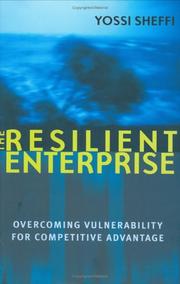
Yossi Sheffi · 2005

How firms recovered from disruptions such as 9/11 and a chip-plant fire.
Taiichi Ohno · 1988

The founder's account of just-in-time and automation with a human touch.
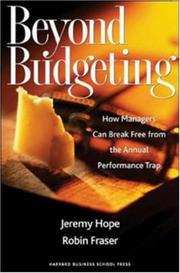
Jeremy Hope, Robin Fraser · 2003

Why the annual budget harms firms, and how some run without one.
Jr. George Stalk, Thomas M. Hout · 1990

Recommended by: Tim Cook

Eliyahu M. Goldratt · 1997

A novel applying the theory of constraints to finishing projects on time.

Where it sits in the reference 3

Business models
Business themes
Business themes

Topics

Business and Management