Updates

  1. Person pages list letters, writing, profiles and links as sortable tables with filters, and show each person's companies as links; Fund letters show each letter's description in its own column.
  2. Experts show a checked job title and a short description of each person; 30 more people have photographs.
  3. Every company, fund, university and publication the experts work for has a page listing the people there.
  4. Fund letters show each letter's thesis and filter by it; 225 person pages list the essays, columns and newsletter issues the person wrote.
  5. Person pages list every essay and newsletter issue a person wrote, and their own books as a table in List view.
  6. Recommends shows the five largest kinds of book and the rest under More; browse pictures load sooner.
  7. Podcasts and talks link the original episode, filter by Audio and video or Press, and list each publisher once.
  8. Pages are wider, Recommends has List and Grid, and a filter clicked again turns off.
  9. Book cards sit in a ruled grid with Open Library and Goodreads links and each book's one-line note.
  10. Funds is now Investors; each investor's styles are buttons that filter the table.
  11. Podcasts and talks on a person's page filter by year and publisher and show as a list or a grid of pictures.
  12. Quotes show only people's own words: 472 summaries written by list sites are gone.
  13. Country pages open from Browse again, and every link on the shelf lands on a page.
  14. Subject and person pages show their sections as tabs, and each book appears once on a person's page.
  15. Book cards show the quote, who said it and the source; grids show five cards to a row.
  16. On a phone, a menu holds the sections, search, Updates, Feedback and dark mode.
  17. Feedback takes a screenshot of the page with no browser prompt, opens a screenshot full size when you click it, and clears itself once sent.
  18. Book cards are centred, search names the topic each book sits in, and any text cut short shows whole on hover.
  19. Search groups its results by kind: people, companies, geographies, subjects, topics, books, funds, fund letters and papers.
  20. The Books table lists who recommended each book by name, and the browser tab names the section you are in.
  21. Feedback can take a screenshot of the page, or one you paste or choose, and opens in the corner beside Updates.
  22. Each rail button reopens its section where you left it, and Browse, Table and People show on every book and subject page.
  23. Filters grey out choices that hold nothing instead of hiding them, and Books › People filters by authors or recommenders.
  24. Feedback takes a subject line and up to three screenshots.
  25. Biographies are grouped by the person they are about: 41 new pages, from Abraham Lincoln to Lee Kuan Yew.
  26. Sport splits into 23 sports, and Religion into one topic per faith.
  27. Book lists show as cards: the cover, one recommendation quote and every recommender by name.
  28. Seventeen subjects that had two or three pages under different names now have one page each.
  29. Every page lists its Experts as authors and recommenders, with a link to them on the Experts tab.
  30. Economics, Financial history, Financial panics and Accounting are subjects of their own, with one page per financial crisis.
  31. Book, person and subject pages open inside the app, so the tabs stay in view.
  32. 996 more book covers, and photographs or logos for 227 more people and companies.
  33. Books › Browse shows every subject as cards, and the rail holds Fund letters, Papers, Experts, Books and Funds.
  34. Every topic over 150 books splits into narrower topics, each with a page of its own.

Send feedback

What is it?
Screenshots, up to 3 (optional)
or paste one with Ctrl+V

We use your email only to reply to you.

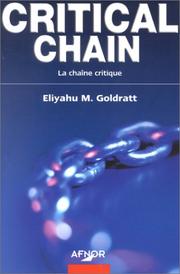
Critical Chain

Critical Chain

Eliyahu M. Goldratt
1997
T2 254 pages · about 4h 14m to read Open Librarygoodreads

Summary

Goldratt applies his theory of constraints to project management, written as a business novel set in a university business school where an academic and his executive students work out a new approach.

The diagnosis is about how estimates and buffers behave. Individual task estimates include substantial safety margin because estimators are held accountable for their own task. That safety is then wasted through three mechanisms: student syndrome, where work starts at the last possible moment because the buffer is known to exist; Parkinson's law, where work expands to fill the time available and early completion is not reported; and multitasking, where a person switching between several projects makes every one of them slower. Because safety is wasted at every task, the accumulated protection disappears while individual tasks still overrun.

His solution is to cut individual task estimates to roughly half, remove all local safety, and aggregate the removed time into buffers placed at the end of the critical chain and at the points where feeding chains join it. The critical chain differs from the critical path by accounting for resource contention as well as task dependency. Project status is then managed by monitoring buffer consumption relative to chain progress, rather than by tracking whether individual tasks met their dates.

The method has been adopted in some project organisations with reported success, and the evidence is largely practitioner reports rather than controlled comparison. The novel format is thin and Goldratt uses characters to voice objections he then dismisses. The behavioural diagnosis is the strongest part and is widely accepted even by people who do not adopt the method.

Key takeaways 7

  1. Individual task estimates contain large safety margins that are wasted rather than saved, because the buffer is consumed by delayed starts and unreported early finishes.
  2. Work expands to fill the time allowed, and early completion is not reported because reporting it invites shorter future estimates.
  3. Multitasking across projects makes every project slower, since setup and context switching consume time that appears nowhere in the plan.
  4. Safety time should be removed from individual tasks and aggregated into project and feeding buffers, which requires far less total time for the same protection.
  5. The critical chain accounts for resource contention as well as task dependency, which the critical path method does not.
  6. Project status should be monitored by buffer consumption relative to chain progress rather than by whether individual tasks met their dates.
  7. Holding individuals accountable for individual task dates guarantees padded estimates and therefore longer projects.

Who should read it

Operators managing projects who want a diagnosis of why estimates inflate and schedules slip, and a scheduling method that aggregates rather than distributes safety.

About Eliyahu M. Goldratt

Israeli physicist and management theorist who created the Theory of Constraints and founded the Avraham Y. Goldratt Institute.

The Goal teaches throughput accounting and constraint management inside a plant-turnaround novel: find the bottleneck, subordinate every other decision to it, raise it, then repeat. The method transfers to any process with a limiting step, which is why operations, project and software-delivery teams still run on it.

Avraham Y. Goldratt Institute

Similar books 6

Chosen by shared topics, the entries that hold them, and the people who recommended both.
Eliyahu M. Goldratt, Jeff Cox · 1984

A plant manager learns that a system's output is set by its bottleneck.

Eliyahu M. Goldratt · 1990

Every system has one constraint; find it, exploit it, and subordinate all else to it.
Eliyahu M. Goldratt · 2008

A dialogue on thinking clearly: reality is simple, conflicts can be resolved.

Recommended by: Mohnish Pabrai
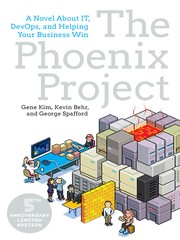
Gene Kim, Kevin Behr, George Spafford · 2013

A novel in which an IT manager rescues a failing project using lessons from The Goal.
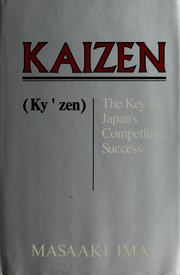
Masaaki Imai · 1986

Continuous small improvement as the core of Japanese manufacturing success.
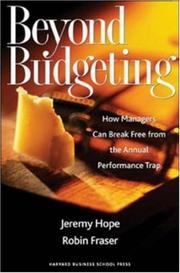
Jeremy Hope, Robin Fraser · 2003

Why the annual budget harms firms, and how some run without one.

Where it sits in the reference 4

Strategists
Business themes
Mental models
Business themes

Topics

Business and ManagementProductivity and HabitsTime management and focus