Updates

  1. Person pages list letters, writing, profiles and links as sortable tables with filters, and show each person's companies as links; Fund letters show each letter's description in its own column.
  2. Experts show a checked job title and a short description of each person; 30 more people have photographs.
  3. Every company, fund, university and publication the experts work for has a page listing the people there.
  4. Fund letters show each letter's thesis and filter by it; 225 person pages list the essays, columns and newsletter issues the person wrote.
  5. Person pages list every essay and newsletter issue a person wrote, and their own books as a table in List view.
  6. Recommends shows the five largest kinds of book and the rest under More; browse pictures load sooner.
  7. Podcasts and talks link the original episode, filter by Audio and video or Press, and list each publisher once.
  8. Pages are wider, Recommends has List and Grid, and a filter clicked again turns off.
  9. Book cards sit in a ruled grid with Open Library and Goodreads links and each book's one-line note.
  10. Funds is now Investors; each investor's styles are buttons that filter the table.
  11. Podcasts and talks on a person's page filter by year and publisher and show as a list or a grid of pictures.
  12. Quotes show only people's own words: 472 summaries written by list sites are gone.
  13. Country pages open from Browse again, and every link on the shelf lands on a page.
  14. Subject and person pages show their sections as tabs, and each book appears once on a person's page.
  15. Book cards show the quote, who said it and the source; grids show five cards to a row.
  16. On a phone, a menu holds the sections, search, Updates, Feedback and dark mode.
  17. Feedback takes a screenshot of the page with no browser prompt, opens a screenshot full size when you click it, and clears itself once sent.
  18. Book cards are centred, search names the topic each book sits in, and any text cut short shows whole on hover.
  19. Search groups its results by kind: people, companies, geographies, subjects, topics, books, funds, fund letters and papers.
  20. The Books table lists who recommended each book by name, and the browser tab names the section you are in.
  21. Feedback can take a screenshot of the page, or one you paste or choose, and opens in the corner beside Updates.
  22. Each rail button reopens its section where you left it, and Browse, Table and People show on every book and subject page.
  23. Filters grey out choices that hold nothing instead of hiding them, and Books › People filters by authors or recommenders.
  24. Feedback takes a subject line and up to three screenshots.
  25. Biographies are grouped by the person they are about: 41 new pages, from Abraham Lincoln to Lee Kuan Yew.
  26. Sport splits into 23 sports, and Religion into one topic per faith.
  27. Book lists show as cards: the cover, one recommendation quote and every recommender by name.
  28. Seventeen subjects that had two or three pages under different names now have one page each.
  29. Every page lists its Experts as authors and recommenders, with a link to them on the Experts tab.
  30. Economics, Financial history, Financial panics and Accounting are subjects of their own, with one page per financial crisis.
  31. Book, person and subject pages open inside the app, so the tabs stay in view.
  32. 996 more book covers, and photographs or logos for 227 more people and companies.
  33. Books › Browse shows every subject as cards, and the rail holds Fund letters, Papers, Experts, Books and Funds.
  34. Every topic over 150 books splits into narrower topics, each with a page of its own.

Send feedback

What is it?
Screenshots, up to 3 (optional)
or paste one with Ctrl+V

We use your email only to reply to you.

Toyota Kata

Toyota Kata

Mike Rother
2009
T2 321 pages · about 5h 21m to read Open Librarygoodreads

The improvement and coaching routines beneath the visible tools.

Summary

Mike Rother spent years studying how Toyota managers actually behave, as distinct from the tools and practices that Western firms had copied, and this book reports what he found. His argument is that the visible elements of the Toyota Production System are outputs of an underlying routine, and that copying the outputs without the routine produces nothing durable.

The routine he identifies has two parts. The improvement kata is a repeating pattern: understand the direction or challenge, grasp the current condition with actual data, establish the next target condition, which is a specific description of how the process should operate by a specific date, and then experiment toward it one step at a time. Each experiment is a prediction tested at what Rother calls the threshold of knowledge, meaning the boundary of what is currently known. The coaching kata is the corresponding routine for managers, who ask a fixed set of five questions of the person doing the improvement rather than solving the problem for them.

Rother's central claim is that Toyota's advantage is that everyone in the organisation practises a scientific routine continuously, and that this is a skill developed through deliberate coaching rather than a set of tools. He argues that Western firms adopted the tools because they were visible and missed the routine because it lives in daily interactions. The book is practical, with the five coaching questions specified exactly, and it has generated a substantial implementation literature. Its evidence is Rother's own observation rather than controlled comparison.

Key takeaways 7

  1. The visible tools of the Toyota Production System are outputs of an underlying management routine, and copying them alone produces nothing durable.
  2. The improvement kata proceeds from challenge to current condition to a specific target condition and then to experiments toward it.
  3. A target condition is a specific description of how a process should operate by a specific date, not a goal or a result.
  4. Each experiment is a prediction tested at the threshold of what is currently known, so failure produces information rather than embarrassment.
  5. The coaching kata gives managers a fixed set of five questions to ask rather than problems to solve.
  6. Rother argues that Toyota's advantage is that everyone practises a scientific routine continuously as a developed skill.
  7. The evidence is the author's own observation rather than controlled comparison with firms that do not do this.

Who should read it

Operators and managers implementing continuous improvement who want the behavioural routine behind the tools rather than another set of tools.

Similar books 6

Chosen by shared topics, the entries that hold them, and the people who recommended both.
Jeremy Hope, Robin Fraser · 2003

Why the annual budget harms firms, and how some run without one.

Charles H. Fine · 1998

Fast-moving industries reveal supply-chain dynamics slow ones take decades to show.
Jr. George Stalk, Thomas M. Hout · 1990

Recommended by: Tim Cook

Eliyahu M. Goldratt · 1997

A novel applying the theory of constraints to finishing projects on time.
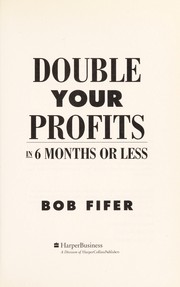
Bob Fifer · 1994

Cost discipline handbook widely used by buyout and turnaround operators

Emi Osono, Norihiko Shimizu, Hirotaka Takeuchi · 2008

Argues Toyota runs on deliberate internal contradictions.

Where it sits in the reference 2

Business themes
Business themes

Topics

Business and Management