
Double Your Profits
Cost discipline handbook widely used by buyout and turnaround operators
Summary
Fifer ran a consulting firm specialising in cost reduction and wrote this as seventy-eight short rules for raising profit quickly. It is aggressive, prescriptive and deliberately uncomfortable, and it has circulated among private equity operators and founders for decades.
The organising distinction is between strategic and non-strategic costs. Strategic costs are those that directly generate revenue or competitive advantage, and Fifer argues these should be increased, not cut. Non-strategic costs are everything else, and he argues they should be attacked without regard to what is reasonable. His methods for the second category include setting budgets at a fraction of last year's spending and requiring justification for any increase rather than any decrease, refusing to approve any expenditure that does not have a named revenue consequence, demanding that suppliers cut prices immediately with a credible threat to leave, and paying invoices late as a matter of policy.
On revenue he argues for pricing at what the customer will pay rather than at cost plus margin, for firing unprofitable customers, and for concentrating sales effort on the accounts that produce most of the profit.
The management style he recommends is confrontational, and he is explicit that the person doing this will be disliked. Several of the tactics, particularly the supplier payment and negotiation methods, damage relationships in ways that carry costs he does not account for. The book has no evidence base beyond his consulting record, and readers should treat it as one aggressive approach to cost that works in specific situations rather than as general management advice.
Key takeaways 7
- Costs divide into strategic ones that generate revenue and non-strategic ones that do not, and the two should be managed in opposite directions.
- Budgets should be set as a fraction of last year's spending with justification required for any increase, which reverses the default of incremental approval.
- Any expenditure that cannot be tied to a named revenue consequence should be eliminated rather than reduced.
- Suppliers will cut prices substantially when asked directly with a credible alternative, and most companies never ask.
- Prices should be set at what the customer will pay rather than derived from cost, and most companies underprice because they start from cost.
- Unprofitable customers should be fired, since serving them consumes the capacity that profitable customers require.
- Cost reduction executed slowly and consensually does not happen, so the decisions must be made quickly and imposed.
Who should read it
Operators taking over an underperforming business who want an aggressive playbook for cost and pricing, used with judgement about the relationship costs.
Who recommended it 3 · 2 direct
Similar books 6
Chosen by shared topics, the entries that hold them, and the people who recommended both.

Measure a firm on finance, customers, internal processes, and learning and growth.
Recommended by: Mohnish Pabrai

A plant manager learns that a system's output is set by its bottleneck.
Recommended by: Mohnish Pabrai, Nat Eliason and 5 others
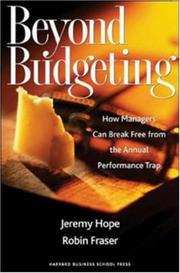
Why the annual budget harms firms, and how some run without one.

Objectives and key results, the goal system Grove built at Intel and Google adopted.
Recommended by: Bill Gates, Amy Hood, Craig Blair and 4 others

How to spot a strategic inflection point, when a tenfold force changes a business.
“On my Top Ten List. Great Book. Grove was CEO of Intel.” — Mohnish Pabrai
Source: Mohnish's Bookshelf — Books on Entrepreneurship, Management and Leadership, entry 174
Recommended by: Charlie Munger, Mohnish Pabrai and 11 others

The 2006-2010 turnaround told with close management access.
Recommended by: Mohnish Pabrai
Where it sits in the reference 4
Topics