
Measure What Matters
OKRs as Doerr learned them at Intel and spread through venture portfolios
Summary
Doerr documents objectives and key results, the goal-setting system Andy Grove developed at Intel and that Doerr introduced to Google in 1999 as a venture investor. An objective is a qualitative statement of what is to be achieved. Key results are quantitative measures that determine whether it was achieved, typically three to five per objective, with numbers and deadlines.
The operating rules Doerr sets out include making objectives public across the organisation so anyone can see what anyone else is working on; setting them quarterly and annually; separating committed objectives, which must be fully achieved, from aspirational ones, where achieving seventy percent counts as success; setting them both top down and bottom up rather than cascading them entirely from the top; and decoupling them from compensation so that people set ambitious targets without financial risk.
The second half covers what Doerr calls continuous performance management, meaning conversations, feedback and recognition, and argues that annual performance reviews should be replaced by regular one-on-ones structured around progress against key results.
The evidence is a series of case studies from Google, Intel, YouTube, the Gates Foundation, Bono's ONE campaign, Intuit and others, all presented as successes. Doerr does not examine organisations where the system failed, and the number of companies that adopted objectives and key results and abandoned them is substantial. The system's dependence on decoupling from compensation is the rule most often broken in practice, which converts ambitious targets into sandbagged ones. The book is repetitive and reads partly as advocacy. The mechanics are stated clearly enough to implement.
Key takeaways 8
- An objective states what is to be achieved qualitatively, and key results measure whether it was achieved with numbers and dates.
- Goals should be visible to everyone in the organisation, because transparency is what allows teams to see dependencies and avoid duplicated effort.
- Committed and aspirational objectives are different categories, and mixing them destroys both by making failure ambiguous.
- Aspirational objectives should be set so that achieving seventy percent counts as success, which is what makes ambitious targets safe to set.
- Goal setting must run bottom up as well as top down, and organisations that cascade objectives entirely from the top produce compliance rather than commitment.
- Objectives must be decoupled from compensation, because tying them to pay guarantees that people will set targets they know they can hit.
- A small number of objectives forces the prioritisation that the exercise exists to produce, and organisations that set many have not chosen.
- Regular conversations about progress should replace annual performance reviews, which arrive too late to change any outcome.
Who should read it
Executives implementing a company-wide goal system who need the operating rules, particularly the separation of aspirational goals from compensation.
About John Doerr
Chairman of the venture firm Kleiner Perkins, where he led investments in Google, Amazon, Intuit and Sun Microsystems.
Measure What Matters documents the objectives-and-key-results system Andy Grove built at Intel and Doerr carried into Google, with the mechanics that make it work - how objectives are set, how key results are graded, and why they are kept separate from compensation. Speed and Scale applies the same goal structure to decarbonisation targets and to the climate companies venture investors now fund.
Who recommended it 7 · 1 direct
Similar books 6
Chosen by shared topics, the entries that hold them, and the people who recommended both.
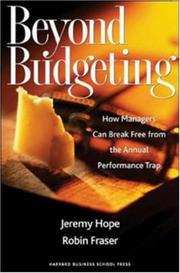
Why the annual budget harms firms, and how some run without one.
Cost discipline handbook widely used by buyout and turnaround operators
Recommended by: Mohnish Pabrai, Patrick O'Shaughnessy and 1 other

Measure a firm on finance, customers, internal processes, and learning and growth.
Recommended by: Mohnish Pabrai

A plant manager learns that a system's output is set by its bottleneck.
Recommended by: Mohnish Pabrai, Nat Eliason and 5 others
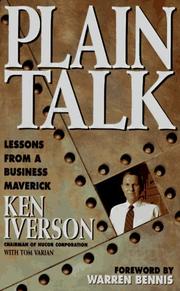
Nucor's chief executive on flat structure, incentive pay and minimills
“Another great builder of our time was Kenneth Iverson. In just a few decades, Iverson transformed a small, nearly bankrupt company into the largest and most profitable steel company in the U.S…” — Francois Rochon
Source: Rochon on Ken Iverson and the building of Nucor
Recommended by: Francois Rochon

Recommended by: Mohnish Pabrai
Where it sits in the reference 4
Topics