Updates

  1. Person pages list letters, writing, profiles and links as sortable tables with filters, and show each person's companies as links; Fund letters show each letter's description in its own column.
  2. Experts show a checked job title and a short description of each person; 30 more people have photographs.
  3. Every company, fund, university and publication the experts work for has a page listing the people there.
  4. Fund letters show each letter's thesis and filter by it; 225 person pages list the essays, columns and newsletter issues the person wrote.
  5. Person pages list every essay and newsletter issue a person wrote, and their own books as a table in List view.
  6. Recommends shows the five largest kinds of book and the rest under More; browse pictures load sooner.
  7. Podcasts and talks link the original episode, filter by Audio and video or Press, and list each publisher once.
  8. Pages are wider, Recommends has List and Grid, and a filter clicked again turns off.
  9. Book cards sit in a ruled grid with Open Library and Goodreads links and each book's one-line note.
  10. Funds is now Investors; each investor's styles are buttons that filter the table.
  11. Podcasts and talks on a person's page filter by year and publisher and show as a list or a grid of pictures.
  12. Quotes show only people's own words: 472 summaries written by list sites are gone.
  13. Country pages open from Browse again, and every link on the shelf lands on a page.
  14. Subject and person pages show their sections as tabs, and each book appears once on a person's page.
  15. Book cards show the quote, who said it and the source; grids show five cards to a row.
  16. On a phone, a menu holds the sections, search, Updates, Feedback and dark mode.
  17. Feedback takes a screenshot of the page with no browser prompt, opens a screenshot full size when you click it, and clears itself once sent.
  18. Book cards are centred, search names the topic each book sits in, and any text cut short shows whole on hover.
  19. Search groups its results by kind: people, companies, geographies, subjects, topics, books, funds, fund letters and papers.
  20. The Books table lists who recommended each book by name, and the browser tab names the section you are in.
  21. Feedback can take a screenshot of the page, or one you paste or choose, and opens in the corner beside Updates.
  22. Each rail button reopens its section where you left it, and Browse, Table and People show on every book and subject page.
  23. Filters grey out choices that hold nothing instead of hiding them, and Books › People filters by authors or recommenders.
  24. Feedback takes a subject line and up to three screenshots.
  25. Biographies are grouped by the person they are about: 41 new pages, from Abraham Lincoln to Lee Kuan Yew.
  26. Sport splits into 23 sports, and Religion into one topic per faith.
  27. Book lists show as cards: the cover, one recommendation quote and every recommender by name.
  28. Seventeen subjects that had two or three pages under different names now have one page each.
  29. Every page lists its Experts as authors and recommenders, with a link to them on the Experts tab.
  30. Economics, Financial history, Financial panics and Accounting are subjects of their own, with one page per financial crisis.
  31. Book, person and subject pages open inside the app, so the tabs stay in view.
  32. 996 more book covers, and photographs or logos for 227 more people and companies.
  33. Books › Browse shows every subject as cards, and the rail holds Fund letters, Papers, Experts, Books and Funds.
  34. Every topic over 150 books splits into narrower topics, each with a page of its own.

Send feedback

What is it?
Screenshots, up to 3 (optional)
or paste one with Ctrl+V

We use your email only to reply to you.

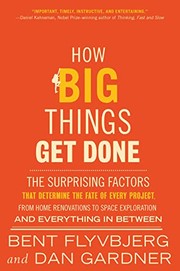
How Big Things Get Done

How Big Things Get Done

Bent Flyvbjerg, Dan Gardner
2023
T3 360 pages · about 6h to read Open Librarygoodreads

Why megaprojects overrun, and the reference-class forecasting correction.

Summary

Flyvbjerg has assembled a database of more than sixteen thousand large projects across twenty-plus types and jurisdictions, and this book presents what the data shows about why projects fail and what distinguishes the ones that succeed. Gardner is the co-writer.

The empirical findings are stark. The overwhelming majority of large projects exceed their budgets, run late, or deliver less benefit than promised, and a substantial share do all three. The distribution of cost overruns is fat-tailed rather than normal, which means the average overrun understates the risk badly and a small number of projects run catastrophically over. Some project types, notably nuclear plants, Olympic Games and information technology, have fatter tails than others, while solar, wind, transmission lines and roads are more predictable.

His explanation combines behavioural causes, principally optimism bias and strategic misrepresentation, where promoters deliberately understate costs to get approval, with a structural cause: projects that must be built as one custom item cannot learn, while projects assembled from repeated modular units can.

His prescriptions are specific. Think slow and act fast, meaning spend heavily on planning and simulation while changes are cheap, then build quickly to limit exposure. Use reference class forecasting, meaning base estimates on the distribution of actual outcomes for similar projects rather than on a bottom-up estimate. Build modular where possible. Hire a team with direct experience of the same thing.

The database is the book's strength and the claims are unusually well supported for the genre.

Key takeaways 7

  1. The overwhelming majority of large projects exceed budget, run late or deliver reduced benefits, and the pattern holds across project types and countries.
  2. Cost overruns follow a fat-tailed distribution, so the average overrun badly understates the risk and a small number of projects fail catastrophically.
  3. Projects assembled from repeated modular units are far more predictable than projects built as a single custom item, because repetition allows learning.
  4. Reference class forecasting, meaning estimating from the distribution of actual outcomes for similar projects, outperforms any bottom-up estimate.
  5. Optimism bias and deliberate understatement of costs to secure approval both operate, and the second is more common than promoters admit.
  6. Extensive planning and simulation before commitment is cheap, while changes during construction are extremely expensive, which argues for slow planning and fast building.
  7. Teams with direct prior experience of the identical project type outperform teams assembled for expertise in the abstract.

Who should read it

Anyone commissioning or funding a large project who needs the actual distribution of outcomes and the practices that shift it.

About Dan Gardner

Canadian journalist who co-wrote Superforecasting with Philip Tetlock and How Big Things Get Done with Bent Flyvbjerg.

Superforecasting reports the Good Judgment Project tournament results and the habits that separated accurate forecasters: breaking questions into parts, updating in small increments, keeping score in numbers. How Big Things Get Done adds base-rate evidence from thousands of megaprojects on why budgets and schedules fail and what the successful ones did differently.

Similar books 6

Chosen by shared topics, the entries that hold them, and the people who recommended both.
Bent Flyvbjerg, Nils Bruzelius, Werner Rothengatter · 2003

Data showing big infrastructure projects run over cost and under demand by design.
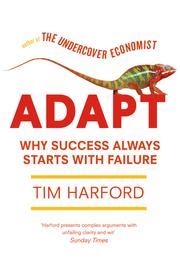
Tim Harford · 2011

Complex problems yield to trial and error, not expert plans, and how to run it.

Max H. Bazerman · 1986

The biases that distort managers' decisions, with exercises that show them.

Jeremy Hope, Robin Fraser · 2003

Why the annual budget harms firms, and how some run without one.
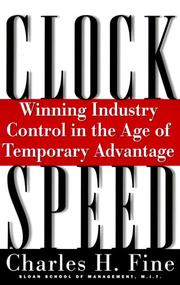
Charles H. Fine · 1998

Fast-moving industries reveal supply-chain dynamics slow ones take decades to show.
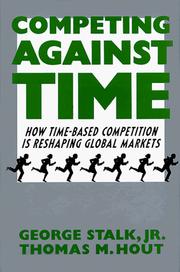
Jr. George Stalk, Thomas M. Hout · 1990

Recommended by: Tim Cook

Where it sits in the reference 5

Journalists
Assets
Business themes
Investment philosophy
Business themes

Topics

Business and ManagementDecision Making