
Updates

  1. Person pages list letters, writing, profiles and links as sortable tables with filters, and show each person's companies as links; Fund letters show each letter's description in its own column.
  2. Experts show a checked job title and a short description of each person; 30 more people have photographs.
  3. Every company, fund, university and publication the experts work for has a page listing the people there.
  4. Fund letters show each letter's thesis and filter by it; 225 person pages list the essays, columns and newsletter issues the person wrote.
  5. Person pages list every essay and newsletter issue a person wrote, and their own books as a table in List view.
  6. Recommends shows the five largest kinds of book and the rest under More; browse pictures load sooner.
  7. Podcasts and talks link the original episode, filter by Audio and video or Press, and list each publisher once.
  8. Pages are wider, Recommends has List and Grid, and a filter clicked again turns off.
  9. Book cards sit in a ruled grid with Open Library and Goodreads links and each book's one-line note.
  10. Funds is now Investors; each investor's styles are buttons that filter the table.
  11. Podcasts and talks on a person's page filter by year and publisher and show as a list or a grid of pictures.
  12. Quotes show only people's own words: 472 summaries written by list sites are gone.
  13. Country pages open from Browse again, and every link on the shelf lands on a page.
  14. Subject and person pages show their sections as tabs, and each book appears once on a person's page.
  15. Book cards show the quote, who said it and the source; grids show five cards to a row.
  16. On a phone, a menu holds the sections, search, Updates, Feedback and dark mode.
  17. Feedback takes a screenshot of the page with no browser prompt, opens a screenshot full size when you click it, and clears itself once sent.
  18. Book cards are centred, search names the topic each book sits in, and any text cut short shows whole on hover.
  19. Search groups its results by kind: people, companies, geographies, subjects, topics, books, funds, fund letters and papers.
  20. The Books table lists who recommended each book by name, and the browser tab names the section you are in.
  21. Feedback can take a screenshot of the page, or one you paste or choose, and opens in the corner beside Updates.
  22. Each rail button reopens its section where you left it, and Browse, Table and People show on every book and subject page.
  23. Filters grey out choices that hold nothing instead of hiding them, and Books › People filters by authors or recommenders.
  24. Feedback takes a subject line and up to three screenshots.
  25. Biographies are grouped by the person they are about: 41 new pages, from Abraham Lincoln to Lee Kuan Yew.
  26. Sport splits into 23 sports, and Religion into one topic per faith.
  27. Book lists show as cards: the cover, one recommendation quote and every recommender by name.
  28. Seventeen subjects that had two or three pages under different names now have one page each.
  29. Every page lists its Experts as authors and recommenders, with a link to them on the Experts tab.
  30. Economics, Financial history, Financial panics and Accounting are subjects of their own, with one page per financial crisis.
  31. Book, person and subject pages open inside the app, so the tabs stay in view.
  32. 996 more book covers, and photographs or logos for 227 more people and companies.
  33. Books › Browse shows every subject as cards, and the rail holds Fund letters, Papers, Experts, Books and Funds.
  34. Every topic over 150 books splits into narrower topics, each with a page of its own.

Send feedback

What is it?
Screenshots, up to 3 (optional)
or paste one with Ctrl+V

We use your email only to reply to you.

Megaprojects and Risk

Megaprojects and Risk

Bent Flyvbjerg, Nils Bruzelius, Werner Rothengatter
2003
T2 218 pages · about 3h 38m to read Open Librarygoodreads

The evidence that traffic forecasts and costs are systematically wrong.

Summary

Bent Flyvbjerg, Nils Bruzelius and Werner Rothengatter assembled data on large infrastructure projects and found that cost overruns and demand shortfalls are systematic rather than exceptional. Their database covers hundreds of transport projects across twenty countries and several decades.

The empirical findings are specific. Cost overruns occur in roughly nine out of ten projects. For rail projects the average overrun is around forty-five per cent in constant prices; for bridges and tunnels around thirty-four per cent; for roads around twenty per cent. Demand forecasts are equally unreliable and biased in a particular direction: rail passenger forecasts overstate actual traffic by an average of more than half, while road traffic forecasts are less biased but highly variable. The errors have not improved over seventy years, which the authors treat as evidence that they are not forecasting mistakes.

Their explanation is that the errors are produced deliberately. Project promoters need approval, approval depends on favourable cost-benefit numbers, and the people producing those numbers are engaged by the promoters. Flyvbjerg calls this strategic misrepresentation and distinguishes it from optimism bias, which is unconscious. Their proposed remedies are institutional: require promoters to put private capital at risk, separate the forecasting function from the promoting function, use reference class forecasting based on outcomes of comparable completed projects, and impose accountability for forecasts after the fact. The reference class forecasting recommendation was subsequently adopted by the United Kingdom Treasury. The book is the foundation of a large subsequent literature, including Flyvbjerg's own How Big Things Get Done.

Key takeaways 7

  1. Cost overruns affect roughly nine out of ten large infrastructure projects, and the average overrun has not declined in seventy years.
  2. Rail passenger demand forecasts overstate realised traffic by more than half on average, and the bias is consistent in direction.
  3. Persistent one-directional forecasting error indicates deliberate misrepresentation rather than technical difficulty.
  4. Promoters produce the forecasts that determine whether their own projects proceed, which is the structural cause of the bias.
  5. Reference class forecasting, using the distribution of outcomes from comparable completed projects, outperforms bottom-up estimation.
  6. Requiring private capital at risk changes forecast behaviour because the forecaster bears the consequence of being wrong.
  7. Accountability for forecasts after project completion is almost never imposed, which removes any correction mechanism.

Who should read it

Investors, lenders and executives evaluating large capital projects who need the base rates for cost and demand forecast error and the reasons those errors persist.

Similar books 6

Chosen by shared topics, the entries that hold them, and the people who recommended both.
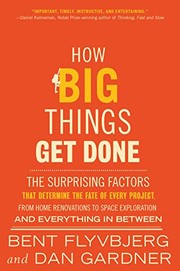
Bent Flyvbjerg, Dan Gardner · 2023

Why megaprojects overrun, and the reference-class forecasting correction.
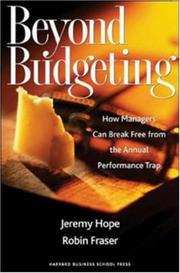
Jeremy Hope, Robin Fraser · 2003

Why the annual budget harms firms, and how some run without one.

Charles H. Fine · 1998

Fast-moving industries reveal supply-chain dynamics slow ones take decades to show.
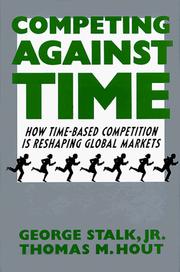
Jr. George Stalk, Thomas M. Hout · 1990

Recommended by: Tim Cook

Eliyahu M. Goldratt · 1997

A novel applying the theory of constraints to finishing projects on time.

Bob Fifer · 1994

Cost discipline handbook widely used by buyout and turnaround operators

Where it sits in the reference 3

Assets
Business themes
Business themes

Topics

Business and ManagementDecision Making