Updates

  1. Person pages list letters, writing, profiles and links as sortable tables with filters, and show each person's companies as links; Fund letters show each letter's description in its own column.
  2. Experts show a checked job title and a short description of each person; 30 more people have photographs.
  3. Every company, fund, university and publication the experts work for has a page listing the people there.
  4. Fund letters show each letter's thesis and filter by it; 225 person pages list the essays, columns and newsletter issues the person wrote.
  5. Person pages list every essay and newsletter issue a person wrote, and their own books as a table in List view.
  6. Recommends shows the five largest kinds of book and the rest under More; browse pictures load sooner.
  7. Podcasts and talks link the original episode, filter by Audio and video or Press, and list each publisher once.
  8. Pages are wider, Recommends has List and Grid, and a filter clicked again turns off.
  9. Book cards sit in a ruled grid with Open Library and Goodreads links and each book's one-line note.
  10. Funds is now Investors; each investor's styles are buttons that filter the table.
  11. Podcasts and talks on a person's page filter by year and publisher and show as a list or a grid of pictures.
  12. Quotes show only people's own words: 472 summaries written by list sites are gone.
  13. Country pages open from Browse again, and every link on the shelf lands on a page.
  14. Subject and person pages show their sections as tabs, and each book appears once on a person's page.
  15. Book cards show the quote, who said it and the source; grids show five cards to a row.
  16. On a phone, a menu holds the sections, search, Updates, Feedback and dark mode.
  17. Feedback takes a screenshot of the page with no browser prompt, opens a screenshot full size when you click it, and clears itself once sent.
  18. Book cards are centred, search names the topic each book sits in, and any text cut short shows whole on hover.
  19. Search groups its results by kind: people, companies, geographies, subjects, topics, books, funds, fund letters and papers.
  20. The Books table lists who recommended each book by name, and the browser tab names the section you are in.
  21. Feedback can take a screenshot of the page, or one you paste or choose, and opens in the corner beside Updates.
  22. Each rail button reopens its section where you left it, and Browse, Table and People show on every book and subject page.
  23. Filters grey out choices that hold nothing instead of hiding them, and Books › People filters by authors or recommenders.
  24. Feedback takes a subject line and up to three screenshots.
  25. Biographies are grouped by the person they are about: 41 new pages, from Abraham Lincoln to Lee Kuan Yew.
  26. Sport splits into 23 sports, and Religion into one topic per faith.
  27. Book lists show as cards: the cover, one recommendation quote and every recommender by name.
  28. Seventeen subjects that had two or three pages under different names now have one page each.
  29. Every page lists its Experts as authors and recommenders, with a link to them on the Experts tab.
  30. Economics, Financial history, Financial panics and Accounting are subjects of their own, with one page per financial crisis.
  31. Book, person and subject pages open inside the app, so the tabs stay in view.
  32. 996 more book covers, and photographs or logos for 227 more people and companies.
  33. Books › Browse shows every subject as cards, and the rail holds Fund letters, Papers, Experts, Books and Funds.
  34. Every topic over 150 books splits into narrower topics, each with a page of its own.

Send feedback

What is it?
Screenshots, up to 3 (optional)
or paste one with Ctrl+V

We use your email only to reply to you.

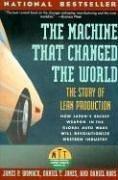
The Machine That Changed the World

The Machine That Changed the World

James P. Womack, Daniel T. Jones, Daniel Roos
1990
T1 323 pages · about 5h 23m to read Open Librarygoodreads

MIT study that named lean production and made Toyota the benchmark.

Summary

This reports the results of the International Motor Vehicle Program at MIT, a five-year study that benchmarked assembly plants worldwide on productivity, quality, inventory and design time. It is the book that introduced the term lean production to a general audience.

The findings were stark. Japanese plants, principally Toyota's, assembled vehicles in roughly half the hours with roughly half the defects, held a fraction of the inventory, used a fraction of the space, and developed new models in substantially less time than American and European plants. The authors established that this was not explained by automation, by culture, by wage levels or by government support, and demonstrated it by measuring the NUMMI plant in California, where Toyota's system applied to an American workforce and a previously worst-in-class facility produced Toyota-level results.

The system they describe includes just-in-time inventory, the ability of any worker to stop the line, root cause problem solving, supplier partnerships based on target costing and shared improvement rather than annual bidding, and product development led by a heavyweight project manager with real authority. They argue lean production is a general system applicable beyond automobiles.

The study data is from the late 1980s and the productivity gaps have narrowed substantially since, partly because Western manufacturers adopted the methods. The book is also more confident about universal applicability than the subsequent record supports, since many lean implementations copied the visible tools without the supplier relationships, employment security or problem-solving culture that made them work.

Key takeaways 7

  1. Japanese assembly plants used roughly half the labour hours and produced roughly half the defects of American and European plants doing the same work.
  2. The productivity difference came from the production system rather than from automation, wage levels, culture or government support.
  3. The NUMMI plant demonstrated that the system produced the same results with an American workforce at a previously worst-in-class facility.
  4. Allowing any worker to stop the production line reduces total defects and total downtime, which contradicts the mass production assumption that the line must keep moving.
  5. Supplier relationships based on target costing and shared improvement produce lower costs than annual competitive bidding does.
  6. Product development led by a project manager with real authority over the functions cuts development time and cost substantially.
  7. Low inventory is not primarily a cost saving but a mechanism that exposes problems immediately, since there is no buffer to conceal them.

Who should read it

Operators in manufacturing or any process-driven business who want the benchmarking evidence behind lean production and the system's actual components.

Similar books 6

Chosen by shared topics, the entries that hold them, and the people who recommended both.

Emi Osono, Norihiko Shimizu, Hirotaka Takeuchi · 2008

Argues Toyota runs on deliberate internal contradictions.
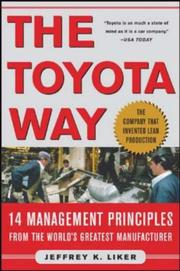
Jeffrey K. Liker · 2004

Toyota's management system as fourteen principles in four groups.
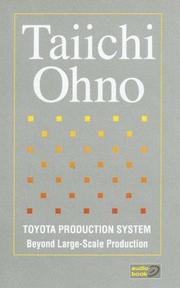
Taiichi Ohno · 1988

The founder's account of just-in-time and automation with a human touch.

Jeffrey K. Liker, Timothy N. Ogden · 2011

The recall crisis and tsunami tested against the lean model.

Taiichi Ohno · 1988

Insider account: Ohno's shorter, blunter shop-floor essays.
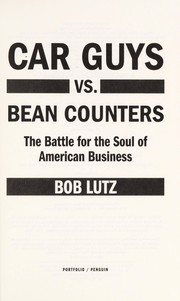
Bob Lutz · 2011

Insider account: Lutz on product culture versus finance control.

Recommended by: Mohnish Pabrai

Where it sits in the reference 4

Companies
Business themes
Industries
Business themes

Topics

Business and ManagementCompany Histories