Updates

  1. Person pages list letters, writing, profiles and links as sortable tables with filters, and show each person's companies as links; Fund letters show each letter's description in its own column.
  2. Experts show a checked job title and a short description of each person; 30 more people have photographs.
  3. Every company, fund, university and publication the experts work for has a page listing the people there.
  4. Fund letters show each letter's thesis and filter by it; 225 person pages list the essays, columns and newsletter issues the person wrote.
  5. Person pages list every essay and newsletter issue a person wrote, and their own books as a table in List view.
  6. Recommends shows the five largest kinds of book and the rest under More; browse pictures load sooner.
  7. Podcasts and talks link the original episode, filter by Audio and video or Press, and list each publisher once.
  8. Pages are wider, Recommends has List and Grid, and a filter clicked again turns off.
  9. Book cards sit in a ruled grid with Open Library and Goodreads links and each book's one-line note.
  10. Funds is now Investors; each investor's styles are buttons that filter the table.
  11. Podcasts and talks on a person's page filter by year and publisher and show as a list or a grid of pictures.
  12. Quotes show only people's own words: 472 summaries written by list sites are gone.
  13. Country pages open from Browse again, and every link on the shelf lands on a page.
  14. Subject and person pages show their sections as tabs, and each book appears once on a person's page.
  15. Book cards show the quote, who said it and the source; grids show five cards to a row.
  16. On a phone, a menu holds the sections, search, Updates, Feedback and dark mode.
  17. Feedback takes a screenshot of the page with no browser prompt, opens a screenshot full size when you click it, and clears itself once sent.
  18. Book cards are centred, search names the topic each book sits in, and any text cut short shows whole on hover.
  19. Search groups its results by kind: people, companies, geographies, subjects, topics, books, funds, fund letters and papers.
  20. The Books table lists who recommended each book by name, and the browser tab names the section you are in.
  21. Feedback can take a screenshot of the page, or one you paste or choose, and opens in the corner beside Updates.
  22. Each rail button reopens its section where you left it, and Browse, Table and People show on every book and subject page.
  23. Filters grey out choices that hold nothing instead of hiding them, and Books › People filters by authors or recommenders.
  24. Feedback takes a subject line and up to three screenshots.
  25. Biographies are grouped by the person they are about: 41 new pages, from Abraham Lincoln to Lee Kuan Yew.
  26. Sport splits into 23 sports, and Religion into one topic per faith.
  27. Book lists show as cards: the cover, one recommendation quote and every recommender by name.
  28. Seventeen subjects that had two or three pages under different names now have one page each.
  29. Every page lists its Experts as authors and recommenders, with a link to them on the Experts tab.
  30. Economics, Financial history, Financial panics and Accounting are subjects of their own, with one page per financial crisis.
  31. Book, person and subject pages open inside the app, so the tabs stay in view.
  32. 996 more book covers, and photographs or logos for 227 more people and companies.
  33. Books › Browse shows every subject as cards, and the rail holds Fund letters, Papers, Experts, Books and Funds.
  34. Every topic over 150 books splits into narrower topics, each with a page of its own.

Send feedback

What is it?
Screenshots, up to 3 (optional)
or paste one with Ctrl+V

We use your email only to reply to you.

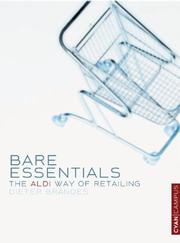
Bare Essentials

Bare Essentials

Dieter Brandes
2004
T4 256 pages · about 4h 16m to read Open Librarygoodreads

A former Aldi director on radical simplicity as the cost model.

Summary

Brandes worked as a senior executive at Aldi under Theo Albrecht and later wrote about the company's method. The book sets out the operating principles of hard discount retailing as Aldi practised them, and argues that simplicity is a deliberate strategy rather than a consequence of low ambition.

The operating model has a small number of connected decisions. Aldi carried roughly six hundred to a thousand items where a supermarket carried tens of thousands. Almost all were private label. The narrow range produced enormous volume per item, which gave Aldi purchasing power that its total revenue alone would not have supported, and let suppliers run long production runs at low cost. Stores were small, fitted cheaply, and stocked from pallets and cases rather than by shelf-filling. Aldi did not advertise beyond price lists, did not run promotions, did not accept manufacturer slotting payments, and did not operate a loyalty programme. It gathered almost no data because the range was too narrow to need category management. Staff numbers per store were very low and pay was above the sector average.

Brandes argues that the principle underneath these choices is the deliberate refusal of complexity, and that most retail cost is generated by variety rather than by volume. He also argues that Aldi's secrecy and family ownership were conditions of the strategy, because a public company would have been pressed to add range and margin.

The book is written by a former insider and reads as advocacy. It offers little analysis of where the model fails, and hard discount has struggled in some markets and product categories. It also predates Aldi and Lidl's expansion into fresh produce, larger ranges and the United States, which complicates the claim that the narrow range is essential.

Key takeaways 7

  1. Most retail operating cost is generated by the number of items carried rather than by sales volume.
  2. A range of under a thousand items produces enough volume per item to give a mid-sized retailer the buying power of a much larger one.
  3. Private label removes the manufacturer's brand margin and the promotional spending that supports it.
  4. Refusing promotions and loyalty schemes removes the analytics, systems and staff those programmes require.
  5. Everyday low pricing is only credible if the retailer never discounts, because promotions teach customers to wait.
  6. Paying staff above the sector average while employing very few of them per store lowers total labour cost.
  7. Private family ownership was a condition of the strategy, because public shareholders press for range extension and margin.

Who should read it

Retail and consumer operators who want the discount model stated as a system of connected choices rather than as a pricing position.

Similar books 6

Chosen by shared topics, the entries that hold them, and the people who recommended both.
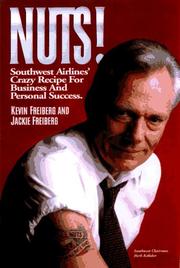
Kevin Freiberg, Jackie Freiberg · 1996

How Southwest Airlines built its low-cost model and its culture under Herb Kelleher.

Bryce G. Hoffman · 2012

The 2006-2010 turnaround told with close management access.

Recommended by: Mohnish Pabrai

Where it sits in the reference 4

Business models
Business models
Business themes
Business themes

Topics

Company HistoriesBusiness and Management