Updates

  1. Person pages list letters, writing, profiles and links as sortable tables with filters, and show each person's companies as links; Fund letters show each letter's description in its own column.
  2. Experts show a checked job title and a short description of each person; 30 more people have photographs.
  3. Every company, fund, university and publication the experts work for has a page listing the people there.
  4. Fund letters show each letter's thesis and filter by it; 225 person pages list the essays, columns and newsletter issues the person wrote.
  5. Person pages list every essay and newsletter issue a person wrote, and their own books as a table in List view.
  6. Recommends shows the five largest kinds of book and the rest under More; browse pictures load sooner.
  7. Podcasts and talks link the original episode, filter by Audio and video or Press, and list each publisher once.
  8. Pages are wider, Recommends has List and Grid, and a filter clicked again turns off.
  9. Book cards sit in a ruled grid with Open Library and Goodreads links and each book's one-line note.
  10. Funds is now Investors; each investor's styles are buttons that filter the table.
  11. Podcasts and talks on a person's page filter by year and publisher and show as a list or a grid of pictures.
  12. Quotes show only people's own words: 472 summaries written by list sites are gone.
  13. Country pages open from Browse again, and every link on the shelf lands on a page.
  14. Subject and person pages show their sections as tabs, and each book appears once on a person's page.
  15. Book cards show the quote, who said it and the source; grids show five cards to a row.
  16. On a phone, a menu holds the sections, search, Updates, Feedback and dark mode.
  17. Feedback takes a screenshot of the page with no browser prompt, opens a screenshot full size when you click it, and clears itself once sent.
  18. Book cards are centred, search names the topic each book sits in, and any text cut short shows whole on hover.
  19. Search groups its results by kind: people, companies, geographies, subjects, topics, books, funds, fund letters and papers.
  20. The Books table lists who recommended each book by name, and the browser tab names the section you are in.
  21. Feedback can take a screenshot of the page, or one you paste or choose, and opens in the corner beside Updates.
  22. Each rail button reopens its section where you left it, and Browse, Table and People show on every book and subject page.
  23. Filters grey out choices that hold nothing instead of hiding them, and Books › People filters by authors or recommenders.
  24. Feedback takes a subject line and up to three screenshots.
  25. Biographies are grouped by the person they are about: 41 new pages, from Abraham Lincoln to Lee Kuan Yew.
  26. Sport splits into 23 sports, and Religion into one topic per faith.
  27. Book lists show as cards: the cover, one recommendation quote and every recommender by name.
  28. Seventeen subjects that had two or three pages under different names now have one page each.
  29. Every page lists its Experts as authors and recommenders, with a link to them on the Experts tab.
  30. Economics, Financial history, Financial panics and Accounting are subjects of their own, with one page per financial crisis.
  31. Book, person and subject pages open inside the app, so the tabs stay in view.
  32. 996 more book covers, and photographs or logos for 227 more people and companies.
  33. Books › Browse shows every subject as cards, and the rail holds Fund letters, Papers, Experts, Books and Funds.
  34. Every topic over 150 books splits into narrower topics, each with a page of its own.

Send feedback

What is it?
Screenshots, up to 3 (optional)
or paste one with Ctrl+V

We use your email only to reply to you.

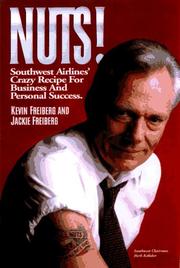
Nuts! Southwest Airlines' Crazy Recipe for B

Nuts! Southwest Airlines' Crazy Recipe for Business and Personal Success

Kevin Freiberg, Jackie Freiberg
1996
T2 363 pages · about 6h 3m to read Open Librarygoodreads

The best-known account of the Kelleher-era culture.

Summary

The Freibergs wrote an admiring account of Southwest Airlines and of Herb Kelleher's leadership, covering the founding and the legal fight to be allowed to fly, the operating model, the culture and the employee practices.

The operating substance is real even when the framing is promotional. Southwest flew a single aircraft type, the Boeing 737, which cut training, maintenance, parts inventory and scheduling complexity simultaneously. It flew point to point rather than through hubs, which avoided the connection banking that leaves aircraft on the ground. It achieved turnaround times of around fifteen minutes when competitors took an hour, which meant more flights per aircraft per day from the same capital. It did not offer assigned seats, meals, interline baggage transfer or connections to other carriers, each of which removed cost and complexity. It flew into secondary airports with lower fees and less congestion. The cost structure that resulted was one no legacy carrier could match without dismantling its own network.

The cultural material covers hiring for attitude, the humour, the unusually good labour relations despite heavy unionisation, and profit sharing.

The book is essentially a celebration and has no critical distance. It is from 1996, before the industry consolidation, before Southwest's cost advantage narrowed as it aged and its workforce gained seniority, and before the model was copied worldwide by Ryanair, easyJet and others. The operating decisions and their interlocking logic are what to take from it.

Key takeaways 7

  1. Flying a single aircraft type cut training, maintenance, parts inventory and scheduling complexity at once, and the savings compounded across every function.
  2. Fifteen-minute turnarounds generated more flights per aircraft per day, which produced more revenue from the same capital than any pricing decision could.
  3. Point-to-point routing avoided the connection banking that leaves aircraft idle at hubs waiting for feeder flights.
  4. Removing assigned seats, meals, interline baggage and connections each eliminated cost and complexity that customers did not value at the price.
  5. Secondary airports offered lower fees and less congestion, which supported both the cost structure and the turnaround times.
  6. The operating decisions interlocked, so a competitor could not copy any one of them without adopting the others.
  7. Legacy carriers could not match the cost structure without dismantling their own network economics, which is why the advantage persisted for decades.

Who should read it

Operators studying how interlocking operating decisions produce a cost position competitors cannot copy, read past the promotional framing.

Similar books 6

Chosen by shared topics, the entries that hold them, and the people who recommended both.
Thomas Petzinger Jr. · 1995

US airlines after 1978 deregulation through Crandall, Lorenzo and Kelleher.

Recommended by: Patrick Collison
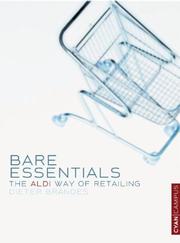
Dieter Brandes · 2004

Aldi's hard-discount method: radical simplicity as the way to keep costs low.

Ken Blanchard, Colleen Barrett · 2010

Insider management account from Southwest's long-serving president.
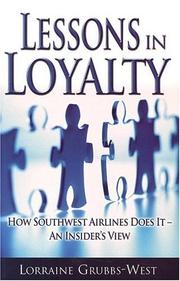
Lorraine Grubbs-West · 2005

Insider account: former head of people on hiring and retention.
Jody Hoffer Gittell · 2003

Academic study of relational coordination and turnaround times.

Recommended by: Ryan Peterson
Barbara Sturken Peterson, James Glab · 1994

Where it sits in the reference 5

Companies
Business models
Business themes
Industries
Business themes

Topics

Company HistoriesBusiness and ManagementLeadership