Updates

  1. Person pages list letters, writing, profiles and links as sortable tables with filters, and show each person's companies as links; Fund letters show each letter's description in its own column.
  2. Experts show a checked job title and a short description of each person; 30 more people have photographs.
  3. Every company, fund, university and publication the experts work for has a page listing the people there.
  4. Fund letters show each letter's thesis and filter by it; 225 person pages list the essays, columns and newsletter issues the person wrote.
  5. Person pages list every essay and newsletter issue a person wrote, and their own books as a table in List view.
  6. Recommends shows the five largest kinds of book and the rest under More; browse pictures load sooner.
  7. Podcasts and talks link the original episode, filter by Audio and video or Press, and list each publisher once.
  8. Pages are wider, Recommends has List and Grid, and a filter clicked again turns off.
  9. Book cards sit in a ruled grid with Open Library and Goodreads links and each book's one-line note.
  10. Funds is now Investors; each investor's styles are buttons that filter the table.
  11. Podcasts and talks on a person's page filter by year and publisher and show as a list or a grid of pictures.
  12. Quotes show only people's own words: 472 summaries written by list sites are gone.
  13. Country pages open from Browse again, and every link on the shelf lands on a page.
  14. Subject and person pages show their sections as tabs, and each book appears once on a person's page.
  15. Book cards show the quote, who said it and the source; grids show five cards to a row.
  16. On a phone, a menu holds the sections, search, Updates, Feedback and dark mode.
  17. Feedback takes a screenshot of the page with no browser prompt, opens a screenshot full size when you click it, and clears itself once sent.
  18. Book cards are centred, search names the topic each book sits in, and any text cut short shows whole on hover.
  19. Search groups its results by kind: people, companies, geographies, subjects, topics, books, funds, fund letters and papers.
  20. The Books table lists who recommended each book by name, and the browser tab names the section you are in.
  21. Feedback can take a screenshot of the page, or one you paste or choose, and opens in the corner beside Updates.
  22. Each rail button reopens its section where you left it, and Browse, Table and People show on every book and subject page.
  23. Filters grey out choices that hold nothing instead of hiding them, and Books › People filters by authors or recommenders.
  24. Feedback takes a subject line and up to three screenshots.
  25. Biographies are grouped by the person they are about: 41 new pages, from Abraham Lincoln to Lee Kuan Yew.
  26. Sport splits into 23 sports, and Religion into one topic per faith.
  27. Book lists show as cards: the cover, one recommendation quote and every recommender by name.
  28. Seventeen subjects that had two or three pages under different names now have one page each.
  29. Every page lists its Experts as authors and recommenders, with a link to them on the Experts tab.
  30. Economics, Financial history, Financial panics and Accounting are subjects of their own, with one page per financial crisis.
  31. Book, person and subject pages open inside the app, so the tabs stay in view.
  32. 996 more book covers, and photographs or logos for 227 more people and companies.
  33. Books › Browse shows every subject as cards, and the rail holds Fund letters, Papers, Experts, Books and Funds.
  34. Every topic over 150 books splits into narrower topics, each with a page of its own.

Send feedback

What is it?
Screenshots, up to 3 (optional)
or paste one with Ctrl+V

We use your email only to reply to you.

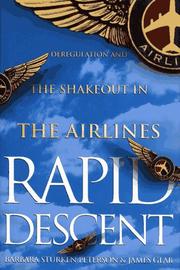
Rapid Descent

Rapid Descent

Barbara Sturken Peterson, James Glab
1994
T3 352 pages · about 5h 52m to read Open Librarygoodreads

Summary

Barbara Sturken Peterson and James Glab, both aviation journalists, chronicle the American airline industry in the decade and a half after deregulation in 1978. The book is a history of the resulting competitive upheaval and of the people who drove it.

The narrative covers the deregulation legislation and Alfred Kahn's role, the entry of low-cost carriers including People Express, the failures of established carriers including Braniff, Eastern and Pan American, and the consolidation that followed. Frank Lorenzo is the central figure: his acquisition of Continental, the 1983 bankruptcy filing used to abrogate labour contracts, the acquisitions of People Express, New York Air and Eastern, and the destruction of Eastern through the 1989 strike. The authors also cover the development of hub-and-spoke networks, computer reservation systems and their competitive use, frequent flyer programmes, and yield management.

The argument implicit in the reporting is that deregulation delivered lower fares and more travel while destroying most of the incumbent carriers and their employees' terms, and that the industry's structure converged toward concentrated hub dominance rather than the competitive market its advocates predicted. The book was published in 1994, before the second wave of consolidation, before Southwest's expansion to national scale, before the post-2001 bankruptcies and before the current four-carrier structure. It is journalism rather than industry economics, and readers wanting the latter should go to the academic literature on airline competition.

Key takeaways 7

  1. Deregulation lowered fares and expanded travel while destroying most of the carriers that existed when it began.
  2. Hub-and-spoke networks concentrated market power at individual airports, which produced local monopoly pricing within a nationally competitive industry.
  3. Bankruptcy filing became a competitive instrument for abrogating labour contracts rather than a response to insolvency.
  4. Computer reservation systems owned by carriers were used to bias travel agent bookings until regulators intervened.
  5. Frequent flyer programmes raised switching costs enough to protect incumbents against low-fare entrants on the same routes.
  6. Labour cost differences rather than operational efficiency drove most of the competitive advantage low-cost entrants held.
  7. The authors argue that the industry's capital intensity and cyclicality make sustained profitability structurally unlikely regardless of regulation.

Who should read it

Investors in airlines and analysts of deregulated industries who want a narrative history of what the first fifteen years of open competition produced.

Similar books 6

Chosen by shared topics, the entries that hold them, and the people who recommended both.
Thomas Petzinger Jr. · 1995

US airlines after 1978 deregulation through Crandall, Lorenzo and Kelleher.

Recommended by: Patrick Collison
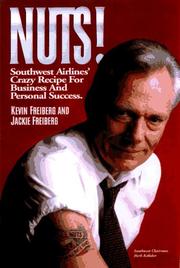
Kevin Freiberg, Jackie Freiberg · 1996

How Southwest Airlines built its low-cost model and its culture under Herb Kelleher.

Rigas Doganis · 2005

The standard academic text on airline economics.
John Newhouse · 1982

Classic on the bet-the-company economics of airliner programs.
Where it sits in the reference 3

Business themes
Industries
Business themes

Topics

General HistoryBusiness and ManagementPolitics and GovernmentEconomic and Business HistoryRegulation, central banks and public policy