Updates

  1. Person pages list letters, writing, profiles and links as sortable tables with filters, and show each person's companies as links; Fund letters show each letter's description in its own column.
  2. Experts show a checked job title and a short description of each person; 30 more people have photographs.
  3. Every company, fund, university and publication the experts work for has a page listing the people there.
  4. Fund letters show each letter's thesis and filter by it; 225 person pages list the essays, columns and newsletter issues the person wrote.
  5. Person pages list every essay and newsletter issue a person wrote, and their own books as a table in List view.
  6. Recommends shows the five largest kinds of book and the rest under More; browse pictures load sooner.
  7. Podcasts and talks link the original episode, filter by Audio and video or Press, and list each publisher once.
  8. Pages are wider, Recommends has List and Grid, and a filter clicked again turns off.
  9. Book cards sit in a ruled grid with Open Library and Goodreads links and each book's one-line note.
  10. Funds is now Investors; each investor's styles are buttons that filter the table.
  11. Podcasts and talks on a person's page filter by year and publisher and show as a list or a grid of pictures.
  12. Quotes show only people's own words: 472 summaries written by list sites are gone.
  13. Country pages open from Browse again, and every link on the shelf lands on a page.
  14. Subject and person pages show their sections as tabs, and each book appears once on a person's page.
  15. Book cards show the quote, who said it and the source; grids show five cards to a row.
  16. On a phone, a menu holds the sections, search, Updates, Feedback and dark mode.
  17. Feedback takes a screenshot of the page with no browser prompt, opens a screenshot full size when you click it, and clears itself once sent.
  18. Book cards are centred, search names the topic each book sits in, and any text cut short shows whole on hover.
  19. Search groups its results by kind: people, companies, geographies, subjects, topics, books, funds, fund letters and papers.
  20. The Books table lists who recommended each book by name, and the browser tab names the section you are in.
  21. Feedback can take a screenshot of the page, or one you paste or choose, and opens in the corner beside Updates.
  22. Each rail button reopens its section where you left it, and Browse, Table and People show on every book and subject page.
  23. Filters grey out choices that hold nothing instead of hiding them, and Books › People filters by authors or recommenders.
  24. Feedback takes a subject line and up to three screenshots.
  25. Biographies are grouped by the person they are about: 41 new pages, from Abraham Lincoln to Lee Kuan Yew.
  26. Sport splits into 23 sports, and Religion into one topic per faith.
  27. Book lists show as cards: the cover, one recommendation quote and every recommender by name.
  28. Seventeen subjects that had two or three pages under different names now have one page each.
  29. Every page lists its Experts as authors and recommenders, with a link to them on the Experts tab.
  30. Economics, Financial history, Financial panics and Accounting are subjects of their own, with one page per financial crisis.
  31. Book, person and subject pages open inside the app, so the tabs stay in view.
  32. 996 more book covers, and photographs or logos for 227 more people and companies.
  33. Books › Browse shows every subject as cards, and the rail holds Fund letters, Papers, Experts, Books and Funds.
  34. Every topic over 150 books splits into narrower topics, each with a page of its own.

Send feedback

What is it?
Screenshots, up to 3 (optional)
or paste one with Ctrl+V

We use your email only to reply to you.

The Airline Business

The Airline Business

Rigas Doganis
2005
T3 307 pages · about 5h 7m to read Open Librarygoodreads

The standard academic text on airline economics.

Summary

Rigas Doganis has advised airlines and governments for decades and writes the standard economics text on the industry. This volume covers the structural changes of the 1990s and 2000s, following his earlier Flying Off Course, which covers airline economics and costing in more detail.

The content covers the liberalisation of international aviation, including the bilateral air services agreement system and its erosion through open skies agreements and the European single market; the alliance structures that carriers built to obtain network reach without ownership, and the antitrust immunity questions they raise; the low-cost carrier model and its cost advantages, broken down by source; the effects of internet distribution on the travel agency and computer reservation system intermediaries; airline privatisation; and the persistent question of why the industry as a whole has not earned its cost of capital across the cycle.

Doganis is analytical rather than narrative and the book contains substantial data on costs, yields and margins. Its limitation is currency: the industry has since consolidated into a small number of carriers in each major market, ancillary revenue has transformed low-cost economics, and long-haul low-cost has been attempted and largely failed. The framework for decomposing airline costs and for analysing route economics remains standard.

Key takeaways 7

  1. Airline profitability across the cycle has not covered the industry's cost of capital, which is a structural rather than a cyclical result.
  2. Low-cost carrier advantages come from aircraft utilisation, single fleet type, point-to-point routing, secondary airports and labour terms, in measurable proportions.
  3. Alliances gave carriers network reach where ownership restrictions in bilateral agreements prevented merger.
  4. Bilateral air services agreements restricted ownership and route access, and their erosion drove the industry's restructuring.
  5. Internet distribution removed the intermediary margin that travel agents and reservation systems had captured.
  6. Doganis argues that overcapacity is endemic because governments and lessors keep failing carriers flying.
  7. Route economics depend on load factor and yield jointly, and carriers that optimise either alone lose money.

Who should read it

Investors and executives in aviation who want the structural economics of the industry, using a current edition for market data.

Similar books 6

Chosen by shared topics, the entries that hold them, and the people who recommended both.
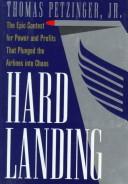
Thomas Petzinger Jr. · 1995

US airlines after 1978 deregulation through Crandall, Lorenzo and Kelleher.

Recommended by: Patrick Collison

Kevin Freiberg, Jackie Freiberg · 1996

How Southwest Airlines built its low-cost model and its culture under Herb Kelleher.
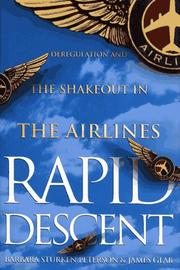
Barbara Sturken Peterson, James Glab · 1994
John Newhouse · 1982

Classic on the bet-the-company economics of airliner programs.

Jeffrey Brabec, Todd Brabec · 1994

The publishing-side reference on royalty streams and licensing income.

Where it sits in the reference 3

Business themes
Industries
Business themes

Topics

Business and ManagementReference WorksFinance, accounting and economics references