Updates

  1. Person pages list letters, writing, profiles and links as sortable tables with filters, and show each person's companies as links; Fund letters show each letter's description in its own column.
  2. Experts show a checked job title and a short description of each person; 30 more people have photographs.
  3. Every company, fund, university and publication the experts work for has a page listing the people there.
  4. Fund letters show each letter's thesis and filter by it; 225 person pages list the essays, columns and newsletter issues the person wrote.
  5. Person pages list every essay and newsletter issue a person wrote, and their own books as a table in List view.
  6. Recommends shows the five largest kinds of book and the rest under More; browse pictures load sooner.
  7. Podcasts and talks link the original episode, filter by Audio and video or Press, and list each publisher once.
  8. Pages are wider, Recommends has List and Grid, and a filter clicked again turns off.
  9. Book cards sit in a ruled grid with Open Library and Goodreads links and each book's one-line note.
  10. Funds is now Investors; each investor's styles are buttons that filter the table.
  11. Podcasts and talks on a person's page filter by year and publisher and show as a list or a grid of pictures.
  12. Quotes show only people's own words: 472 summaries written by list sites are gone.
  13. Country pages open from Browse again, and every link on the shelf lands on a page.
  14. Subject and person pages show their sections as tabs, and each book appears once on a person's page.
  15. Book cards show the quote, who said it and the source; grids show five cards to a row.
  16. On a phone, a menu holds the sections, search, Updates, Feedback and dark mode.
  17. Feedback takes a screenshot of the page with no browser prompt, opens a screenshot full size when you click it, and clears itself once sent.
  18. Book cards are centred, search names the topic each book sits in, and any text cut short shows whole on hover.
  19. Search groups its results by kind: people, companies, geographies, subjects, topics, books, funds, fund letters and papers.
  20. The Books table lists who recommended each book by name, and the browser tab names the section you are in.
  21. Feedback can take a screenshot of the page, or one you paste or choose, and opens in the corner beside Updates.
  22. Each rail button reopens its section where you left it, and Browse, Table and People show on every book and subject page.
  23. Filters grey out choices that hold nothing instead of hiding them, and Books › People filters by authors or recommenders.
  24. Feedback takes a subject line and up to three screenshots.
  25. Biographies are grouped by the person they are about: 41 new pages, from Abraham Lincoln to Lee Kuan Yew.
  26. Sport splits into 23 sports, and Religion into one topic per faith.
  27. Book lists show as cards: the cover, one recommendation quote and every recommender by name.
  28. Seventeen subjects that had two or three pages under different names now have one page each.
  29. Every page lists its Experts as authors and recommenders, with a link to them on the Experts tab.
  30. Economics, Financial history, Financial panics and Accounting are subjects of their own, with one page per financial crisis.
  31. Book, person and subject pages open inside the app, so the tabs stay in view.
  32. 996 more book covers, and photographs or logos for 227 more people and companies.
  33. Books › Browse shows every subject as cards, and the rail holds Fund letters, Papers, Experts, Books and Funds.
  34. Every topic over 150 books splits into narrower topics, each with a page of its own.

Send feedback

What is it?
Screenshots, up to 3 (optional)
or paste one with Ctrl+V

We use your email only to reply to you.

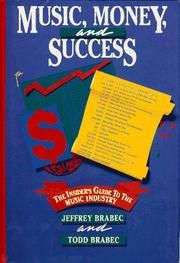
Music, Money, and Success

Music, Money, and Success

Jeffrey Brabec, Todd Brabec
1994
T3 435 pages · about 7h 15m to read Open Librarygoodreads

The publishing-side reference on royalty streams and licensing income.

Summary

Jeffrey and Todd Brabec are music industry attorneys and executives, and this is a reference on how money moves in the music business. It has been revised repeatedly since 1994 and is used as a textbook in music business programmes.

The content is a systematic account of every income source available to a songwriter, composer or artist, and of the contracts that govern each. It covers mechanical royalties for reproduction and the statutory rate that sets them, performance royalties collected by the performing rights organisations and how they are distributed, synchronisation licences for film, television and advertising, print income, recording agreements and the royalty calculations within them, publishing agreements and the difference between the writer's share and the publisher's share, co-publishing and administration deals, foreign collection through subpublishers, and the economics of touring and merchandising.

The book's method is to reproduce contract language and then explain what each clause does financially. Its accuracy about specific rates and about industry practice makes it useful, and that is also why edition matters: the streaming economics, the Music Modernization Act of 2018, and the changes to mechanical licensing administration have all altered the numbers substantially since early editions. Readers should use the most recent edition available and treat older ones as historical.

Key takeaways 7

  1. A song generates income through several legally distinct rights, and each is licensed, collected and split under different rules.
  2. The writer's share and the publisher's share of publishing income are separate, and a publishing deal transfers only one of them.
  3. Mechanical royalty rates for reproduction are set by statute or by rate court rather than negotiated, which caps that income source.
  4. Performance royalties are collected by societies and distributed by survey and census methods, so the payment reflects sampling rather than actual use.
  5. Synchronisation licences are freely negotiated and are frequently the largest single payment a song receives.
  6. Recording agreements recoup advances and specified costs before any artist royalty is paid, which is why a successful record can produce no artist income.
  7. Ownership of copyright, rather than the size of a royalty percentage, determines who controls and profits from a work over its life.

Who should read it

Musicians, managers and investors in music rights who need a clause-level understanding of how income is generated, split and collected.

Similar books 6

Chosen by shared topics, the entries that hold them, and the people who recommended both.

Rigas Doganis · 2005

The standard academic text on airline economics.

Bryce G. Hoffman · 2012

The 2006-2010 turnaround told with close management access.

Recommended by: Mohnish Pabrai

Where it sits in the reference 3

Assets
Business themes
Business themes

Topics

Business and ManagementReference WorksFinance, accounting and economics references